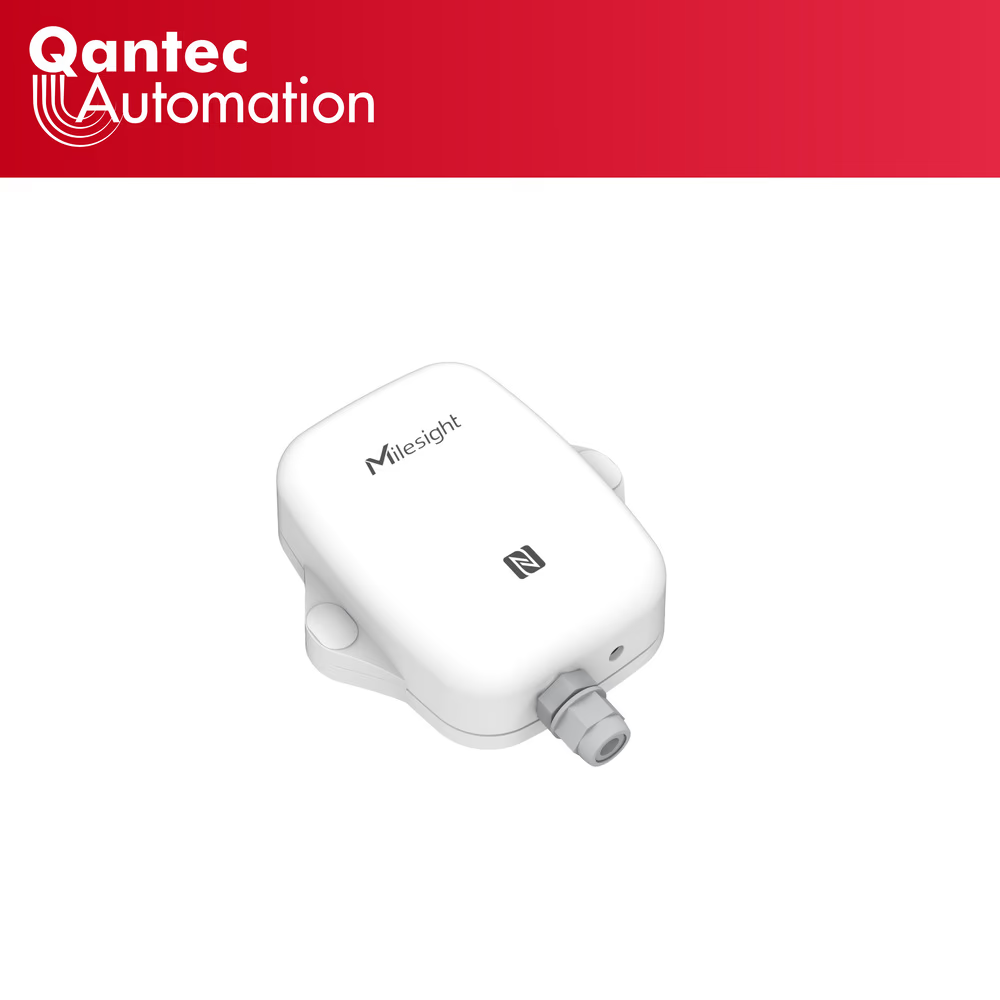
Milesight EM300-SLD - Spot Leakage Detection Sensor
High-Efficiency Leak Detection with Integrated Temperature and Humidity Monitoring for Complete Asset Protection The…
AUD $97.90 inc. GST

Field-grade IoT sensors and devices built on LoRaWAN (Long Range Wide Area Network), NB-IoT (Narrowband Internet of Things) and Modbus, stocked and supported locally in Australia. Verify the protocol, confirm the topology, then order with trade pricing and same-region dispatch.
[Hero Banner Alt Text: IoT sensors and devices — Qantec Automation Australia]
Qantec Automation is the Australian distribution arm of the Oberix Group, supplying Building Management System (BMS) integrators and IoT solution architects with verified IoT sensors and devices. This category covers the full Milesight sensing stack — ambience, occupancy, distance, leak, electrical and acoustic measurement — across LoRaWAN, NB-IoT and LTE Cat M1 transports. Stock is held locally on AU915 hardware, with engineering support and firmware files available before you order.
Our team verifies frequency variant, firmware version and lead time against your bill of materials. Send the model list and we will confirm availability on industrial IoT sensors the same business day.
[CTA Button: Request Trade Pricing & Stock Check]
On this page:
<a id="overview"></a>
IoT sensors and devices are battery- or mains-powered field nodes that digitise a physical measurand — temperature, distance, current, occupancy — and transmit it as an encrypted packet to a gateway or cellular base station. On the Milesight platform, LoRaWAN nodes operate on the AU915 plan (915–928 MHz) using 125 kHz channels and Class A/B/C uplinks, joining via OTAA with AES-128 session encryption. A single coordinator serves a dense fleet of remote IoT monitoring devices, each holding a multi-year battery budget.
Most Milesight IoT sensors are configured by Near Field Communication through the ToolBox app, so commissioning needs no exposed ports. The result is a predictable duty cycle that keeps wireless IoT sensors inside their stated battery envelope. These IoT sensors and devices, purpose-built as IoT sensors for buildings, hold that envelope for years unattended.
<a id="protocols"></a>
Industrial IoT sensors succeed or fail on transport choice, because each IoT device protocol trades range, power and bandwidth differently. LoRaWAN on the AU915 plan (915–928 MHz) suits dense private fleets; NB-IoT reaches sparse or deeply embedded assets; PoE handles high-bandwidth edge analytics. Matching IoT device protocols to the site is the first decision for any IoT sensors and devices rollout. The table below maps the three transports used across our industrial IoT devices so you can match topology to site before specifying.
| Attribute | LoRaWAN (AU915) | NB-IoT / LTE Cat M1 | Wi-Fi / Ethernet (PoE) |
|---|---|---|---|
| Spectrum | Unlicensed ISM, 915–928 MHz | Licensed cellular, carrier SIM | Local LAN |
| Topology | Star-of-stars via gateway | Direct to cellular tower | Switched LAN |
| Typical battery | 10+ years on periodic uplink | 5–10 years | Mains / PoE |
| Best fit | Dense private sensor fleets | Remote, underground, deep-indoor | High-bandwidth edge devices |
| Example hardware | EM300-TH, VS133, CTH01 | EM400-UDL (NB-IoT) | VS133-P, VS121 |
Metal switchboards and plant rooms attenuate 915 MHz signals, so LoRaWAN IoT sensors near steel benefit from an external transceiver or a relocated antenna. The same physics applies to all IoT sensors and devices mounted inside metal enclosures. For LoRaWAN backhaul, pair these nodes with a coordinator from our LoRaWAN gateway range [Link to: LoRaWAN Gateway Sub-Category Page] or the wider gateways and controllers catalogue [Link to: Gateways & Controllers Category Page]. Protocol bridging to BACnet/IP or Modbus is handled at the gateway layer, not the sensor.
<a id="cellular"></a>
A 4G IoT device transmits telemetry over licensed cellular spectrum — NB-IoT or LTE Cat M1 — instead of an unlicensed LoRaWAN link, removing the need to deploy and manage a gateway. Milesight ships the EM400 distance and level family as 4G IoT devices in NB-IoT and Cat M1 variants, with Cat M1 covering bands B1 to B85 and optional GNSS location reporting. These 4g IoT devices excel where assets are sparse, mobile or buried. Cumulative reporting on these IoT sensors and devices batches up to 24 packets to conserve SIM data and battery, and EM400 bodies also ship as LoRaWAN IoT sensors.
<a id="range"></a>
Every product below is genuine Milesight hardware held on AU915 or cellular variants. Each IoT sensors and devices group is named by model, with -915M units transmitting on the AU915 band (915–928 MHz), so your integrator can match payload decoders and mounting before purchase. Qantec stocks these smart IoT devices and supporting smart IoT sensors as IoT sensors Australia-wide.
Ambience and climate nodes (AM and EM300/EM500 series). The AM102, AM103, AM307, AM308 and AM319 indoor ambience nodes capture multi-parameter air data; the EM300-TH, EM320-TH and EM320TH+SS11 add ruggedised enclosures, while the EM500 CO2 four-in-one, EM500-LGT light node, EM500-PT100 RTD probe and EM500-SMTC soil node extend the range outdoors. The DS3604 IoT E-ink Display and WTS506 weather station round out the climate group. These are the smart IoT sensors that feed indoor-environment dashboards.
ToF and AI footfall analytics (VS1xx and VS3xx series). The VS133 and VS135 use second-generation Time-of-Flight with a 940 nm invisible beam, reaching up to 99.8% counting accuracy in Milesight's published ToF accuracy test report, and distinguishing adults, children and lanyard-tagged staff without capturing images. The VS125 stereo-vision node, VS350 and VS360 passage units, and the VS351 thermopile node cover lighter footfall tasks. The VS121 AI workplace node and VS321 wireless AI node report room utilisation as anonymous counts, and pair with the Milesight AI camera range [Link to: Camera Category Page] for vision-based footfall.
[DEVELOPER NOTE: Sourced from high-visibility PAA. Sufyan, embed this verified video URL: https://www.youtube.com/watch?v=oPi032bO5Is and apply VideoObject Schema per technical standards]
Radar and motion detection (VS370, VS373, WS202, WS203). The VS370 fuses 24 GHz radar with PIR for image-free human detection and a five-year battery; the VS373 uses a 60 GHz 4D millimetre-wave MIMO array (24 transmitters, 22 receivers) for fall capture up to 99%, communicating over Milesight D2D for gateway-free, low-latency alerts. The WS202 PIR-and-light node and WS203 motion-and-climate node handle simpler room logic. These remote IoT monitoring devices protect privacy by design and rank among the most specified smart IoT sensors in Australian fitouts.
Distance, level and fill measurement (EM400 and EM500 series). The EM400-MUD ultrasonic node, EM400-TLD ToF laser node and EM400-UDL (in LoRaWAN and NB-IoT) measure non-contact fill across bins, tanks and pits; the EM410-RDL radar node, EM500-UDL ultrasonic node, EM500-SWL submersible probe, EM500-PP pipe-pressure node and WS201 fill-level node extend the set. Cleanroom and washroom air sits with the GS301 odour node and GS601 vape node. Browse the full set via distance and level hardware [Link to: Liquid Level & Air Quality Sensors Sub-Category Page].
Integrity, location and contact nodes (EM300, EM310, AT101, WS30x). The EM300-MLD, EM300-SLD and EM300-ZLD provide membrane, spot and zone moisture alerting; the WS303 mini node and EM300-MCS and WS301 contact switches cover door and panel status. The EM310 and EM320-TILT report inclination, the EM300-DI counts pulses across these IoT sensors and devices, and the AT101 outdoor tracker is one of our asset tracking IoT devices for plant and equipment.
Electrical sub-metering (CTH01 and CT series). The CTH01 hub measures up to 12 single-phase or 4 three-phase circuits with 8 kHz sampling, Class 1 accuracy to IEC 62053-21, and non-invasive magnetic voltage probes; the CT Series split-core clamps span 100 A to 4000 A — the electrical layer of a broader industrial IoT devices fleet. The WS302 acoustic node completes this IoT sensors and devices catalogue with ambient dB(A) capture. For deeper metering specs see electrical sub-metering hardware [Link to: Power & Energy Sub-Category Page].
[Product Image Alt Text: Milesight VS133 AI ToF people counter — IoT Sensors & Devices]
<a id="compliance"></a>
IoT sensors and devices specified for Australian projects must map to named regulatory frameworks, not generic "smart building" claims. CO2 and ambience nodes feed demand-controlled ventilation under AS 1668.2 and supply the indoor-environment data points behind a NABERS (National Australian Built Environment Rating System) Indoor Environment rating and Green Star Buildings v1.1 credits. The CTH01 hub delivers the circuit-level sub-metering granularity expected under NCC (National Construction Code) Section J energy provisions. Cellular 4G IoT devices extend the same compliance reach to sites with no fixed network. Image-free counting and radar nodes keep occupant data inside the Privacy Act 1988 Australian Privacy Principles, while acoustic and fall-detection hardware supports duty-of-care obligations under the WHS Act 2011. Each measurement feeds a wider building automation system [Link to: Building Automation Category Page] at the head-end. NABERS rating methodology is published by the national rating authority.
<a id="why"></a>
Securing IoT sensors and devices is a layered exercise across the physical and network planes. Segment field nodes onto a dedicated VLAN, isolated from corporate traffic, and terminate gateway backhaul through a VPN tunnel rather than an open WAN port. The VS133 and its peers join via OTAA with AES-128 session keys, so over-the-air payloads stay encrypted end to end. Enforce role-based access controls on the network server, disable unused ToolBox interfaces after commissioning, and validate firmware integrity against the manufacturer hash before every flash. These controls keep wireless IoT sensors from becoming an unmonitored ingress point.
<a id="faq"></a>
How many Milesight nodes can one Gateway support?
A multi-channel coordinator, such as the Milesight UG67, supports 2000+ nodes, but practical capacity depends on uplink interval, spreading factor, and duty cycle. Long reporting intervals and higher data rates let one gateway serve more IoT sensors and devices before airtime saturates across a dense fleet of industrial IoT sensors.
Do Milesight LoRaWAN sensors run on the Australian frequency band?
Yes. The -915M hardware defaults to AU915 (915–928 MHz) and supports channel indices 8–15 to match Milesight gateways. Confirm the variant at order, because an EU868 unit will not join an Australian network. Where no gateway exists, choose the cellular 4G IoT devices variant instead.
Can these IoT sensors and devices integrate with a BACnet/IP BMS?
The sensor speaks LoRaWAN; protocol translation to BACnet/IP or Modbus occurs at the gateway. A LoRaWAN-to-BACnet gateway exposes node payloads as BACnet objects, so head-end graphics treat each measurement as a native point.
What battery life is realistic for LoRaWAN IoT sensors?
Periodic-reporting nodes such as the EM400-MUD exceed ten years in standard mode at a ten-minute interval and 25°C. Frequent triggers, short intervals and extreme temperatures shorten that envelope, so size the duty cycle to the application.
[PHASE 1 COMPLETE. Standing by for Phase 2 Instruction to generate Extended FAQs & Schema Notes]
Send your bill of materials and our engineers confirm frequency variant, firmware version, decoder availability and live stock before you commit a single line. Trade accounts receive volume pricing, GST-compliant invoicing and same-region dispatch on every Milesight order.
[Request Trade Pricing] [Book a Technical Consultation] [Download Datasheets]
Technically reviewed by Dr. Abhishek Mitra, [insert role/qualification].
What spreading factor should Milesight LoRaWAN sensors use across a multi-storey site?
Use the lowest spreading factor that still closes the link, and let Adaptive Data Rate (ADR) tune it per node. Spreading factors run from SF7 to SF12: higher factors extend range and penetration through concrete floors, but lengthen time-on-air and raise both collision risk and battery drain. The network server runs ADR to set each node's optimal rate from its signal margin, so units near a gateway settle at SF7 while distant basement nodes climb toward SF12.
Do Milesight sensors need Class C for downlink control, or is Class A enough?
Class A suits almost every battery-powered Milesight node, because most sensors only report upstream and tolerate downlink latency. A Class A device opens two short receive windows — RX1 one second after each uplink, RX2 two seconds after — then returns to sleep. Choose Class C only for mains-powered actuators or near-instant downlink control, since its continuously open receiver multiplies power draw. Firmware updates over the air also require switching a node to Class B or Class C.
Should I commission Milesight sensors with OTAA or ABP?
Use Over-the-Air Activation (OTAA) wherever possible, because it negotiates fresh session keys at every join and simplifies key rotation. Activation by Personalisation (ABP) hard-codes the device address and session keys, which removes the join handshake but weakens security and complicates re-keying. Milesight nodes support both methods; on ChirpStack or The Things Stack you select the matching device profile, then paste the application key for OTAA or the session keys for ABP.
Why won't my Milesight sensor join the network, or why is it dropping packets?
A mismatch between the channels a sensor transmits on and the channels the gateway listens to is the most common cause of join failures and packet loss. The node's enabled sub-band must match the gateway exactly, and at least two channels must be active — a single channel will not hold a link. Confirm the DevEUI, AppEUI and AppKey are correct, then run the gateway's Noise Analyzer to find clean channels and enable Listen Before Talk in congested RF sites.
What payload format do Milesight LoRaWAN sensors output, and how do I decode it?
Milesight sensors transmit a compact hexadecimal payload using a channel-and-type byte structure, not clear-text JSON. Each data element begins with one channel byte and one data-type byte, followed by the value bytes, which keeps airtime minimal. Decode it with the manufacturer's JavaScript codec pasted into your network server's decoder page — The Things Stack, ChirpStack and Datacake all execute these functions to output named JSON fields such as a reading in degrees Celsius.
Can Milesight sensors run on ChirpStack or The Things Stack instead of a vendor cloud?
Yes — Milesight nodes are standards-compliant LoRaWAN hardware that join any compliant network server. On ChirpStack V4 you add a device profile matching the node's MAC version (1.0.2 or 1.0.3) and Regional Parameters revision B, paste the model decoder into the Codec page, then register the device by EUI. Milesight UG65 and UG67 gateways also embed a network server and a ChirpStack MQTT forwarder, so a separate cloud platform is optional.
What ingress and durability rating do outdoor Milesight IoT sensors and devices carry?
Outdoor Milesight nodes such as the EM400-MUD carry an IP67 rating plus a conformal damp-proof coating on the circuit board, so they withstand dust, immersion and condensation. That sealing carries one practical trade-off: vented readings can lag up to an hour after a large ambient swing, because air must diffuse through the gasket. Specify IP67-rated bodies for kerbside, plant-room and wash-down positions where splashing and particulate ingress are routine.
Do 4G IoT devices need a special SIM and carrier plan in Australia?
Yes — the cellular EM400 variants need a carrier IoT SIM provisioned for NB-IoT or LTE Cat M1 on the matching bands. Cat M1 covers bands B1 through B85, so confirm your carrier enables the band and APN before deployment; first registration takes roughly two minutes after a new SIM is inserted. These 4G IoT devices then report directly to your platform with no LoRaWAN gateway in the signal path.
What real-world LoRaWAN range should I plan for indoors versus outdoors?
Plan for several kilometres of outdoor line-of-sight coverage, but only tens to a few hundred metres through a built environment. Range collapses with each obstruction: concrete slabs, lift cores and metal cladding attenuate the 915 MHz signal far more than open air does. Raise the spreading factor, fit a higher-gain antenna, or add a second gateway for redundancy rather than pushing one coordinator past its reliable footprint. Always survey RSSI on site before finalising node positions.
Showing 12 of 55 Products
High-Efficiency Leak Detection with Integrated Temperature and Humidity Monitoring for Complete Asset Protection The…
AUD $97.90 inc. GST
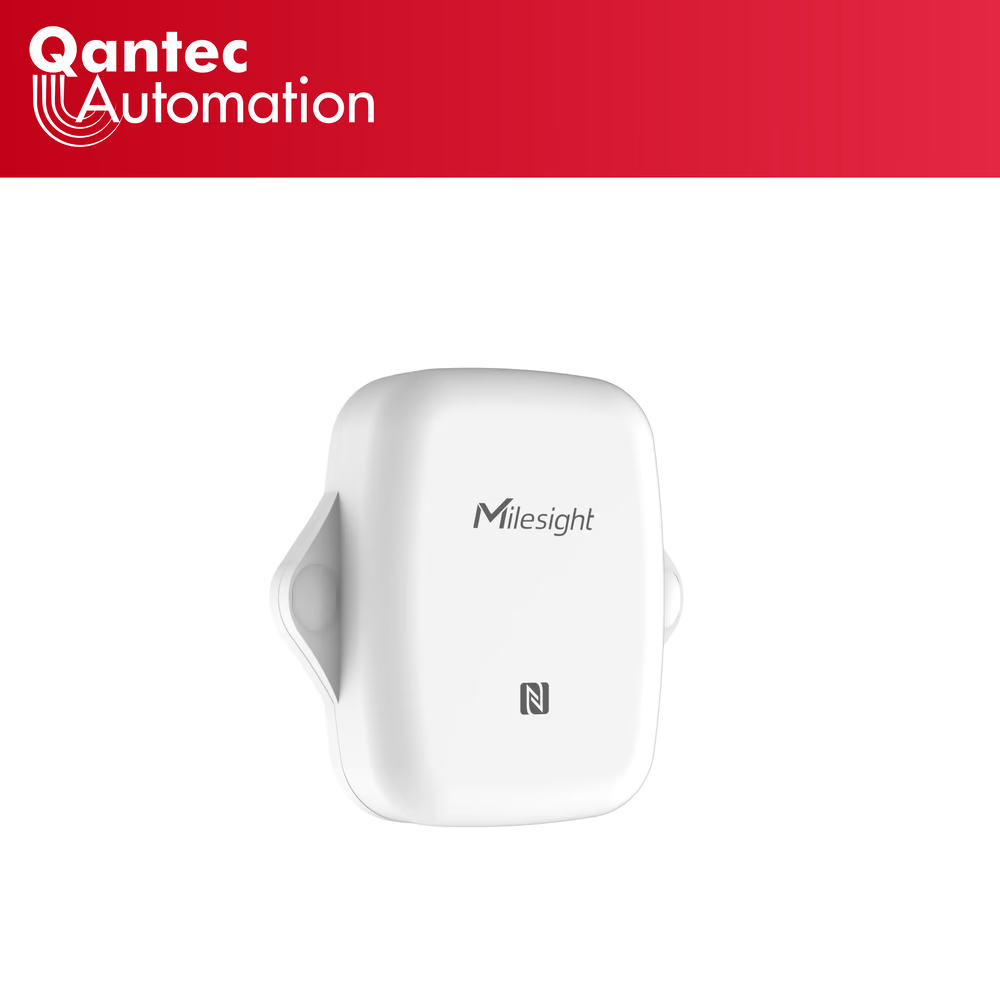
Precision, Power, and Performance: The Ideal Solution for Environmental Monitoring The EM300-TH is an advanced, compact…
AUD $74.80 inc. GST
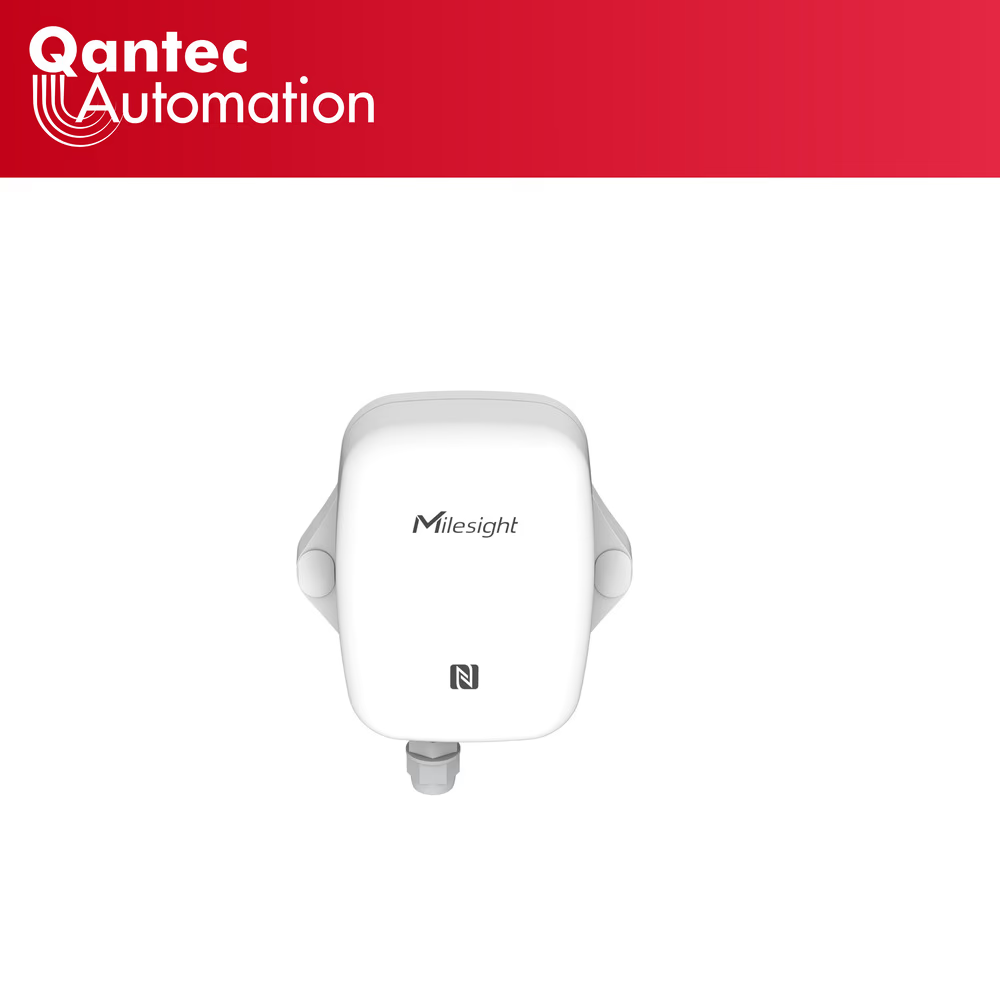
High-Efficiency Leak Detection with Integrated Temperature and Humidity Monitoring for Complete Asset Protection The…
AUD $127.60 inc. GST
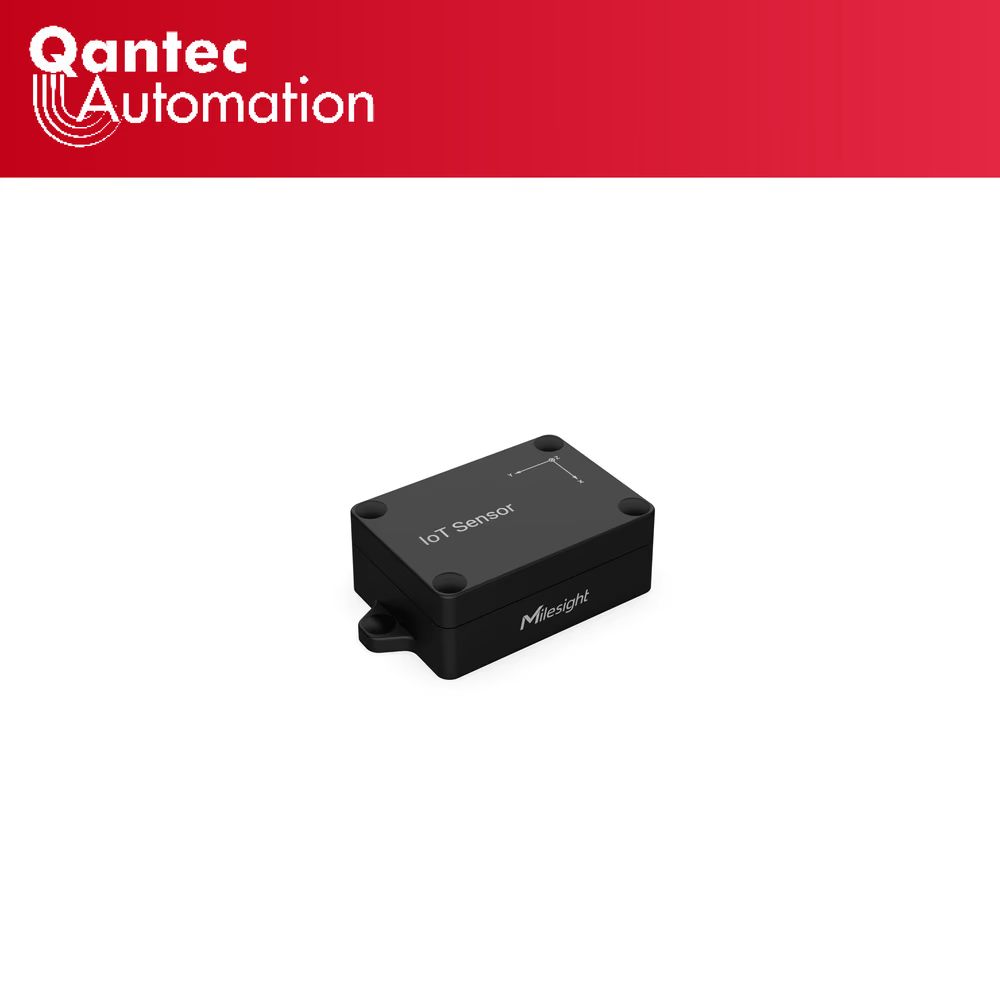
Introducing the EM310-TILT: Streamlined Precision in Angle Measurement and Asset Movement Detection The EM310-TILT is…
AUD $110.00 inc. GST
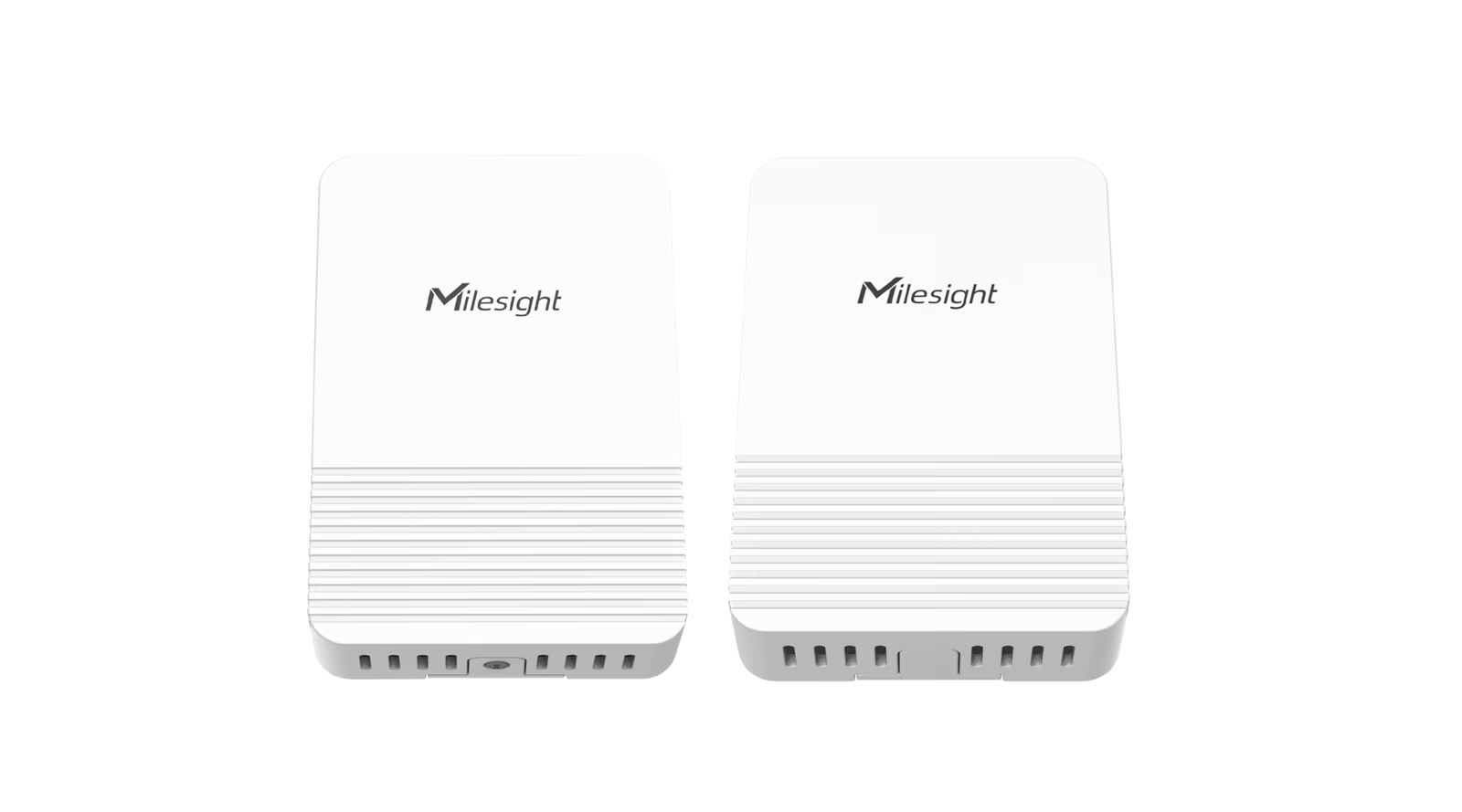
Industrial-grade LoRaWAN temperature and humidity node, running up to a decade on the 8,000 mAh cell.
AUD $88.00 – AUD $104.50 inc. GST
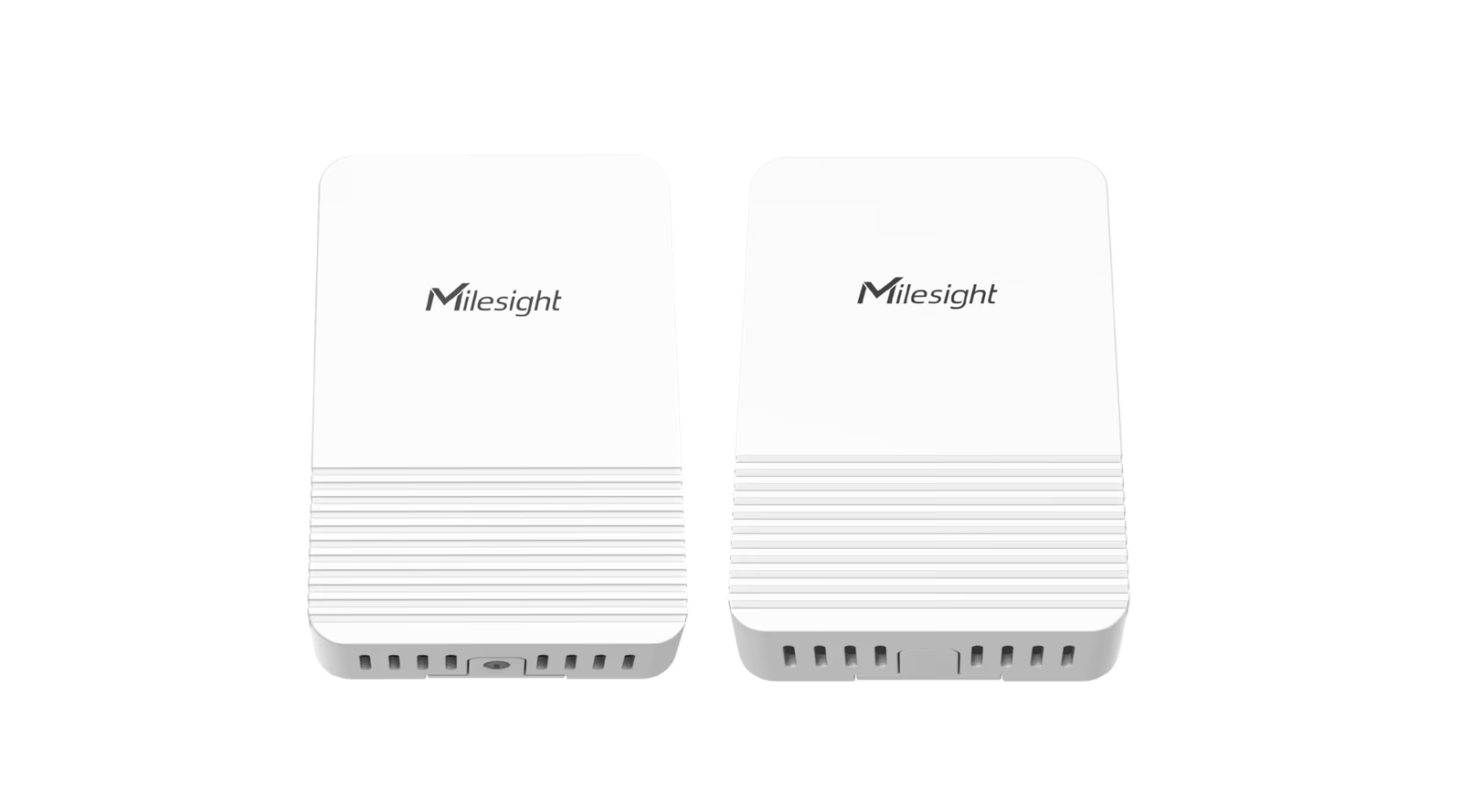
The EM320-TH industrial temperature and humidity sensor supplied with the SS11 sensor shelter.
AUD $295.90 inc. GST
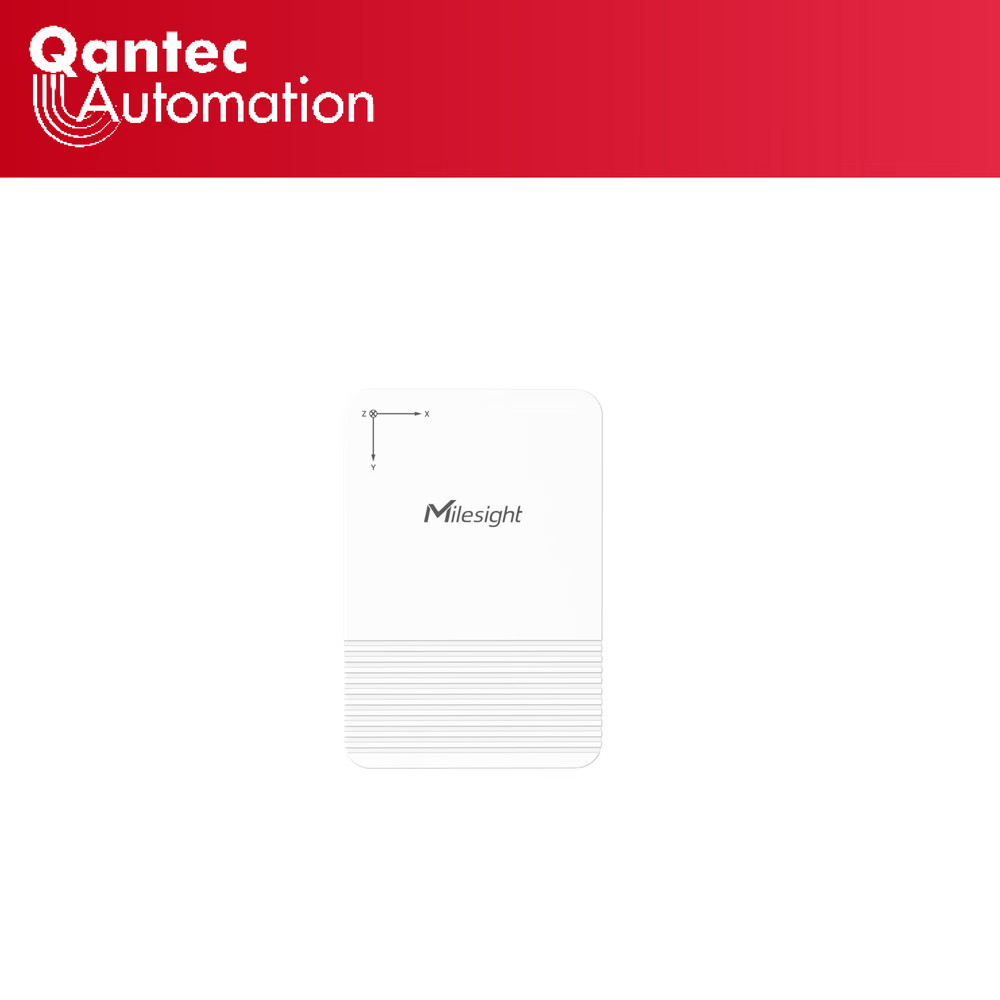
EM320-TILT: Precision Tilt Sensor for Reliable Asset Tracking and Monitoring The EM320-TILT is a state-of-the-art…
AUD $107.80 inc. GST
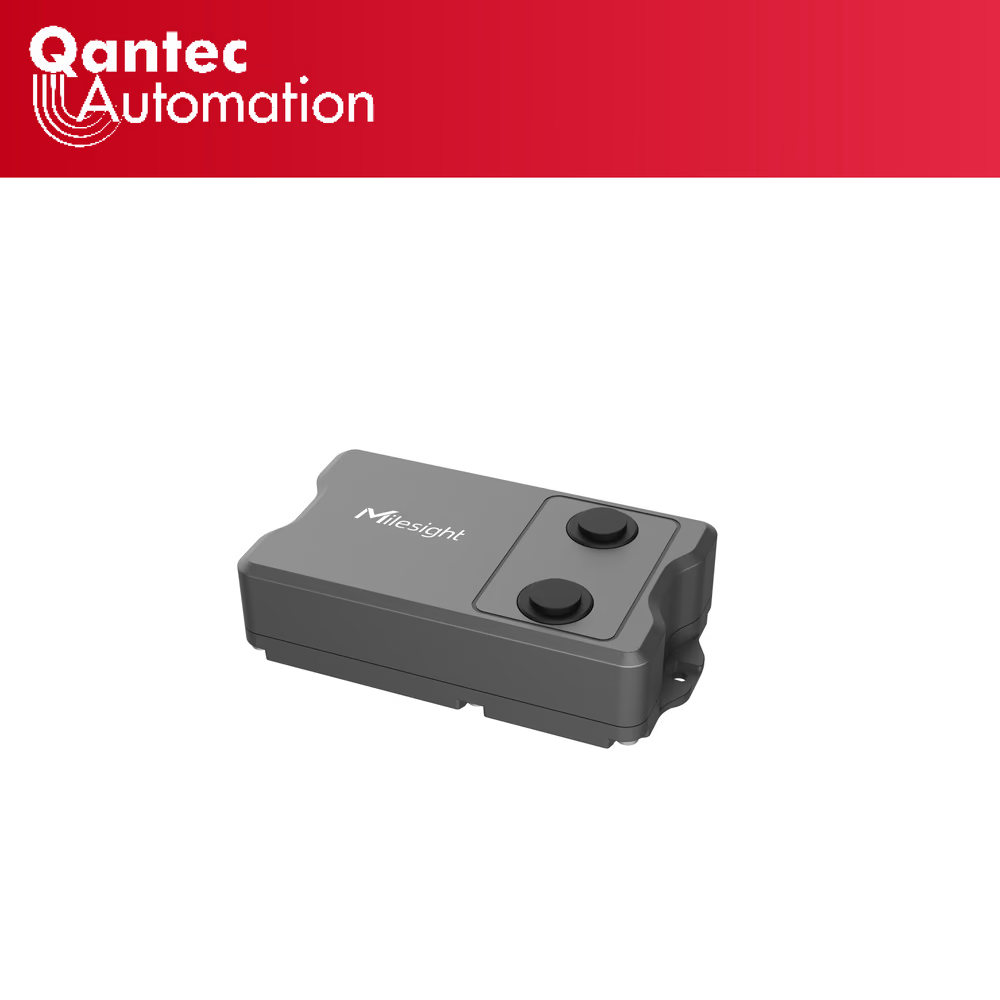
Ultrasonic level measurement for clean, stable tanks across 0.25–10 m spans.
AUD $204.60 – AUD $240.90 inc. GST
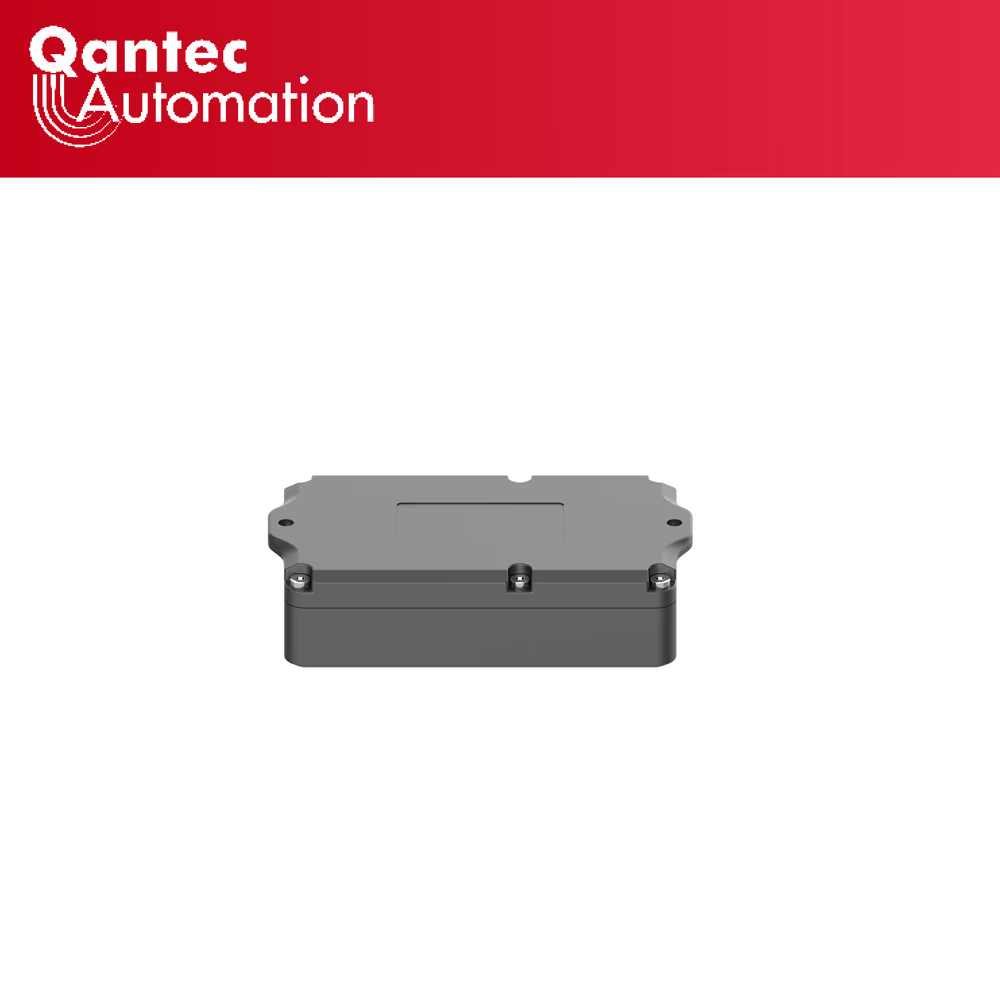
Time-of-flight laser measurement with a near-zero blind spot, for compact containers.
AUD $189.20 – AUD $236.50 inc. GST
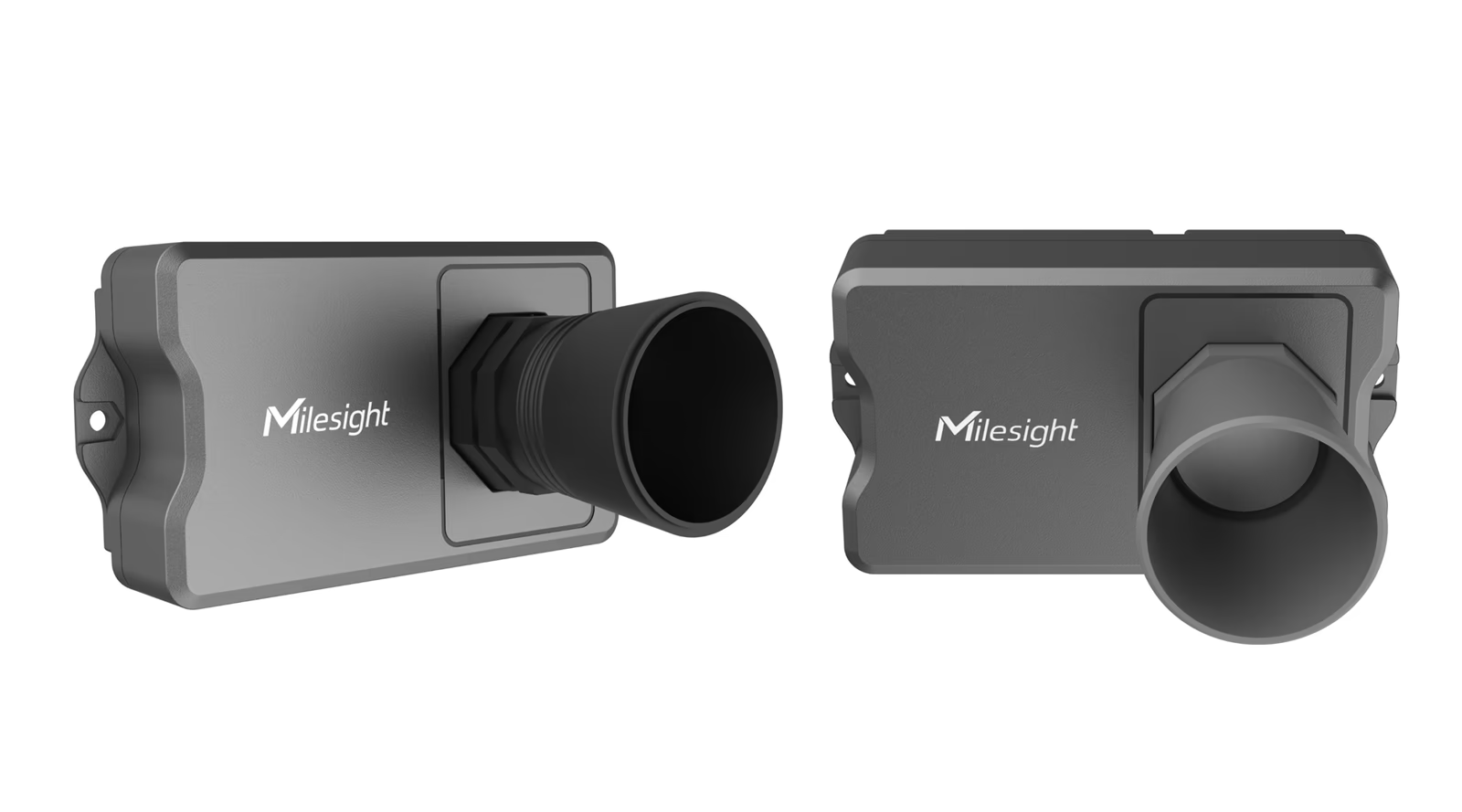
Ultrasonic level for clean, stable tanks across 0.25–10 m. Not for foam, vapour or wide temperature swings.
AUD $422.40 – AUD $640.20 inc. GST
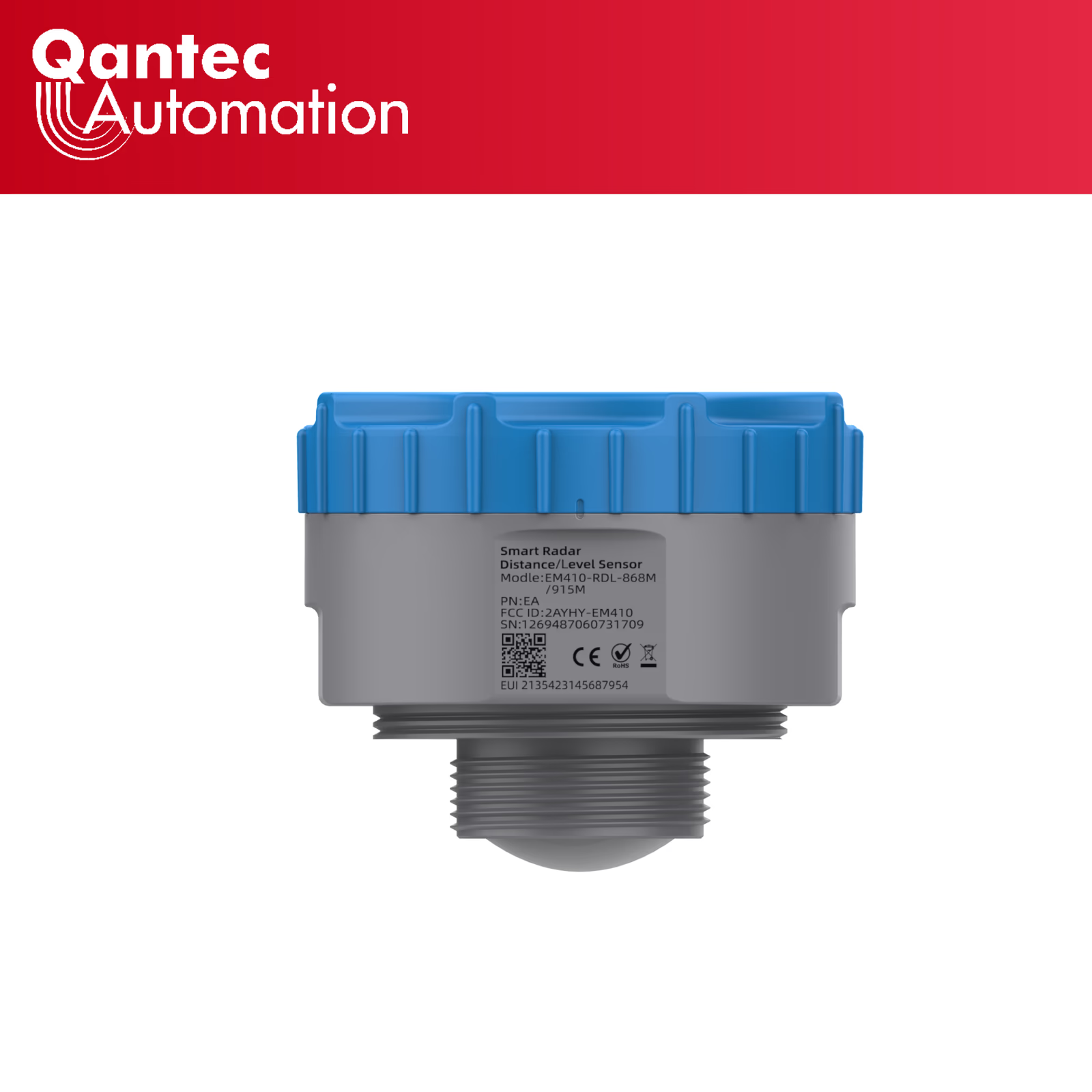
60 GHz millimetre-wave radar, 8° beam, reading 0.3–12 m at up to ±2 mm with 1 mm resolution.
AUD $587.40 – AUD $664.40 inc. GST
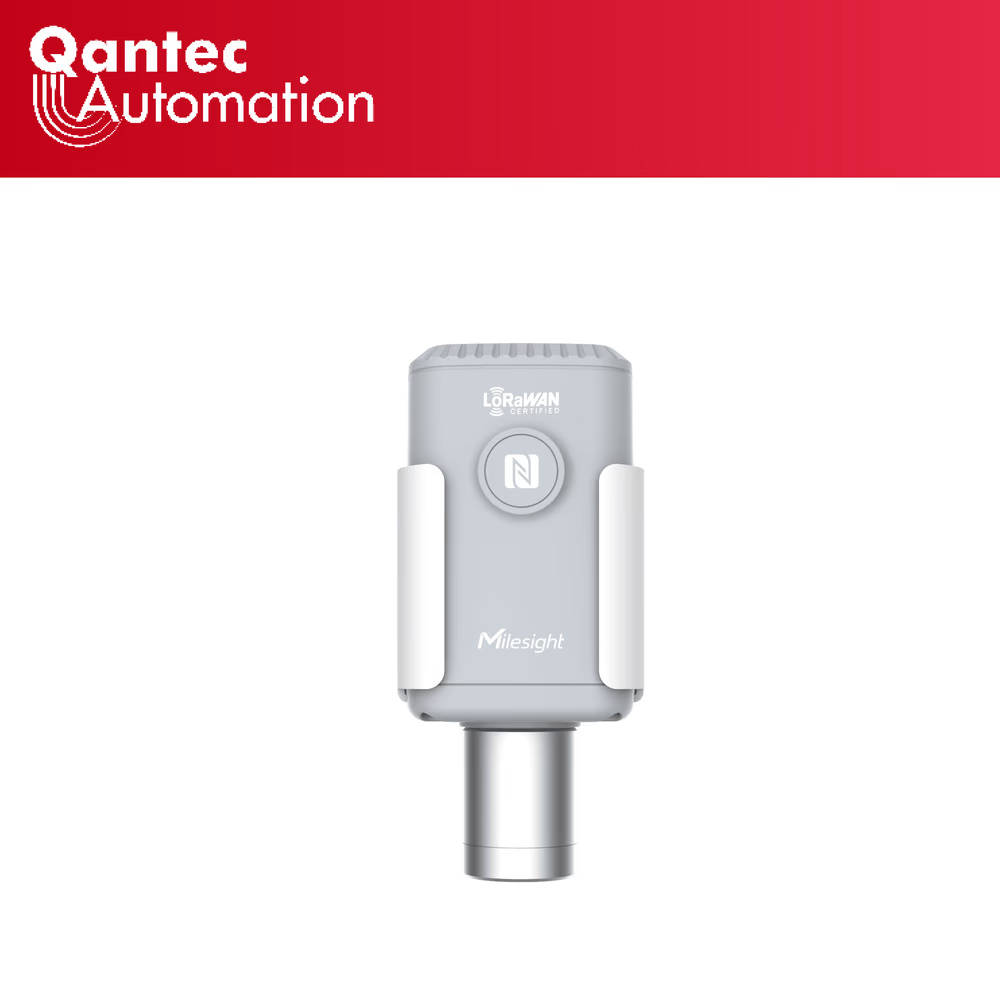
Elevate Your Warehouse and Greenhouse Management with Our Cutting-Edge CO2 Sensor Introducing the EM500-CO2, a durable…
AUD $431.20 inc. GST