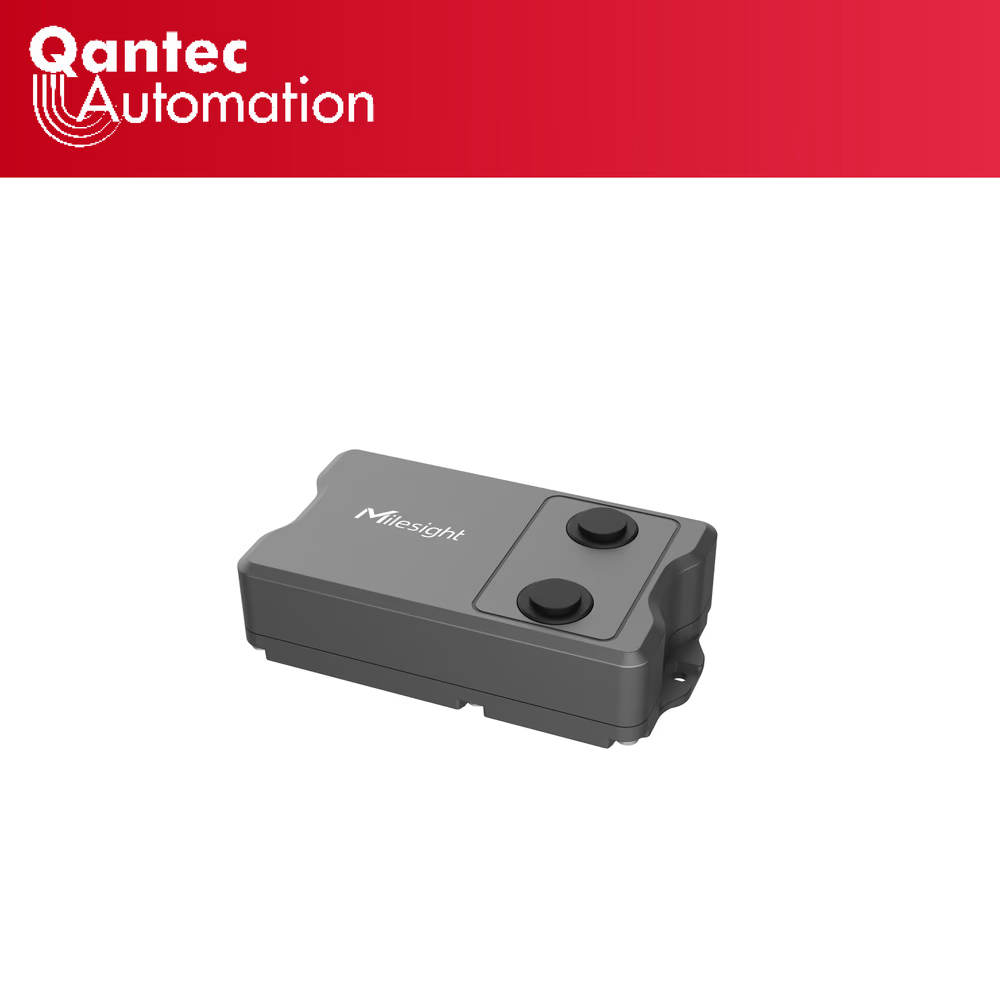
Liquid Level Sensor & Air Quality Sensor Range Australia
Liquid level sensor and air quality sensor hardware — non-contact distance, submersible depth, and gas detection for tanks, wet wells, plant rooms, and restrooms — all on AU915 LoRaWAN (Long Range Wide Area Network), shipped from Australian stock.
SECTION 3 — CATEGORY INTRO BLOCK
Qantec Automation is the Australian distribution arm of the Oberix Group and an authorised Milesight reseller supplying smart building integrators, water utilities, and facilities teams nationwide. This category consolidates two measurement disciplines onto one wireless backhaul: liquid level sensor hardware spanning ultrasonic, radar, submersible, and pressure technologies, and air quality sensor hardware for vape, smoke, and odour gas detection. Every liquid level sensor and air quality sensor is warehoused locally with engineering support, verified AU915 frequency variants, and trade pricing for specified projects.
SECTION 4 — PRODUCT RANGE
1. Milesight EM400-UDL — Ultrasonic Distance/Level Sensor (LoRaWAN)
2. Milesight EM400-UDL — Ultrasonic Distance/Level Sensor (NB-IoT)
3. Milesight EM500-UDL — Ultrasonic Distance/Level Sensor
4. Milesight EM400-MUD — Multifunctional Ultrasonic Distance Sensor
5. Milesight EM410-RDL — Radar Distance/Level Sensor
6. Milesight EM400-TLD — ToF Laser Distance Sensor
7. Milesight EM500-SWL — Submersible Water Level Sensor
8. Milesight EM500-PP — Pipe Pressure Sensor
9. Milesight WS201 — Smart Fill Level Monitoring Sensor
10. Milesight GS601 — Vape Detector Sensor
11. Milesight GS301 — Smart Bathroom Odour Detector
SECTION 5 — FEATURED PRODUCTS
SECTION 6 — CTA BAR
Verify Milesight Vape Detection and Tank Levels Before You Order
Our engineers confirm AU915 frequency variants, probe ranges, and gateway compatibility against your network server before despatch. Specify once, deploy with confidence.
SECTION 7 — DETAILED CONTENT
On this page: Milesight Liquid Level Sensor Range · Milesight Air Quality Sensor & Vape Detector Range · Air Quality Sensor Compliance · Why Specify Qantec · Liquid Level & Air Quality Sensor FAQ
Milesight Liquid Level Sensor Range and Topologies
A liquid level sensor is a transducer that converts the distance between a fixed reference point and a liquid surface into a digital depth or volume reading. The Milesight liquid level sensor range spans 60 GHz radar, ultrasonic, submersible, and time-of-flight (ToF) physics, with measurement spans from 0.25 m to 200 m across IP67 and IP68 housings.
Use the selection matrix below to match each liquid level sensor to its site conditions; every liquid level sensor below ships as the verified AU915 variant.
| <w:shd w:fill="1f4e79" w:val="clear"/><w:tcMar><w:top w:w="60.0" w:type="dxa"/><w:left w:w="90.0" w:type="dxa"/><w:bottom w:w="60.0" w:type="dxa"/><w:right w:w="90.0" w:type="dxa"/></w:tcMar></w:tcPr><w:p w:rsidR="00000000" w:rsidDel="00000000" w:rsidP="00000000" w:rsidRDefault="00000000" w:rsidRPr="00000000" w14:paraId="00000025"><w:pPr><w:rPr/></w:pPr><w:r w:rsidDel="00000000" w:rsidR="00000000" w:rsidRPr="00000000"><w:rPr><w:b w:val="1"/><w:bCs w:val="1"/><w:color w:val="ffffff"/><w:sz w:val="19"/><w:szCs w:val="19"/><w:rtl w:val="0"/></w:rPr><w:t xml:space="preserve">Technology | <w:shd w:fill="1f4e79" w:val="clear"/><w:tcMar><w:top w:w="60.0" w:type="dxa"/><w:left w:w="90.0" w:type="dxa"/><w:bottom w:w="60.0" w:type="dxa"/><w:right w:w="90.0" w:type="dxa"/></w:tcMar></w:tcPr><w:p w:rsidR="00000000" w:rsidDel="00000000" w:rsidP="00000000" w:rsidRDefault="00000000" w:rsidRPr="00000000" w14:paraId="00000026"><w:pPr><w:rPr/></w:pPr><w:r w:rsidDel="00000000" w:rsidR="00000000" w:rsidRPr="00000000"><w:rPr><w:b w:val="1"/><w:bCs w:val="1"/><w:color w:val="ffffff"/><w:sz w:val="19"/><w:szCs w:val="19"/><w:rtl w:val="0"/></w:rPr><w:t xml:space="preserve">Lead Model(s) | <w:shd w:fill="1f4e79" w:val="clear"/><w:tcMar><w:top w:w="60.0" w:type="dxa"/><w:left w:w="90.0" w:type="dxa"/><w:bottom w:w="60.0" w:type="dxa"/><w:right w:w="90.0" w:type="dxa"/></w:tcMar></w:tcPr><w:p w:rsidR="00000000" w:rsidDel="00000000" w:rsidP="00000000" w:rsidRDefault="00000000" w:rsidRPr="00000000" w14:paraId="00000027"><w:pPr><w:rPr/></w:pPr><w:r w:rsidDel="00000000" w:rsidR="00000000" w:rsidRPr="00000000"><w:rPr><w:b w:val="1"/><w:bCs w:val="1"/><w:color w:val="ffffff"/><w:sz w:val="19"/><w:szCs w:val="19"/><w:rtl w:val="0"/></w:rPr><w:t xml:space="preserve">Best Fit | <w:shd w:fill="1f4e79" w:val="clear"/><w:tcMar><w:top w:w="60.0" w:type="dxa"/><w:left w:w="90.0" w:type="dxa"/><w:bottom w:w="60.0" w:type="dxa"/><w:right w:w="90.0" w:type="dxa"/></w:tcMar></w:tcPr><w:p w:rsidR="00000000" w:rsidDel="00000000" w:rsidP="00000000" w:rsidRDefault="00000000" w:rsidRPr="00000000" w14:paraId="00000028"><w:pPr><w:rPr/></w:pPr><w:r w:rsidDel="00000000" w:rsidR="00000000" w:rsidRPr="00000000"><w:rPr><w:b w:val="1"/><w:bCs w:val="1"/><w:color w:val="ffffff"/><w:sz w:val="19"/><w:szCs w:val="19"/><w:rtl w:val="0"/></w:rPr><w:t xml:space="preserve">Avoid When |
|---|---|---|---|
| <w:tcMar><w:top w:w="60.0" w:type="dxa"/><w:left w:w="90.0" w:type="dxa"/><w:bottom w:w="60.0" w:type="dxa"/><w:right w:w="90.0" w:type="dxa"/></w:tcMar></w:tcPr><w:p w:rsidR="00000000" w:rsidDel="00000000" w:rsidP="00000000" w:rsidRDefault="00000000" w:rsidRPr="00000000" w14:paraId="00000029"><w:pPr><w:rPr/></w:pPr><w:r w:rsidDel="00000000" w:rsidR="00000000" w:rsidRPr="00000000"><w:rPr><w:b w:val="0"/><w:bCs w:val="0"/><w:color w:val="222222"/><w:sz w:val="19"/><w:szCs w:val="19"/><w:rtl w:val="0"/></w:rPr><w:t xml:space="preserve">Ultrasonic | <w:tcMar><w:top w:w="60.0" w:type="dxa"/><w:left w:w="90.0" w:type="dxa"/><w:bottom w:w="60.0" w:type="dxa"/><w:right w:w="90.0" w:type="dxa"/></w:tcMar></w:tcPr><w:p w:rsidR="00000000" w:rsidDel="00000000" w:rsidP="00000000" w:rsidRDefault="00000000" w:rsidRPr="00000000" w14:paraId="0000002A"><w:pPr><w:rPr/></w:pPr><w:r w:rsidDel="00000000" w:rsidR="00000000" w:rsidRPr="00000000"><w:rPr><w:b w:val="0"/><w:bCs w:val="0"/><w:color w:val="222222"/><w:sz w:val="19"/><w:szCs w:val="19"/><w:rtl w:val="0"/></w:rPr><w:t xml:space="preserve">EM400-UDL / EM500-UDL / EM400-MUD | <w:tcMar><w:top w:w="60.0" w:type="dxa"/><w:left w:w="90.0" w:type="dxa"/><w:bottom w:w="60.0" w:type="dxa"/><w:right w:w="90.0" w:type="dxa"/></w:tcMar></w:tcPr><w:p w:rsidR="00000000" w:rsidDel="00000000" w:rsidP="00000000" w:rsidRDefault="00000000" w:rsidRPr="00000000" w14:paraId="0000002B"><w:pPr><w:rPr/></w:pPr><w:r w:rsidDel="00000000" w:rsidR="00000000" w:rsidRPr="00000000"><w:rPr><w:b w:val="0"/><w:bCs w:val="0"/><w:color w:val="222222"/><w:sz w:val="19"/><w:szCs w:val="19"/><w:rtl w:val="0"/></w:rPr><w:t xml:space="preserve">Clean, stable tanks; 0.25–10 m spans | <w:tcMar><w:top w:w="60.0" w:type="dxa"/><w:left w:w="90.0" w:type="dxa"/><w:bottom w:w="60.0" w:type="dxa"/><w:right w:w="90.0" w:type="dxa"/></w:tcMar></w:tcPr><w:p w:rsidR="00000000" w:rsidDel="00000000" w:rsidP="00000000" w:rsidRDefault="00000000" w:rsidRPr="00000000" w14:paraId="0000002C"><w:pPr><w:rPr/></w:pPr><w:r w:rsidDel="00000000" w:rsidR="00000000" w:rsidRPr="00000000"><w:rPr><w:b w:val="0"/><w:bCs w:val="0"/><w:color w:val="222222"/><w:sz w:val="19"/><w:szCs w:val="19"/><w:rtl w:val="0"/></w:rPr><w:t xml:space="preserve">Foam, vapour, wide temp swings |
| <w:shd w:fill="eaf1f8" w:val="clear"/><w:tcMar><w:top w:w="60.0" w:type="dxa"/><w:left w:w="90.0" w:type="dxa"/><w:bottom w:w="60.0" w:type="dxa"/><w:right w:w="90.0" w:type="dxa"/></w:tcMar></w:tcPr><w:p w:rsidR="00000000" w:rsidDel="00000000" w:rsidP="00000000" w:rsidRDefault="00000000" w:rsidRPr="00000000" w14:paraId="0000002D"><w:pPr><w:rPr/></w:pPr><w:r w:rsidDel="00000000" w:rsidR="00000000" w:rsidRPr="00000000"><w:rPr><w:b w:val="0"/><w:bCs w:val="0"/><w:color w:val="222222"/><w:sz w:val="19"/><w:szCs w:val="19"/><w:rtl w:val="0"/></w:rPr><w:t xml:space="preserve">60 GHz Radar | <w:shd w:fill="eaf1f8" w:val="clear"/><w:tcMar><w:top w:w="60.0" w:type="dxa"/><w:left w:w="90.0" w:type="dxa"/><w:bottom w:w="60.0" w:type="dxa"/><w:right w:w="90.0" w:type="dxa"/></w:tcMar></w:tcPr><w:p w:rsidR="00000000" w:rsidDel="00000000" w:rsidP="00000000" w:rsidRDefault="00000000" w:rsidRPr="00000000" w14:paraId="0000002E"><w:pPr><w:rPr/></w:pPr><w:r w:rsidDel="00000000" w:rsidR="00000000" w:rsidRPr="00000000"><w:rPr><w:b w:val="0"/><w:bCs w:val="0"/><w:color w:val="222222"/><w:sz w:val="19"/><w:szCs w:val="19"/><w:rtl w:val="0"/></w:rPr><w:t xml:space="preserve">EM410-RDL | <w:shd w:fill="eaf1f8" w:val="clear"/><w:tcMar><w:top w:w="60.0" w:type="dxa"/><w:left w:w="90.0" w:type="dxa"/><w:bottom w:w="60.0" w:type="dxa"/><w:right w:w="90.0" w:type="dxa"/></w:tcMar></w:tcPr><w:p w:rsidR="00000000" w:rsidDel="00000000" w:rsidP="00000000" w:rsidRDefault="00000000" w:rsidRPr="00000000" w14:paraId="0000002F"><w:pPr><w:rPr/></w:pPr><w:r w:rsidDel="00000000" w:rsidR="00000000" w:rsidRPr="00000000"><w:rPr><w:b w:val="0"/><w:bCs w:val="0"/><w:color w:val="222222"/><w:sz w:val="19"/><w:szCs w:val="19"/><w:rtl w:val="0"/></w:rPr><w:t xml:space="preserve">Wet wells, sewers, high-salt mist; 0.3–12 m | <w:shd w:fill="eaf1f8" w:val="clear"/><w:tcMar><w:top w:w="60.0" w:type="dxa"/><w:left w:w="90.0" w:type="dxa"/><w:bottom w:w="60.0" w:type="dxa"/><w:right w:w="90.0" w:type="dxa"/></w:tcMar></w:tcPr><w:p w:rsidR="00000000" w:rsidDel="00000000" w:rsidP="00000000" w:rsidRDefault="00000000" w:rsidRPr="00000000" w14:paraId="00000030"><w:pPr><w:rPr/></w:pPr><w:r w:rsidDel="00000000" w:rsidR="00000000" w:rsidRPr="00000000"><w:rPr><w:b w:val="0"/><w:bCs w:val="0"/><w:color w:val="222222"/><w:sz w:val="19"/><w:szCs w:val="19"/><w:rtl w:val="0"/></w:rPr><w:t xml:space="preserve">Metal-lidded sealed vessels |
| <w:tcMar><w:top w:w="60.0" w:type="dxa"/><w:left w:w="90.0" w:type="dxa"/><w:bottom w:w="60.0" w:type="dxa"/><w:right w:w="90.0" w:type="dxa"/></w:tcMar></w:tcPr><w:p w:rsidR="00000000" w:rsidDel="00000000" w:rsidP="00000000" w:rsidRDefault="00000000" w:rsidRPr="00000000" w14:paraId="00000031"><w:pPr><w:rPr/></w:pPr><w:r w:rsidDel="00000000" w:rsidR="00000000" w:rsidRPr="00000000"><w:rPr><w:b w:val="0"/><w:bCs w:val="0"/><w:color w:val="222222"/><w:sz w:val="19"/><w:szCs w:val="19"/><w:rtl w:val="0"/></w:rPr><w:t xml:space="preserve">Submersible Probe | <w:tcMar><w:top w:w="60.0" w:type="dxa"/><w:left w:w="90.0" w:type="dxa"/><w:bottom w:w="60.0" w:type="dxa"/><w:right w:w="90.0" w:type="dxa"/></w:tcMar></w:tcPr><w:p w:rsidR="00000000" w:rsidDel="00000000" w:rsidP="00000000" w:rsidRDefault="00000000" w:rsidRPr="00000000" w14:paraId="00000032"><w:pPr><w:rPr/></w:pPr><w:r w:rsidDel="00000000" w:rsidR="00000000" w:rsidRPr="00000000"><w:rPr><w:b w:val="0"/><w:bCs w:val="0"/><w:color w:val="222222"/><w:sz w:val="19"/><w:szCs w:val="19"/><w:rtl w:val="0"/></w:rPr><w:t xml:space="preserve">EM500-SWL | <w:tcMar><w:top w:w="60.0" w:type="dxa"/><w:left w:w="90.0" w:type="dxa"/><w:bottom w:w="60.0" w:type="dxa"/><w:right w:w="90.0" w:type="dxa"/></w:tcMar></w:tcPr><w:p w:rsidR="00000000" w:rsidDel="00000000" w:rsidP="00000000" w:rsidRDefault="00000000" w:rsidRPr="00000000" w14:paraId="00000033"><w:pPr><w:rPr/></w:pPr><w:r w:rsidDel="00000000" w:rsidR="00000000" w:rsidRPr="00000000"><w:rPr><w:b w:val="0"/><w:bCs w:val="0"/><w:color w:val="222222"/><w:sz w:val="19"/><w:szCs w:val="19"/><w:rtl w:val="0"/></w:rPr><w:t xml:space="preserve">Deep/narrow columns up to 200 m | <w:tcMar><w:top w:w="60.0" w:type="dxa"/><w:left w:w="90.0" w:type="dxa"/><w:bottom w:w="60.0" w:type="dxa"/><w:right w:w="90.0" w:type="dxa"/></w:tcMar></w:tcPr><w:p w:rsidR="00000000" w:rsidDel="00000000" w:rsidP="00000000" w:rsidRDefault="00000000" w:rsidRPr="00000000" w14:paraId="00000034"><w:pPr><w:rPr/></w:pPr><w:r w:rsidDel="00000000" w:rsidR="00000000" w:rsidRPr="00000000"><w:rPr><w:b w:val="0"/><w:bCs w:val="0"/><w:color w:val="222222"/><w:sz w:val="19"/><w:szCs w:val="19"/><w:rtl w:val="0"/></w:rPr><w:t xml:space="preserve">Corrosive media; frequent removal |
| <w:shd w:fill="eaf1f8" w:val="clear"/><w:tcMar><w:top w:w="60.0" w:type="dxa"/><w:left w:w="90.0" w:type="dxa"/><w:bottom w:w="60.0" w:type="dxa"/><w:right w:w="90.0" w:type="dxa"/></w:tcMar></w:tcPr><w:p w:rsidR="00000000" w:rsidDel="00000000" w:rsidP="00000000" w:rsidRDefault="00000000" w:rsidRPr="00000000" w14:paraId="00000035"><w:pPr><w:rPr/></w:pPr><w:r w:rsidDel="00000000" w:rsidR="00000000" w:rsidRPr="00000000"><w:rPr><w:b w:val="0"/><w:bCs w:val="0"/><w:color w:val="222222"/><w:sz w:val="19"/><w:szCs w:val="19"/><w:rtl w:val="0"/></w:rPr><w:t xml:space="preserve">ToF Laser | <w:shd w:fill="eaf1f8" w:val="clear"/><w:tcMar><w:top w:w="60.0" w:type="dxa"/><w:left w:w="90.0" w:type="dxa"/><w:bottom w:w="60.0" w:type="dxa"/><w:right w:w="90.0" w:type="dxa"/></w:tcMar></w:tcPr><w:p w:rsidR="00000000" w:rsidDel="00000000" w:rsidP="00000000" w:rsidRDefault="00000000" w:rsidRPr="00000000" w14:paraId="00000036"><w:pPr><w:rPr/></w:pPr><w:r w:rsidDel="00000000" w:rsidR="00000000" w:rsidRPr="00000000"><w:rPr><w:b w:val="0"/><w:bCs w:val="0"/><w:color w:val="222222"/><w:sz w:val="19"/><w:szCs w:val="19"/><w:rtl w:val="0"/></w:rPr><w:t xml:space="preserve">EM400-TLD / WS201 | <w:shd w:fill="eaf1f8" w:val="clear"/><w:tcMar><w:top w:w="60.0" w:type="dxa"/><w:left w:w="90.0" w:type="dxa"/><w:bottom w:w="60.0" w:type="dxa"/><w:right w:w="90.0" w:type="dxa"/></w:tcMar></w:tcPr><w:p w:rsidR="00000000" w:rsidDel="00000000" w:rsidP="00000000" w:rsidRDefault="00000000" w:rsidRPr="00000000" w14:paraId="00000037"><w:pPr><w:rPr/></w:pPr><w:r w:rsidDel="00000000" w:rsidR="00000000" w:rsidRPr="00000000"><w:rPr><w:b w:val="0"/><w:bCs w:val="0"/><w:color w:val="222222"/><w:sz w:val="19"/><w:szCs w:val="19"/><w:rtl w:val="0"/></w:rPr><w:t xml:space="preserve">Compact containers; near-zero blind spot | <w:shd w:fill="eaf1f8" w:val="clear"/><w:tcMar><w:top w:w="60.0" w:type="dxa"/><w:left w:w="90.0" w:type="dxa"/><w:bottom w:w="60.0" w:type="dxa"/><w:right w:w="90.0" w:type="dxa"/></w:tcMar></w:tcPr><w:p w:rsidR="00000000" w:rsidDel="00000000" w:rsidP="00000000" w:rsidRDefault="00000000" w:rsidRPr="00000000" w14:paraId="00000038"><w:pPr><w:rPr/></w:pPr><w:r w:rsidDel="00000000" w:rsidR="00000000" w:rsidRPr="00000000"><w:rPr><w:b w:val="0"/><w:bCs w:val="0"/><w:color w:val="222222"/><w:sz w:val="19"/><w:szCs w:val="19"/><w:rtl w:val="0"/></w:rPr><w:t xml:space="preserve">Long-range outdoor tanks |
| <w:tcMar><w:top w:w="60.0" w:type="dxa"/><w:left w:w="90.0" w:type="dxa"/><w:bottom w:w="60.0" w:type="dxa"/><w:right w:w="90.0" w:type="dxa"/></w:tcMar></w:tcPr><w:p w:rsidR="00000000" w:rsidDel="00000000" w:rsidP="00000000" w:rsidRDefault="00000000" w:rsidRPr="00000000" w14:paraId="00000039"><w:pPr><w:rPr/></w:pPr><w:r w:rsidDel="00000000" w:rsidR="00000000" w:rsidRPr="00000000"><w:rPr><w:b w:val="0"/><w:bCs w:val="0"/><w:color w:val="222222"/><w:sz w:val="19"/><w:szCs w:val="19"/><w:rtl w:val="0"/></w:rPr><w:t xml:space="preserve">Pressure | <w:tcMar><w:top w:w="60.0" w:type="dxa"/><w:left w:w="90.0" w:type="dxa"/><w:bottom w:w="60.0" w:type="dxa"/><w:right w:w="90.0" w:type="dxa"/></w:tcMar></w:tcPr><w:p w:rsidR="00000000" w:rsidDel="00000000" w:rsidP="00000000" w:rsidRDefault="00000000" w:rsidRPr="00000000" w14:paraId="0000003A"><w:pPr><w:rPr/></w:pPr><w:r w:rsidDel="00000000" w:rsidR="00000000" w:rsidRPr="00000000"><w:rPr><w:b w:val="0"/><w:bCs w:val="0"/><w:color w:val="222222"/><w:sz w:val="19"/><w:szCs w:val="19"/><w:rtl w:val="0"/></w:rPr><w:t xml:space="preserve">EM500-PP | <w:tcMar><w:top w:w="60.0" w:type="dxa"/><w:left w:w="90.0" w:type="dxa"/><w:bottom w:w="60.0" w:type="dxa"/><w:right w:w="90.0" w:type="dxa"/></w:tcMar></w:tcPr><w:p w:rsidR="00000000" w:rsidDel="00000000" w:rsidP="00000000" w:rsidRDefault="00000000" w:rsidRPr="00000000" w14:paraId="0000003B"><w:pPr><w:rPr/></w:pPr><w:r w:rsidDel="00000000" w:rsidR="00000000" w:rsidRPr="00000000"><w:rPr><w:b w:val="0"/><w:bCs w:val="0"/><w:color w:val="222222"/><w:sz w:val="19"/><w:szCs w:val="19"/><w:rtl w:val="0"/></w:rPr><w:t xml:space="preserve">Pipe liquid/gas line monitoring | <w:tcMar><w:top w:w="60.0" w:type="dxa"/><w:left w:w="90.0" w:type="dxa"/><w:bottom w:w="60.0" w:type="dxa"/><w:right w:w="90.0" w:type="dxa"/></w:tcMar></w:tcPr><w:p w:rsidR="00000000" w:rsidDel="00000000" w:rsidP="00000000" w:rsidRDefault="00000000" w:rsidRPr="00000000" w14:paraId="0000003C"><w:pPr><w:rPr/></w:pPr><w:r w:rsidDel="00000000" w:rsidR="00000000" w:rsidRPr="00000000"><w:rPr><w:b w:val="0"/><w:bCs w:val="0"/><w:color w:val="222222"/><w:sz w:val="19"/><w:szCs w:val="19"/><w:rtl w:val="0"/></w:rPr><w:t xml:space="preserve">Open-surface level reads |
EM400-UDL Ultrasonic Level Sensor
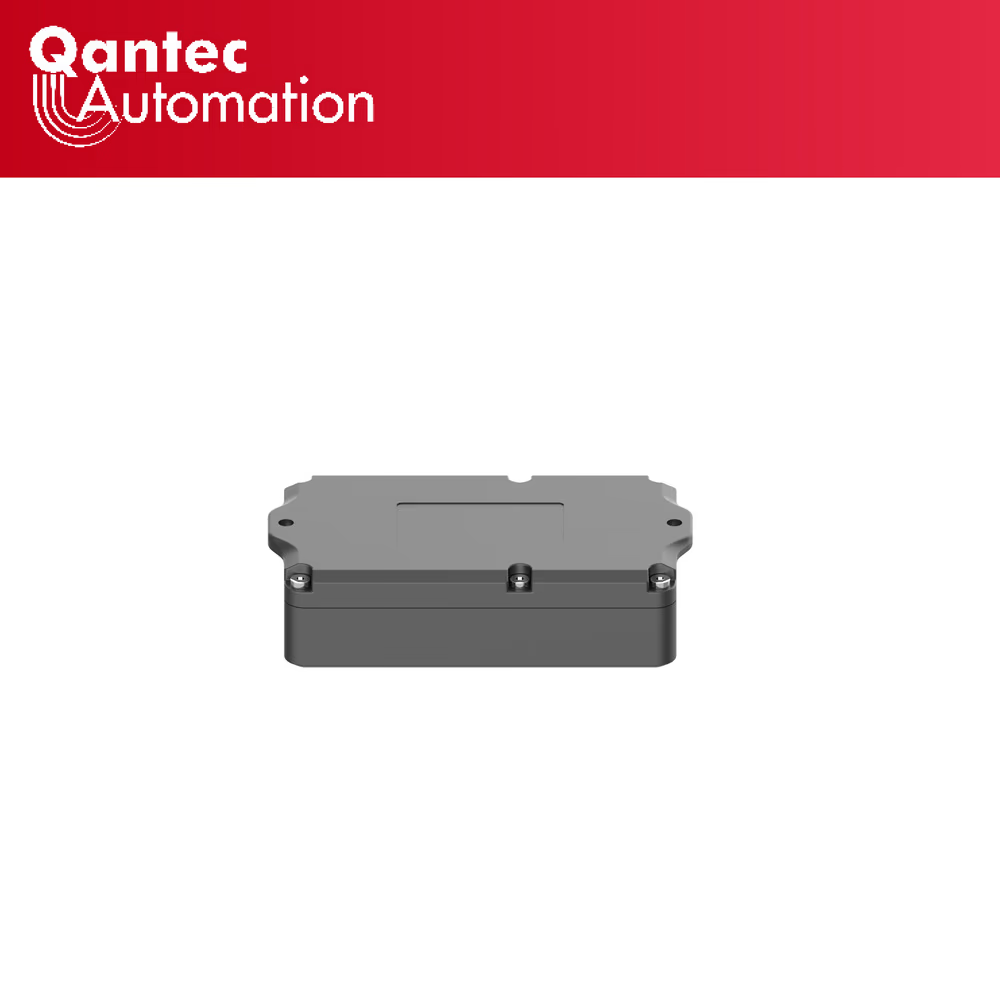
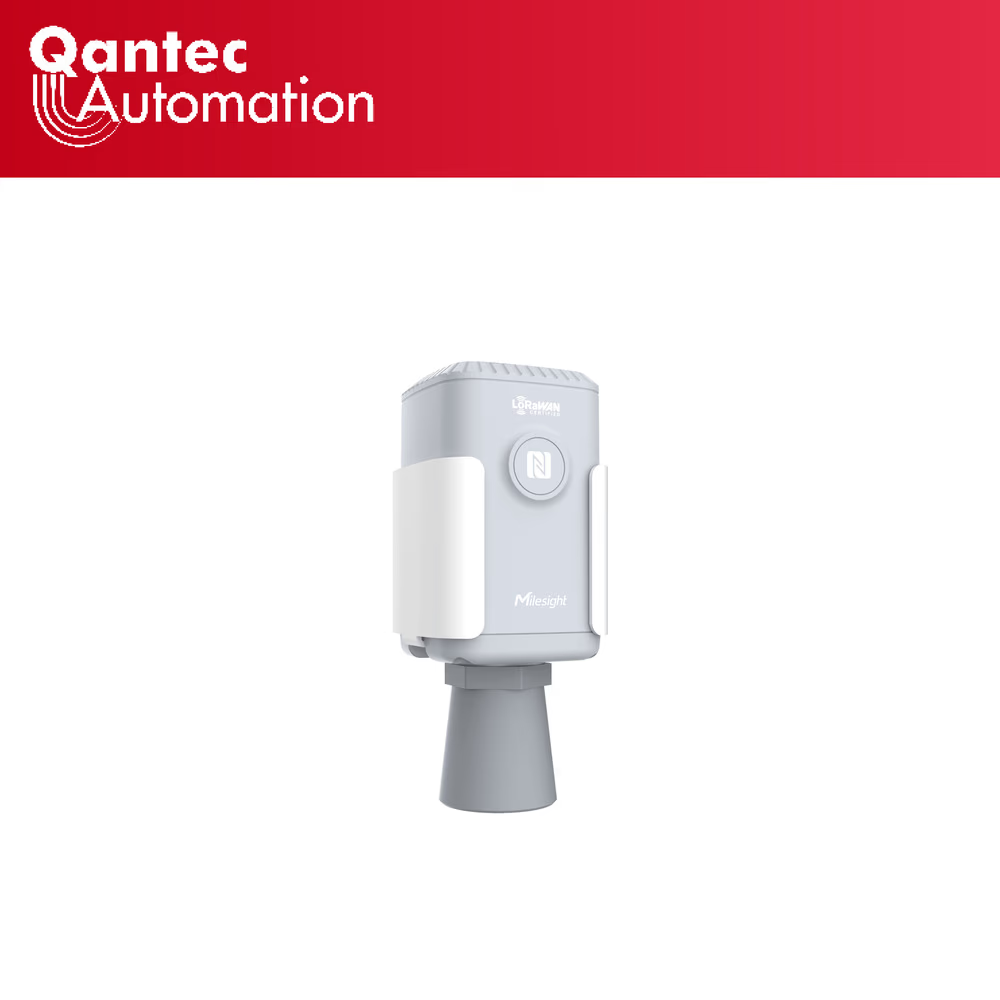
The EM400-UDL is a non-contact liquid level sensor with a measurement span up to 10 metres across Standard and Pro probe options. Because the transducer never touches the medium, this liquid level sensor resists fouling and contamination. An IP67 enclosure, built-in 3-axis accelerometer for tilt status, and an NTC thermistor for over-temperature alarms make this liquid level sensor suited to boiler expansion vessels, barn silos, and outdoor tanks. Both AU915 LoRaWAN and NB-IoT variants are stocked, so this smart water tank level sensor can backhaul through a gateway or directly over carrier cellular.
EM500-UDL Ultrasonic Level Sensor
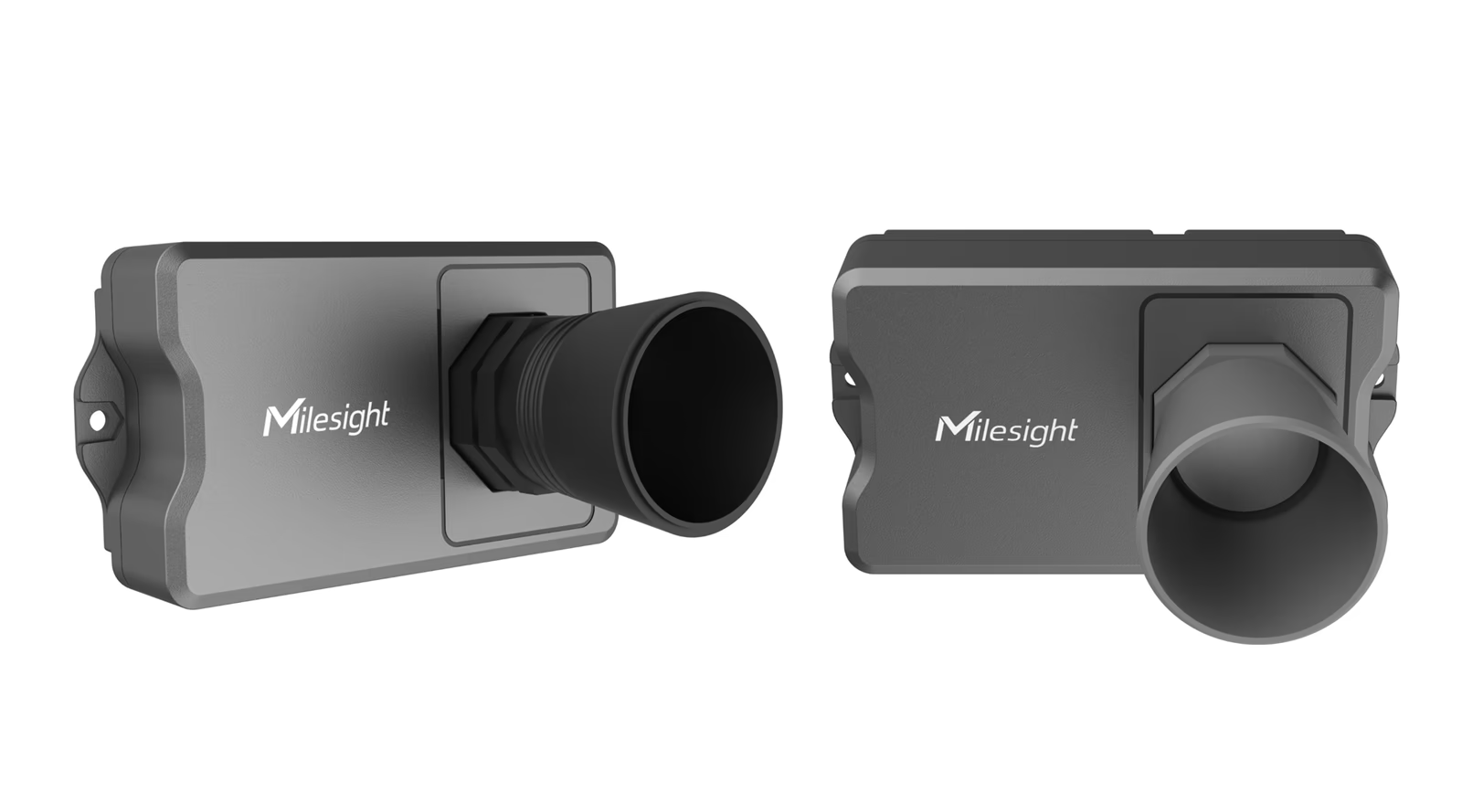
The EM500-UDL is an industrial liquid level sensor measuring 0.25 to 10 metres at up to ±1% accuracy. Non-contact emission and reflection let this liquid level sensor read corrosive liquids — petroleum, fertiliser, and process chemicals — without wetted-part degradation. This is the workhorse smart water tank level sensor for plant rooms and bulk storage, and our default liquid level sensor where a wetted probe would corrode. The same unit doubles as a smart water tank level sensor for rooftop and fire-reserve tanks.
EM410-RDL Radar Level Sensor
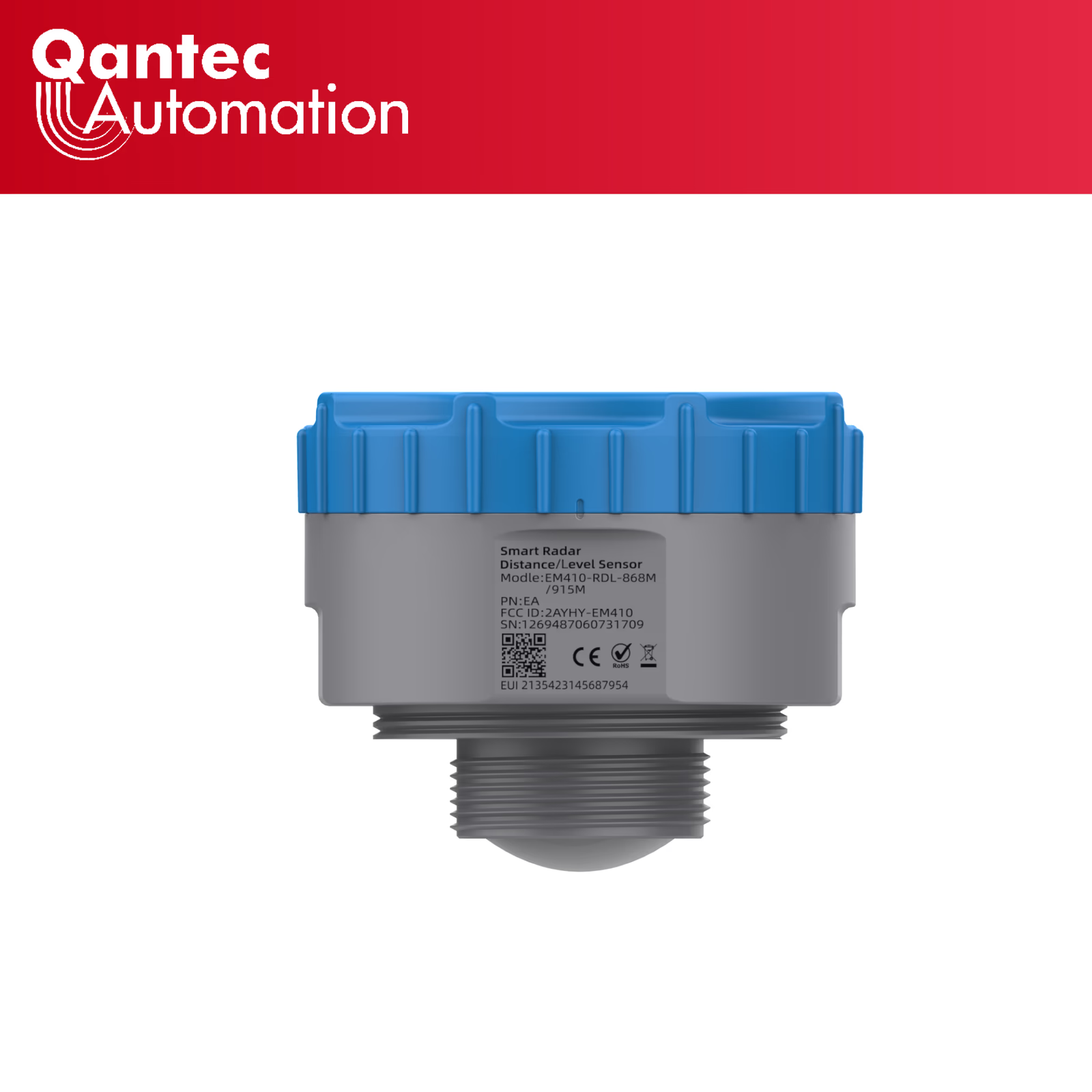
The EM410-RDL applies 60 GHz millimetre-wave radar with an 8° beam angle, reading 0.3 to 12 metres at up to ±2 mm and 1 mm resolution. Radar is unaffected by temperature, vapour, foam, dust, or condensate, which makes it the most reliable ultrasonic level sensor alternative for sewers, wet wells, reservoirs, and high-salt-mist environments such as seawater intakes. As a sealed liquid level sensor, its IP68 housing and AU915 LoRaWAN radio support maintenance-free operation; this liquid level sensor ignores the vapour and foam that defeat sound-based units.
EM500-SWL Submersible Level Sensor
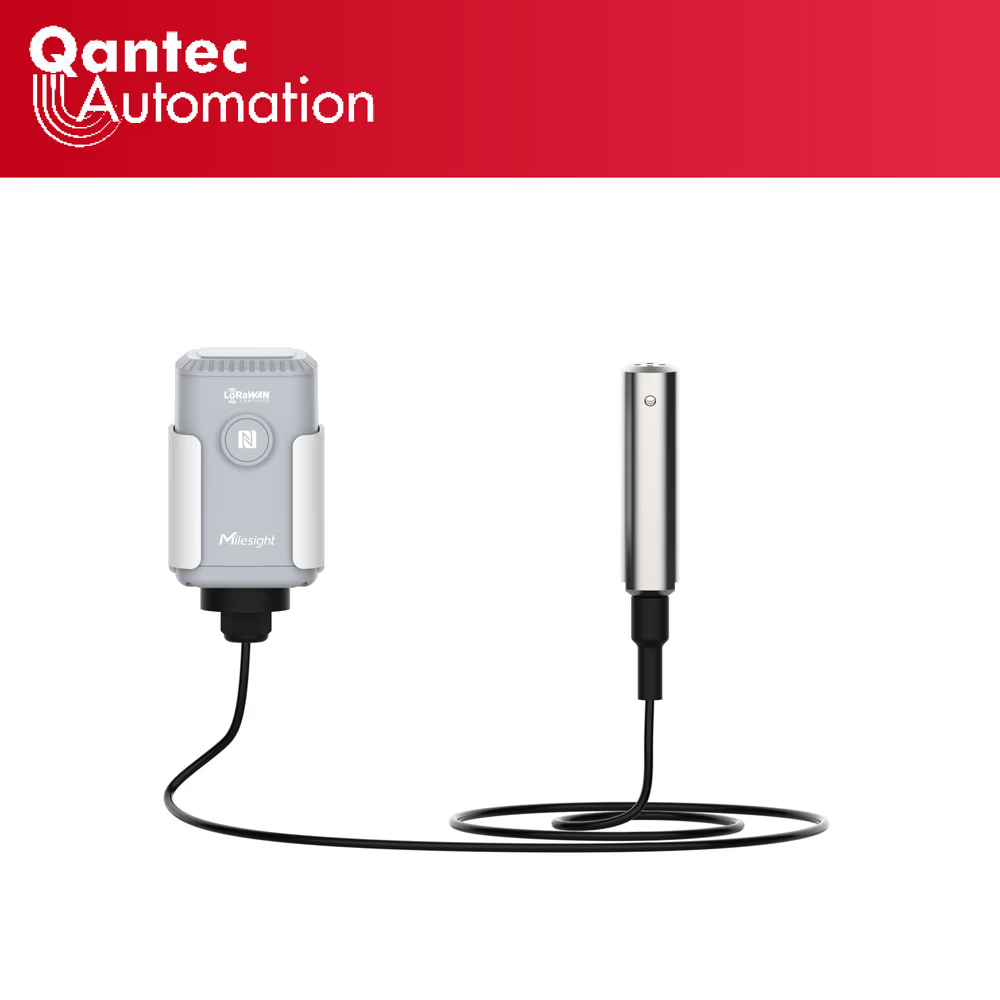
The EM500-SWL is a submersible water level probe sensor lowered directly into the liquid column. This water level detector sensor offers a customisable range to 200 metres for water, oil, and other non-corrosive media, with battery life rated up to 10 years on AU915 LoRaWAN. A transceiver-plus-probe topology separates the electronics from the wetted element, making this water level detector sensor the preferred liquid level sensor for deep bores, dams, and river-gauging stations. For raw-water assets a submersible water level detector sensor reads through surface foam, wind, and rain without drift.
EM400-MUD and EM400-TLD Sensors
The EM400-MUD is a multifunctional ultrasonic distance sensor with selectable application modes for waste-bin fill, parking occupancy (LoRaWAN only), and general level monitoring, accumulating up to 24 packets per uplink to conserve power. The EM400-TLD uses ToF laser ranging across a 2–350 cm detection range at ±2 cm accuracy and 1 mm resolution, with a 27° field of view and near-zero blind spot for compact containers, pairing a lid-status accelerometer with combustion-temperature alerting. Neither liquid level sensor requires a wetted probe.
EM500-PP and WS201 Sensors
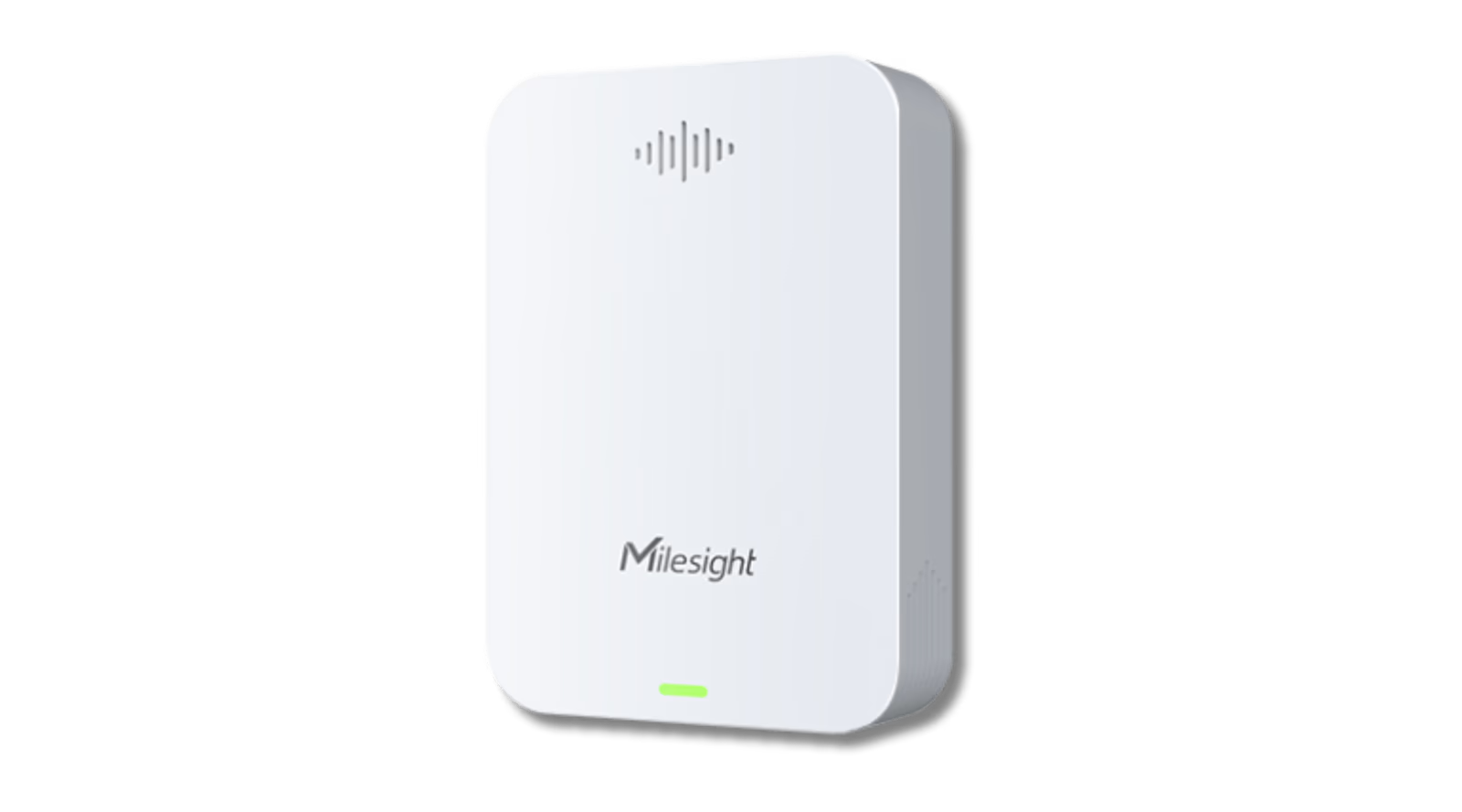
The EM500-PP is a pipe pressure sensor monitoring liquid and gas line pressure for abnormality detection, with wall, pole, and DIN-rail mounting. The WS201 is a ToF fill-level sensor reading 1 to 55 cm with a 1 cm blind zone, powered by a CR2450 coin cell for up to two years — engineered for restroom consumable dispensers across airports, hotels, and shopping centres.
You can pair any of these with a Milesight LoRaWAN gateway for on-premise backhaul, or trigger valve actuation through an IoT controller.
[Link to: LoRaWAN Gateway Sub-Category Page] for anchor “Milesight LoRaWAN gateway”. [Link to: IoT Controller Sub-Category Page] for anchor “IoT controller”. One mention each; keep sibling-category keyword density at 0%.
Milesight Air Quality Sensor and Vape Detector Range
An air quality sensor measures airborne contaminants — particulate matter, volatile organic compounds, and target gases — and reports concentration data for ventilation control or duty-of-care alerting. The GS601 air quality sensor outputs a vape index from 0 to 100 alongside PM1.0, PM2.5, and PM10, with 4 × 4 m coverage at a 2.4–3 m ceiling mounting height. Each Milesight air quality sensor reports over the same AU915 backhaul as the level range.
For whole-space air quality monitoring sensors, our indoor environmental range carries the multi-parameter AM-series air quality sensor family.
GS601 Vape Detector Sensor
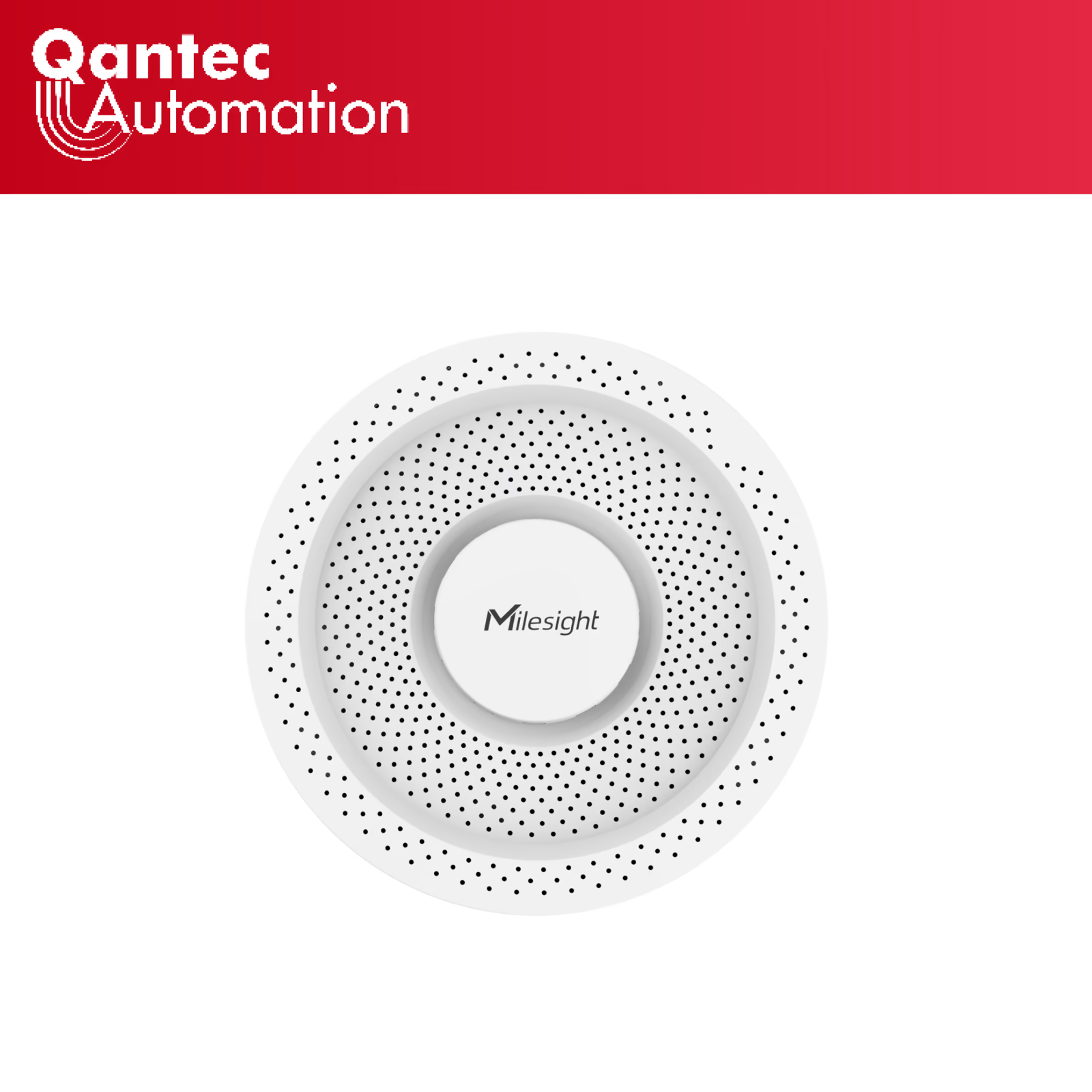
The GS601 is a multi-sensor vape and smoke air quality sensor that quantifies a dedicated vape index (0–100) alongside total volatile organic compounds, PM1.0, PM2.5, PM10, temperature, and humidity. The air quality sensor's anti-water-vapour discrimination separates genuine aerosol events from shower steam, reducing false alarms. Ceiling-mounted and camera-free, this air quality sensor is a compliant vape detector Australia schools and aged-care operators can deploy in restrooms, stairwells, and change rooms without capturing any personally identifiable footage. As an indoor air quality sensor, it backhauls data and alerts over AU915 LoRaWAN to the Milesight IoT Cloud or a third-party network server.
GS301 Bathroom Odour Detector
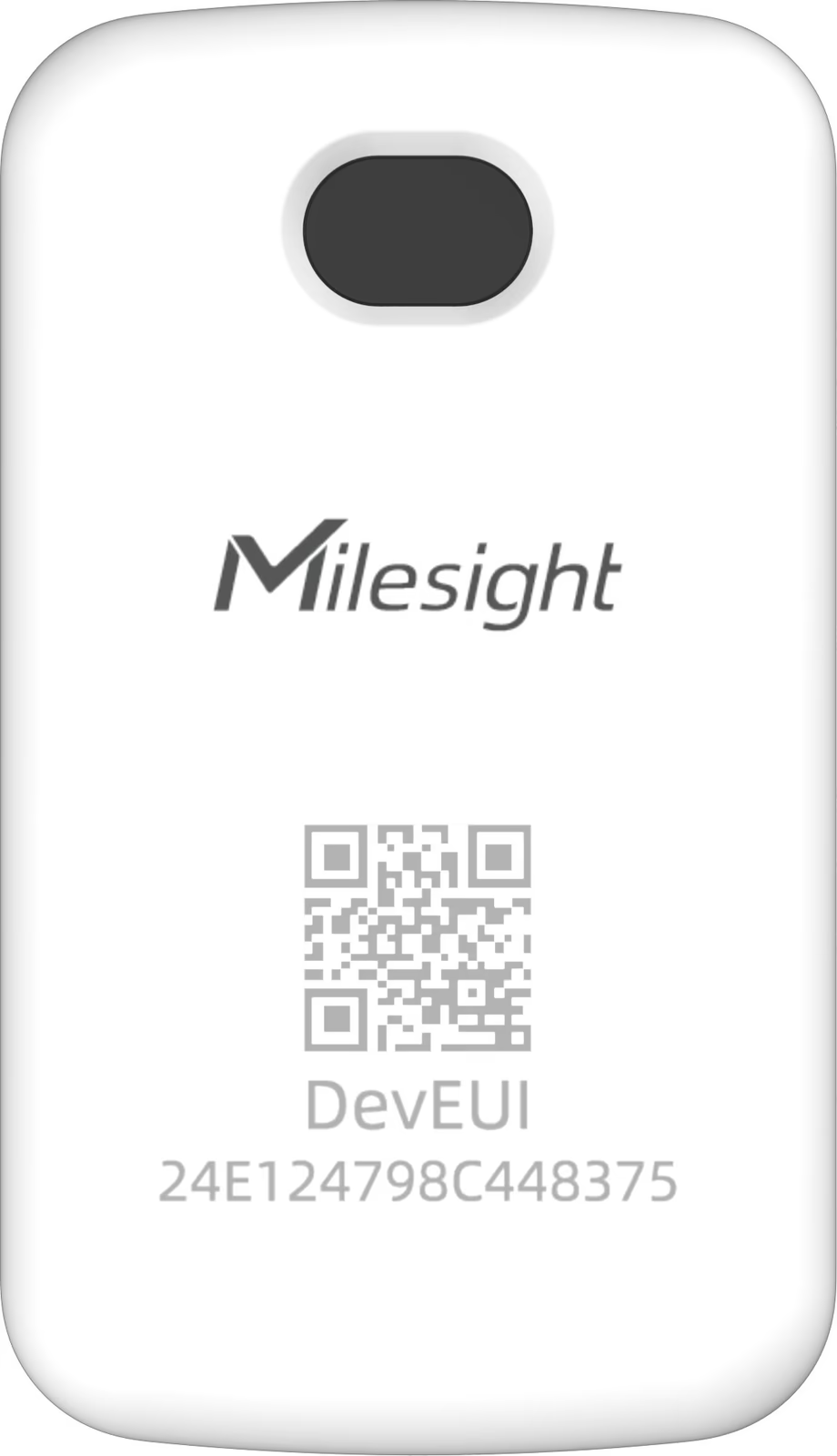
The GS301 air quality sensor is a 4-in-1 odour detector using solid-polymer electrochemical cells to measure ammonia (NH₃, 0–10 ppm) and hydrogen sulfide (H₂S, 0–5 ppm), plus temperature and humidity. On threshold breach the air quality room sensor fires a local LED-and-buzzer alarm and can drive ventilation directly through the Milesight D2D protocol — no gateway in the control loop. Sensor life exceeds three years, making this smart air quality sensor a low-maintenance air quality room sensor; specify the GS301 air quality sensor for high-traffic amenities.
Air Quality Sensor Compliance in Australia
An air quality sensor measures airborne hazards — aerosols, particulates, and target gases — and reports concentration data a building can act on. Under the Work Health and Safety Act 2011, a PCBU carries a duty to monitor and respond to those hazards, and vape and gas alerting provides an auditable control record. The National Construction Code (NCC) and AS 1668.2 govern mechanical ventilation rates, and the GS301 air quality sensor can trigger demand-based extraction on odour thresholds. For Green Star and NABERS (National Australian Built Environment Rating System) Indoor Environment assessments, an air quality room sensor stream and broader air quality monitoring sensors evidence amenity performance over time, and an indoor air quality sensor record satisfies the audit trail. Because the GS601 records no audio or imagery, this air quality sensor keeps vape detection clear of Privacy Act 1988 surveillance concerns — a decisive advantage over camera-based systems in schools. A single air quality sensor per amenity anchors the duty-of-care record.
Authoritative reference: nabers.gov.au · milesight.com (GS601 datasheet)
Why Specify Qantec for Milesight Sensors
• Verified AU915 stock. Every liquid level sensor and air quality sensor is confirmed as the 915 MHz Australian frequency variant before despatch — no grey-import band mismatches that silently fail to join your network server.
• Engineer-to-engineer support. Probe range selection for any liquid level sensor, radar beam geometry, and calibration of each air quality sensor are scoped with our integration team, not a call centre.
• Project trade pricing. Specified quantities across air quality monitoring sensors and level hardware are priced for tender, with documented lead times.
• Single backhaul ecosystem. Every liquid level sensor and air quality sensor is validated alongside its gateway and controller, reducing commissioning risk on mixed deployments.
EM-Series Network Security Layers
Securing a wireless liquid level sensor or air quality sensor deployment is a layered exercise. At the RF layer, LoRaWAN enforces AES-128 session encryption with unique join keys provisioned via NFC, and the EM500-SWL and EM410-RDL require password validation before any configuration write. At the network layer, on-premise gateways should sit on a segregated VLAN with northbound traffic tunnelled through a VPN to the BMS head-end, isolating field telemetry from corporate IT. Firmware integrity is maintained through signed over-the-air updates, and physical access controls on plant-room enclosures complete the cyber-physical perimeter.
Milesight Liquid Level and Air Quality Sensor FAQ
What is the difference between an ultrasonic and a radar liquid level sensor?
An ultrasonic level sensor measures the time-of-flight of a sound pulse, while a radar sensor measures a 60 GHz electromagnetic wave. Radar (EM410-RDL) is unaffected by vapour, foam, or temperature gradients, making it more accurate than ultrasonic in turbulent wet wells; the EM500-UDL liquid level sensor remains cost-effective for stable, clean tanks.
Do these sensors need a gateway to work?
LoRaWAN variants require a gateway and network server to backhaul data; NB-IoT variants such as the EM400-UDL NB-IoT connect directly over carrier cellular without a gateway. The GS301 can additionally drive a ventilation actuator peer-to-peer via Milesight D2D with no gateway in the control path.
How does a vape sensor avoid student privacy breaches?
The GS601 vape sensor contains no camera or microphone and captures only aerosol, particulate, and gas concentration values. It outputs a numerical vape index, not images or audio, keeping deployments clear of Privacy Act 1988 surveillance device obligations in schools.
What is the maximum depth for the submersible water level probe sensor?
The EM500-SWL submersible water level sensor supports a customisable measuring range up to 200 metres for water, oil, and other non-corrosive media. Its piezoresistive transducer is rated for continuous immersion, deriving level from hydrostatic pressure at the probe tip, so depth is reported directly from the liquid column rather than a reflected surface echo.
SECTION 8 — FOOTER CTA
Specify Milesight Liquid Level and Air Quality Sensors With Engineering Backing
Qantec stocks the full Milesight distance, level, and air quality sensor range as verified AU915 hardware, with probe selection and gateway pairing scoped by integrators rather than a sales desk. Lock your bill of materials with documented lead times and trade pricing before your next site mobilisation.
SECTION 9 — EXTENDED FAQ
Why does an ultrasonic level sensor give false readings on foamy or turbulent liquid?
Ultrasonic sensors mis-read foam and turbulence because the sound pulse scatters or is absorbed before it returns a clean echo. Aerated wastewater, surfactant foam, and agitated surfaces all break the reflection, producing erratic level data. For wet wells, aeration tanks, and dosing vessels, the EM410-RDL radar sensor is the correct specification — its 60 GHz beam passes through light foam and vapour largely unaffected.
Does ambient temperature affect ultrasonic level sensor accuracy?
Yes — the speed of sound varies with air temperature, so an uncompensated ultrasonic reading drifts as the tank headspace heats or cools. The EM400-UDL integrates an NTC thermistor that supports temperature awareness and combustion alerting, but large diurnal swings in outdoor tanks still warrant calibration. Where temperature stratification is severe, radar removes the variable entirely.
Can a radar level sensor measure through a sealed tank lid?
60 GHz radar can penetrate some non-conductive materials such as polyethylene and fibreglass, but lid thickness, material, and any condensation film attenuate the signal unpredictably. Bench-validate the EM410-RDL through your specific lid sample before committing to a closed-vessel installation; conductive (metal) lids block the beam entirely and require a flanged process connection.
When should I choose a submersible probe over a non-contact level sensor?
Choose the EM500-SWL submersible probe when the vessel is deep, narrow, or has obstructed line-of-sight that defeats a top-mounted beam. The probe sits in the liquid column and reports hydrostatic depth up to 200 metres, unaffected by surface foam or wind. Reserve non-contact ultrasonic or radar for clean, accessible tanks where a wetted sensor would invite corrosion or fouling.
Where should a vape detector be mounted to minimise false alarms?
Mount a vape detector on the ceiling at the centre of the enclosed space, away from shower heads, hand dryers, and cleaning-chemical stores. The GS601 uses anti-water-vapour discrimination to separate aerosol from steam, but poor placement near a direct steam source still raises false-positive risk. Tune the vape-index threshold per room — a humid change room needs a different profile to a dry stairwell.
How often do the GS301 electrochemical gas cells need replacing?
The GS301 ammonia and hydrogen sulfide cells carry a rated life exceeding three years under normal restroom conditions. Electrochemical cells drift gradually rather than fail outright, with long-term stability quoted below one percent accuracy drift per month, so plan a verification check at the three-year mark. Continuous exposure to high gas concentrations shortens cell life.
What determines the battery life of a LoRaWAN level or gas sensor?
Battery life is governed primarily by reporting interval, spreading factor, and ambient temperature, not just nominal capacity. A device reporting every ten minutes at a low spreading factor near a gateway lasts far longer than one reporting every minute at SF12 across a long link. The EM500-SWL is rated up to ten years precisely because submersible monitoring tolerates infrequent uplinks.
Which AU915 sub-band do these sensors use on an Australian network server?
These sensors operate on the AU915 plan and must be provisioned to the same channel sub-band (frequency sub-band) configured on your gateway and network server. A mismatch between the device sub-band and the gateway plan is the most common reason a correctly joined-looking sensor never delivers uplinks. Confirm the sub-band during commissioning via the Milesight ToolBox app over NFC.
Can level readings automatically actuate a pump or valve?
Yes — threshold breaches can trigger actuation either through network-server rules or peer-to-peer via Milesight D2D for sub-second response without cloud round-trips. Pairing a level sensor with a solenoid valve controller closes the loop for tank fill, overflow prevention, or pump-down sequences. Configure the trigger logic in your IoT controller rather than the sensor itself.
[DEVELOPER NOTE: Sourced from high-visibility PAA. Sufyan, embed this verified video URL: https://www.youtube.com/watch?v=fVsSLeAg6TQ and apply VideoObject Schema per technical standards. uploadDate set to 2024-11-05 — confirm on the live YouTube page before publishing.]
SECTION 10 — SCHEMA IMPLEMENTATION NOTES
// BLOCK 1: ItemList (Section 4 product range)
{
"@context": "https://schema.org",
"@type": "ItemList",
"name": "Liquid Level & Air Quality Sensors",
"itemListElement": [
{ "@type": "ListItem", "position": 1, "name": "Milesight EM400-UDL Ultrasonic Distance/Level Sensor (LoRaWAN)" },
{ "@type": "ListItem", "position": 2, "name": "Milesight EM400-UDL Ultrasonic Distance/Level Sensor (NB-IoT)" },
{ "@type": "ListItem", "position": 3, "name": "Milesight EM500-UDL Ultrasonic Distance/Level Sensor" },
{ "@type": "ListItem", "position": 4, "name": "Milesight EM400-MUD Multifunctional Ultrasonic Distance Sensor" },
{ "@type": "ListItem", "position": 5, "name": "Milesight EM410-RDL Radar Distance/Level Sensor" },
{ "@type": "ListItem", "position": 6, "name": "Milesight EM400-TLD ToF Laser Distance Sensor" },
{ "@type": "ListItem", "position": 7, "name": "Milesight EM500-SWL Submersible Water Level Sensor" },
{ "@type": "ListItem", "position": 8, "name": "Milesight EM500-PP Pipe Pressure Sensor" },
{ "@type": "ListItem", "position": 9, "name": "Milesight WS201 Smart Fill Level Monitoring Sensor" },
{ "@type": "ListItem", "position": 10, "name": "Milesight GS601 Vape Detector Sensor" },
{ "@type": "ListItem", "position": 11, "name": "Milesight GS301 Smart Bathroom Odour Detector" }
]
}
// BLOCK 2: FAQPage - PHASE 1 (Section 7). KEEP SEPARATE from Phase 2. Mirrors visible answers.
{
"@context": "https://schema.org",
"@type": "FAQPage",
"mainEntity": [
{ "@type": "Question", "name": "What is the difference between an ultrasonic and a radar liquid level sensor?",
"acceptedAnswer": { "@type": "Answer", "text": "An ultrasonic level sensor measures the time-of-flight of a sound pulse, while a radar sensor measures a 60 GHz electromagnetic wave. Radar (EM410-RDL) is unaffected by vapour, foam, or temperature gradients, making it more accurate than ultrasonic in turbulent wet wells; the EM500-UDL liquid level sensor remains cost-effective for stable, clean tanks." } },
{ "@type": "Question", "name": "Do these sensors need a gateway to work?",
"acceptedAnswer": { "@type": "Answer", "text": "LoRaWAN variants require a gateway and network server to backhaul data; NB-IoT variants such as the EM400-UDL NB-IoT connect directly over carrier cellular without a gateway. The GS301 can additionally drive a ventilation actuator peer-to-peer via Milesight D2D with no gateway in the control path." } },
{ "@type": "Question", "name": "How does a vape sensor avoid student privacy breaches?",
"acceptedAnswer": { "@type": "Answer", "text": "The GS601 vape sensor contains no camera or microphone and captures only aerosol, particulate, and gas concentration values. It outputs a numerical vape index, not images or audio, keeping deployments clear of Privacy Act 1988 surveillance device obligations in schools." } },
{ "@type": "Question", "name": "What is the maximum depth for the submersible water level probe sensor?",
"acceptedAnswer": { "@type": "Answer", "text": "The EM500-SWL submersible water level sensor supports a customisable measuring range up to 200 metres for water, oil, and other non-corrosive media. Its piezoresistive transducer is rated for continuous immersion, deriving level from hydrostatic pressure at the probe tip, so depth is reported directly from the liquid column rather than a reflected surface echo." } }
]
}
// BLOCK 3: FAQPage - PHASE 2 (Section 9). KEEP SEPARATE from Phase 1.
{
"@context": "https://schema.org",
"@type": "FAQPage",
"mainEntity": [
{ "@type": "Question", "name": "Why does an ultrasonic level sensor give false readings on foamy or turbulent liquid?", "acceptedAnswer": { "@type": "Answer", "text": "Ultrasonic sensors mis-read foam and turbulence because the sound pulse scatters or is absorbed before returning a clean echo. For wet wells and aeration tanks, the EM410-RDL 60 GHz radar sensor passes through light foam and vapour largely unaffected." } },
{ "@type": "Question", "name": "Does ambient temperature affect ultrasonic level sensor accuracy?", "acceptedAnswer": { "@type": "Answer", "text": "Yes. The speed of sound varies with air temperature, so an uncompensated ultrasonic reading drifts as the tank headspace heats or cools. The EM400-UDL integrates an NTC thermistor for temperature awareness; severe stratification favours radar." } },
{ "@type": "Question", "name": "Can a radar level sensor measure through a sealed tank lid?", "acceptedAnswer": { "@type": "Answer", "text": "60 GHz radar can penetrate some non-conductive materials such as polyethylene and fibreglass, but lid thickness and condensation attenuate the signal. Bench-validate the EM410-RDL through the specific lid; metal lids block the beam entirely." } },
{ "@type": "Question", "name": "When should I choose a submersible probe over a non-contact level sensor?", "acceptedAnswer": { "@type": "Answer", "text": "Choose the EM500-SWL submersible probe when the vessel is deep, narrow, or has obstructed line-of-sight. It reports hydrostatic depth up to 200 metres, unaffected by surface foam or wind. Reserve non-contact sensors for clean, accessible tanks." } },
{ "@type": "Question", "name": "Where should a vape detector be mounted to minimise false alarms?", "acceptedAnswer": { "@type": "Answer", "text": "Mount a vape detector on the ceiling at the centre of the enclosed space, away from shower heads, hand dryers, and cleaning-chemical stores. The GS601 uses anti-water-vapour discrimination; tune the vape-index threshold per room." } },
{ "@type": "Question", "name": "How often do the GS301 electrochemical gas cells need replacing?", "acceptedAnswer": { "@type": "Answer", "text": "The GS301 ammonia and hydrogen sulfide cells carry a rated life exceeding three years. Cells drift gradually, with long-term stability below one percent accuracy drift per month, so plan a verification check at the three-year mark." } },
{ "@type": "Question", "name": "What determines the battery life of a LoRaWAN level or gas sensor?", "acceptedAnswer": { "@type": "Answer", "text": "Battery life is governed primarily by reporting interval, spreading factor, and ambient temperature, not just nominal capacity. The EM500-SWL reaches up to ten years because submersible monitoring tolerates infrequent uplinks." } },
{ "@type": "Question", "name": "Which AU915 sub-band do these sensors use on an Australian network server?", "acceptedAnswer": { "@type": "Answer", "text": "These sensors operate on the AU915 plan and must be provisioned to the same channel sub-band configured on the gateway and network server. A sub-band mismatch is the most common reason a joined sensor never delivers uplinks." } },
{ "@type": "Question", "name": "Can level readings automatically actuate a pump or valve?", "acceptedAnswer": { "@type": "Answer", "text": "Yes. Threshold breaches can trigger actuation through network-server rules or peer-to-peer via Milesight D2D for sub-second response. Pairing a level sensor with a solenoid valve controller closes the loop for fill, overflow, or pump-down sequences." } }
]
}
// BLOCK 4: VideoObject - GS601 (Section 9). uploadDate verified 2024-11-05; Sufyan confirm on live YouTube page before publish.
{
"@context": "https://schema.org",
"@type": "VideoObject",
"name": "Milesight GS601 Vape Detector",
"description": "Overview of the Milesight GS601 LoRaWAN vape detector for indoor air quality and aerosol event detection.",
"thumbnailUrl": "https://i.ytimg.com/vi/fVsSLeAg6TQ/hqdefault.jpg",
"uploadDate": "2024-11-05",
"contentUrl": "https://www.youtube.com/watch?v=fVsSLeAg6TQ",
"embedUrl": "https://www.youtube.com/embed/fVsSLeAg6TQ"
}
// BLOCK 5: Person - page reviewer (E-E-A-T)
{
"@context": "https://schema.org",
"@type": "Person",
"name": "Dr. Abhishek Mitra",
"jobTitle": "Business Development Manager NSW",
"email": "a.mitra@qantecautomation.com",
"worksFor": { "@type": "Organization", "name": "Qantec Automation" }
}
// BLOCK 6: Organization - carrying ABN
{
"@context": "https://schema.org",
"@type": "Organization",
"name": "Qantec Automation",
"identifier": { "@type": "PropertyValue", "propertyID": "ABN", "value": "52 623 495 901" }
}