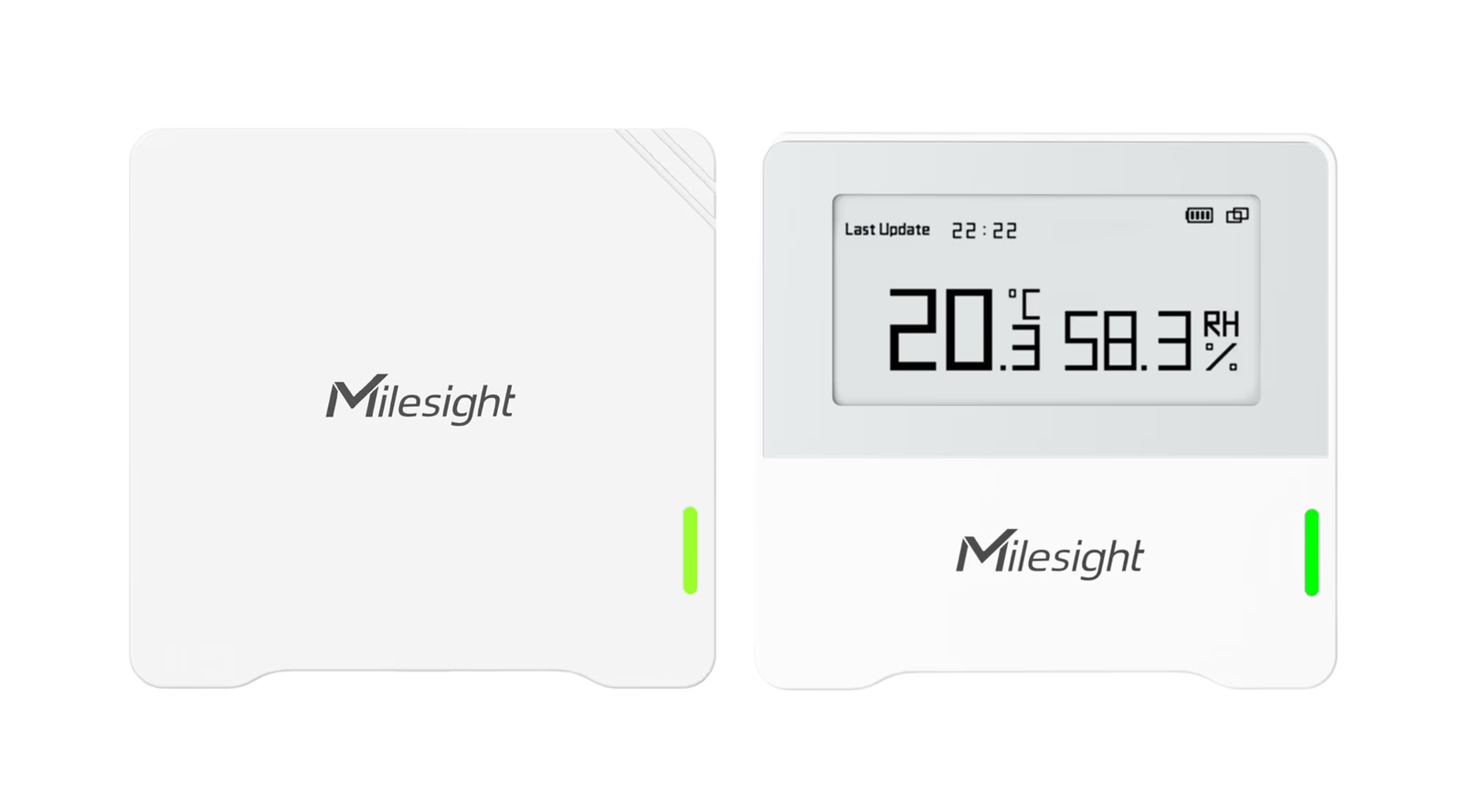
Milesight AM102 Indoor Ambience Sensor
Two-in-one LoRaWAN temperature and humidity sensor for small rooms and back-of-house spaces.
AUD $74.80 – AUD $89.10 inc. GST

Qantec Automation stocks the complete Milesight range of environmental sensors for Australian smart buildings — battery-powered LoRaWAN (Long Range Wide Area Network) nodes on the AU915 band. Local stock, trade pricing and engineers who speak BACnet/IP and Modbus, not a reseller reading from a script.
[Browse Environmental Sensors →] [Request Trade Pricing →]
Qantec Automation, a sister company of Oberix Group, distributes Milesight environmental sensors and the wider Building Automation ecosystem across Australia. This category gathers IoT environmental monitoring sensors for temperature, humidity, light, soil, carbon dioxide and multi-parameter indoor ambience on the AU915 band. Stock is held in-country for fast dispatch, backed by trade pricing and direct access to integration engineers for protocol bridging and commissioning.
Need environmental sensors in stock on the AU915 band this week? Qantec holds the Milesight range in-country, so there is no grey-import frequency mismatch and no multi-week freight wait. Send your bill of materials and we will confirm stock, staged delivery and project pricing.
[Request Trade Pricing & Stock →]
On this page: Overview · Temperature Monitoring · Compliance · Why Qantec · FAQ
Environmental sensors are field-level devices that convert physical conditions — temperature, humidity, light, gas concentration and soil moisture — into digital telemetry for a building platform. Every Milesight unit in this range transmits on the AU915 band using LoRaWAN, with transmission reaching up to 10 km (line-of-sight) and a receiver sensitivity of -137 dBm. This set of IoT environmental monitoring sensors sits alongside Qantec's wired families — BACnet room sensing in the smart room sensors range [Link to: Smart Room Sensors & Controls Sub-Category Page] and duct or immersion probes in the HVAC sensor range [Link to: HVAC Sensors Sub-Category Page] — within the broader IoT sensors and devices catalogue [Link to: IoT Sensors & Devices Main Category Page].
The AM300 series anchors indoor ambience monitoring sensor duty across this group of environmental sensors, sharing a LoRaWAN transceiver and, on the AM307, AM308 and AM319, a 4.2-inch E-ink screen. The AM319 is the flagship 9-in-1 model and carries the Works with WELL mark.
| Model | Channels (x-in-1) | Added sensors | Best-fit zone |
|---|---|---|---|
| AM102 | 2-in-1 | Temperature, humidity | Small rooms, back-of-house |
| AM103 | 3-in-1 | Adds carbon dioxide | Meeting rooms, classrooms |
| AM307 | 7-in-1 | Adds light, PIR motion, TVOC, barometric pressure | Open-plan offices |
| AM308 | 8-in-1 | Adds PM2.5 and PM10 particulate | Higher-spec workplaces |
| AM319 | 9-in-1 | Adds HCHO and O₃ detection | WELL-aligned spaces, hospitals |
All AM300 models measure temperature to ±0.2°C between 0°C and 60°C, widening to ±0.3°C below zero, with humidity accurate to ±2% RH across 0–100% RH. Carbon dioxide is read by NDIR from 400 to 5000 ppm on these environmental sensors, and each unit stores up to 18,000 records locally with retransmission, configured by NFC tap or USB-C. Power is four ER14505 Li-SOCl₂ cells: the AM307 runs around 3.9 years at SF7 on a 10-minute interval, while the particulate-equipped AM308 runs about 1.3 years on the same basis. The AM300 series is an indoor device, rated IP30.
Among Qantec's environmental sensors, the EM500-LGT covers the light axis. It is a LoRaWAN light sensor built around a photodiode element, measuring 0 to 100,000 lux at ±3% accuracy with 1 lux resolution and a one-second response. As an ambient light sensor for daylight harvesting and façade control, it ships in an IP67 enclosure rated from -30°C to 70°C. A 19,000 mAh replaceable Li-SOCl₂ battery supports up to ten years of service (at standard reporting intervals), and wall, pole or DIN-rail mounting suits plant rooms or outdoor masts.
The EM500-SMTC extends these environmental sensors into the ground, reporting soil moisture, soil temperature and electrical conductivity from one buried probe. As a soil humidity sensor for irrigation and landscape monitoring, it pairs an IP67 transceiver with an IP68 corrosion-resistant probe for aggressive soils. The node interfaces with a solenoid valve controller [Link to: IOT Controller Sub-Category Page] to close the loop on automated irrigation. Range reaches up to 2 km (urban) and up to 15 km (line-of-sight, open rural).
The WTS506 is a solar-powered IoT weather station that consolidates temperature, humidity, barometric pressure, wind speed, wind direction and rainfall into one LoRaWAN payload. This IoT weather station complements the indoor environmental sensors with outdoor data, reporting directly to the network server. For rooftop plant, NABERS-rated assets and campus microclimate studies, a single IoT weather station mast replaces several discrete instruments.
The EM500-CO2 is a four-in-one outdoor-grade node measuring carbon dioxide via NDIR alongside temperature, humidity and barometric pressure. It targets greenhouses, car parks and ventilation plenums where carbon dioxide build-up drives mechanical response. Like the rest of these environmental sensors, it self-validates each reading and discards anomalies before transmission.
The DS3604 is a reflective electrophoretic (E-ink) display node that renders telemetry pushed across the LoRaWAN network. It surfaces live readings from the environmental sensors on this page at the point of use — a meeting room, cold store or reception desk — without a wired display feed. Battery operation and a sunlight-readable panel make it a low-maintenance signage layer.
An IoT temperature monitoring system is the coordinated stack of wireless temperature sensors, a gateway and a network server that aggregates readings into one dashboard. Built on these probes, an IoT temperature monitoring system gives facilities a single source of truth for cold-chain and plant temperature. Across this range, every probe reports on AU915 and integrates upstream through a LoRaWAN gateway [Link to: LoRaWAN Gateway Sub-Category Page] before reaching your building platform. A well-planned IoT temperature monitoring system places the EM300-TH LoRaWAN temperature and humidity sensor and the EM320-TH industrial temperature and humidity sensor by zone, so coverage scales from a single cold store to a multi-site estate.
The EM300-TH is the workhorse LoRaWAN temperature and humidity sensor in this range and the anchor of a building's IoT temperature monitoring system.
| Model | Grade | Storage / retransmission | Notable feature |
|---|---|---|---|
| EM300-TH | LoRaWAN temperature and humidity sensor | Live reporting, no on-board log | Sensirion element, IP67, up to 10 km (line-of-sight) |
| EM320-TH | Industrial temperature and humidity sensor, food-grade | On-board storage and retransmission | Cold-chain traceability |
| EM320TH+SS11 | Industrial temperature and humidity sensor with shield | On-board storage and retransmission | SS11 solar-radiation shield for accurate outdoor air |
All three report on AU915 with a replaceable Li-SOCl₂ cell — 4,000 mAh standard, 8,000 mAh optional on the EM300-TH — supporting up to ten years of operation (at standard reporting intervals).
Among the industrial environmental sensors here, the EM500-PT100 accepts a platinum PT100 probe across a -200°C to +800°C span. As a high-range ambient temperature sensor for plant, flues and process lines, it mounts to wall, pole or DIN rail. A high-capacity replaceable battery again targets up to ten years between service visits (at standard reporting intervals).
The TS101 is an all-in-one insertion temperature sensor with an integrated transmitter and a DS18B20 element rated to ±0.5°C at 0.1°C resolution. A food-grade ABS+PC body and 316 stainless steel probe sit behind IP67 ingress and IK10 impact protection for grain, hay and tobacco cores. The TS201 is a compact, cost-efficient temperature node with detachable probes and the same IP67 sealing, suited to pharmacy and retail cabinets.
The TS301 and TS302 are LCD-equipped LoRaWAN temperature loggers wired to high-accuracy PT100 RTD probes. Both seal to IP65, operate from -30°C to 70°C, and store up to 10,000 records with PDF export for HACCP, EN12830 and 21 CFR Part 11B evidence. Milesight D2D and FUOTA support direct device triggering over LoRa and signed over-the-air firmware updates.
| Model | Channels | Key spec |
|---|---|---|
| TS301 | Single-channel | One PT100 RTD probe, LCD, IP65 enclosure |
| TS302 | Dual-channel | Two PT100 RTD probes, LCD, IP65 enclosure |
Environmental sensors are the metering layer that turns indoor conditions — temperature, humidity, light and carbon dioxide — into the auditable data trail Australian rating tools and statutory duties require. Continuous telemetry from these devices feeds the indoor environment metrics behind a NABERS (National Australian Built Environment Rating System) Indoor Environment rating. Carbon dioxide trends from the AM319 also support demand-controlled ventilation under AS 1668.2, the mechanical-ventilation standard called up by the National Construction Code (NCC), trimming fan energy without breaching fresh-air rates. For new builds, particulate and TVOC data underpins indoor environment quality credits within Green Star Buildings v1.1 and Green Star Fitouts.
Two statutory frameworks sit alongside the rating tools. The Work Health and Safety Act 2011 places a duty on PCBUs to manage thermal comfort and air quality, and cold-chain logs from an industrial temperature and humidity sensor support HACCP records that evidence that duty. Because the AM307 and AM319 include passive infrared motion detection, any occupancy-linked data from these IoT environmental monitoring sensors should be handled under the Privacy Act 1988 with sensible data minimisation. Where dedicated presence detection is the primary requirement, specify the occupancy and presence range [Link to: Occupancy & Presence Sensors Sub-Category Page] instead.
Specifying environmental sensors through an authorised Australian distributor means each device lands pre-configured for the AU915 regional plan, with firmware and payload decoders matched to your network server. Milesight nodes transmit at up to 22 dBm on 915 MHz within the ACMA Low Interference Potential Devices class licence, so a compliant fleet of these environmental sensors needs no separate apparatus licence.
Qantec's engineers commission these environmental sensors on Australian sites — setting AU915 sub-bands, validating payload decoders, and bridging to BACnet/IP head-ends — so specifiers inherit a tested fleet of IoT environmental monitoring sensors, not a box of parts.
Whole-of-system supply. Qantec pairs these environmental sensors with complementary Milesight ranges — people counting [Link to: People Counting Sensors Sub-Category Page], liquid level and air quality [Link to: Liquid Level & Air Quality Sensors Sub-Category Page], power and energy monitoring [Link to: Power & Energy Sub-Category Page] and sound and noise monitoring] [Link to: Sound & Noise Monitoring Sub-Category Page] — plus gateways, controllers and software.
Wireless environmental sensors widen the attack surface, so Qantec treats the LoRaWAN layer as production infrastructure. Field payloads are protected by AES-128 session keys (NwkSKey and AppSKey), keeping telemetry confidential from gateway to network server. Backhaul should ride a segmented VLAN, with the gateway reaching the server through a VPN tunnel rather than an open internet port. Access controls matter at the edge too: NFC configuration locks and ToolBox passwords stop tampering on units like the AM319, while FUOTA delivers signed firmware so integrity is verified before any update is applied.
What wireless band do these environmental sensors use in Australia?
Every Milesight unit in this range operates on the AU915 LoRaWAN band, the authorised sub-GHz plan for Australia. AU915 delivers long range and strong wall penetration, with receiver sensitivity down to -137 dBm. Match the gateway region to AU915 to avoid a frequency mismatch.
How long do the batteries last on a LoRaWAN temperature and humidity sensor?
An EM300-TH on a 4,000 mAh Li-SOCl₂ cell can run up to ten years (at standard reporting intervals), and the EM320-TH industrial temperature and humidity sensor lasts similarly with the 8,000 mAh option. Battery life of this LoRaWAN temperature and humidity sensor scales with reporting interval and spreading factor, so report less often to last longer.
What temperature range can the EM500-PT100 measure?
The EM500-PT100 accepts a platinum PT100 probe rated from -200°C to +800°C, covering cryogenic lines through to high-temperature plant. For ambient room and cabinet duty, the EM300-TH or TS201 is the more economical choice.
Do these environmental sensors integrate with a BACnet or Modbus building management system?
Yes. They report over LoRaWAN to a gateway, which exposes the data to BACnet/IP, Modbus TCP or MQTT for the head-end. That protocol bridging keeps wireless field telemetry inside your existing building platform with no separate silo.
(Phase 2 — Footer CTA)
Qantec Automation holds the Milesight range of environmental sensors in Australia, with verified firmware, documented payload decoders and trade pricing for tendered projects. These IoT environmental monitoring sensors ship pre-set to AU915, and an integration engineer will confirm stock, sub-band configuration and lead time before you commit.
[Request Trade Pricing →] [Check Local Stock →] [Talk to an Integration Engineer →]
How many environmental sensors can one gateway support on AU915?
One AU915 gateway typically supports a few hundred to several thousand environmental sensors, because capacity is bounded by radio airtime and packet collisions rather than a fixed connection count. LoRaWAN uses an ALOHA access method, so each device transmits whenever it has data. The spreading factor sets time-on-air — SF7 clears a packet in milliseconds, while SF12 can hold the channel for over a second. Infrequent reporters at low spreading factors scale into the thousands; chatty, long-range nodes at SF12 saturate a single eight-channel sub-band far sooner. Size the network by reporting interval, payload length and spreading factor, then add capacity for coverage rather than overloading one unit.
Why must a sensor's sub-band match the gateway on AU915?
A sensor must use the same eight-channel sub-band as the gateway, because a standard AU915 gateway listens to only one of the eight sub-bands inside the 72 uplink channels, and traffic on any other sub-band is never heard. AU915 defines 64 uplink channels at 125 kHz plus eight at 500 kHz, grouped into eight sub-bands. On an over-the-air-activation join, a Milesight device scans the channels, then locks to the sub-band the network server advertises in the join accept. If a device is hard-set to the wrong group — channels 0–7 when the server uses 8–15, for example — joins stall and uplinks disappear. Align both ends before commissioning.
How do I extend range through concrete and metal in a plant room?
Raise the spreading factor so the link gains sensitivity and reach, then reposition the antenna clear of metal — that combination recovers most range lost to concrete and steel attenuation. A higher spreading factor pushes receiver sensitivity toward -137 dBm, at the cost of longer airtime and higher battery draw. Keep the internal antenna away from earthed surfaces and steel cabinets, and never bury a node inside a metal enclosure. Walk the path with an RF site-survey tool before fixing devices, and add coverage rather than forcing every node to SF12. Survey first, mount second.
What transmit power is allowed for these sensors in Australia?
Australian rules permit up to 30 dBm — one watt — EIRP in the 915–928 MHz band under the Low Interference Potential Devices class licence, and Milesight sensors transmit well within that at around 22 dBm at 915 MHz. The Australian Communications and Media Authority sets the spectrum conditions for sub-GHz LoRaWAN operation in this band. Because the EM300-TH, EM500 and AM300 families ship at compliant power, a standard sensor fleet needs no separate apparatus licence. Gateway antenna gain still counts toward EIRP, so check the combined figure when fitting a high-gain outdoor antenna.
How should I calibrate the carbon dioxide reading on an AM-series sensor?
Enable Auto Background Calibration, which records the offset between 400 ppm and the lowest measured carbon dioxide level across roughly 180 hours and applies it automatically — ideal for spaces that ventilate back toward outdoor levels at least once a week. For sealed or continuously occupied rooms, run a manual calibration instead by placing the device in open outdoor air for over ten minutes. Recalibrate about once a year in well-ventilated areas, or every three to six months where ventilation is poor. The carbon dioxide sampling interval is two minutes on the AM307 and AM308, and one minute on the AM319, and it cannot be changed.
[DEVELOPER NOTE: Sourced from high-visibility PAA. Sufyan, embed this verified video URL: https://www.youtube.com/watch?v=5FAOx4rxADg and apply VideoObject Schema per technical standards]
Where should an AM307 or AM319 sensor be mounted for accurate readings?
Mount the sensor at breathing height — at least 1.5 metres above the floor — upright, with the air inlet unobstructed, so it samples the air occupants actually breathe. Keep it away from doors, openable windows and supply diffusers, where draughts distort carbon dioxide and temperature readings. Avoid direct sunlight and nearby heat sources such as luminaires or equipment, which bias the temperature element. Never fit the unit upside down, as that blocks the inlet path. Placement discipline does more for data quality than frequent recalibration.
Can these sensors trigger an action without a network-server round-trip?
Yes — Milesight D2D (device-to-device) lets a sensor command a compatible controller directly over LoRa, with no network-server hop, so local control reacts in near real time. A carbon dioxide threshold on an AM319 can switch a controller-driven damper or fan the instant the limit is crossed, independent of backhaul availability. D2D runs alongside normal LoRaWAN uplinks, so the network server still logs the data for trending. Use it where latency or link resilience outweighs the need for centralised logic.
Which network servers work with Milesight environmental sensors?
These sensors are standard LoRaWAN devices, so they run on any compliant network server — including The Things Stack, ChirpStack and Actility — as well as the embedded network server built into Milesight gateways. Each model ships with a documented payload decoder that maps the raw uplink into named fields on the platform. Milesight's own development platform adds RESTful APIs and webhooks for onward integration. Because the stack stays open, an environmental monitoring deployment is never locked to a single vendor's cloud.
Do I need IP67, or is IP65 enough for outdoor installations?
Specify IP67 for any outdoor, damp or wash-down location, since IP67 withstands temporary immersion, whereas IP65 only resists low-pressure water jets and suits protected indoor mounting.
| Rating | Protection | Suitable location |
|---|---|---|
| IP67 | Dust-tight; withstands temporary immersion to 1 m | Outdoor, damp, wash-down (EM300-TH, EM500-LGT, EM500-PT100, TS101) |
| IP67 + IK10 | As IP67, plus impact resistance | Exposed sites with knock risk (TS101) |
| IP65 | Dust-tight; resists low-pressure water jets | Protected indoor, cool rooms, cabinets (TS301, TS302) |
Showing 12 of 18 Products
Two-in-one LoRaWAN temperature and humidity sensor for small rooms and back-of-house spaces.
AUD $74.80 – AUD $89.10 inc. GST
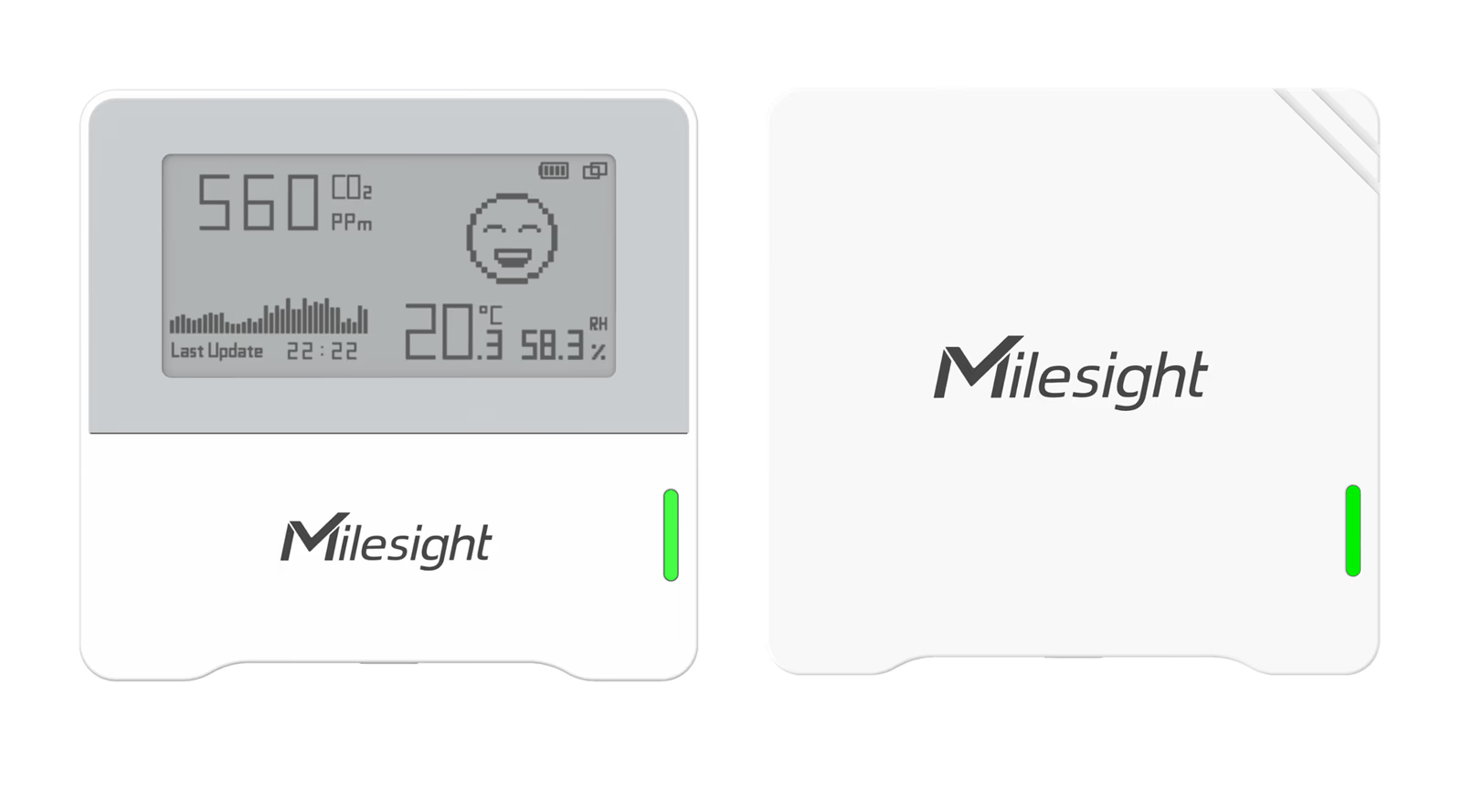
Three-in-one LoRaWAN sensor adding carbon dioxide, for meeting rooms and classrooms.
AUD $236.50 – AUD $266.20 inc. GST
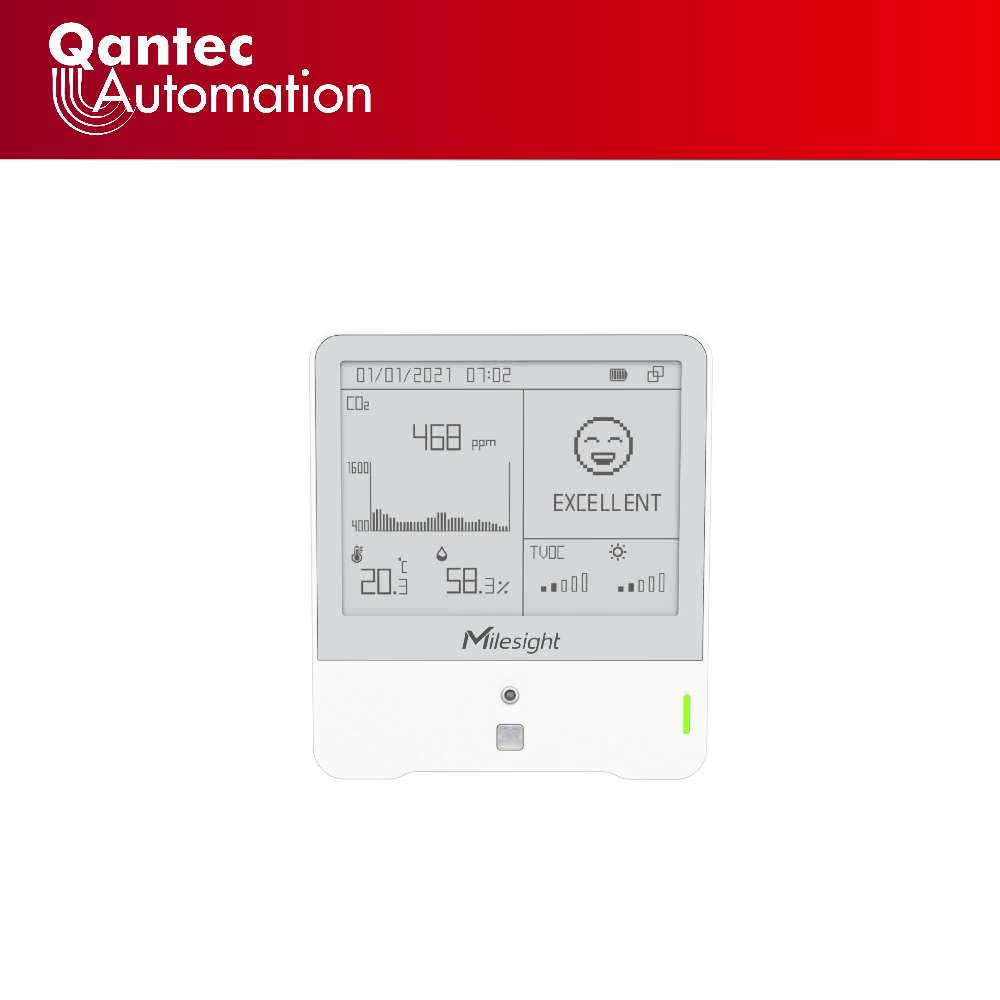
Seven-in-one with a 4.2-inch E-ink screen, adding light, PIR motion, TVOC and barometric pressure.
AUD $370.70 – AUD $404.80 inc. GST
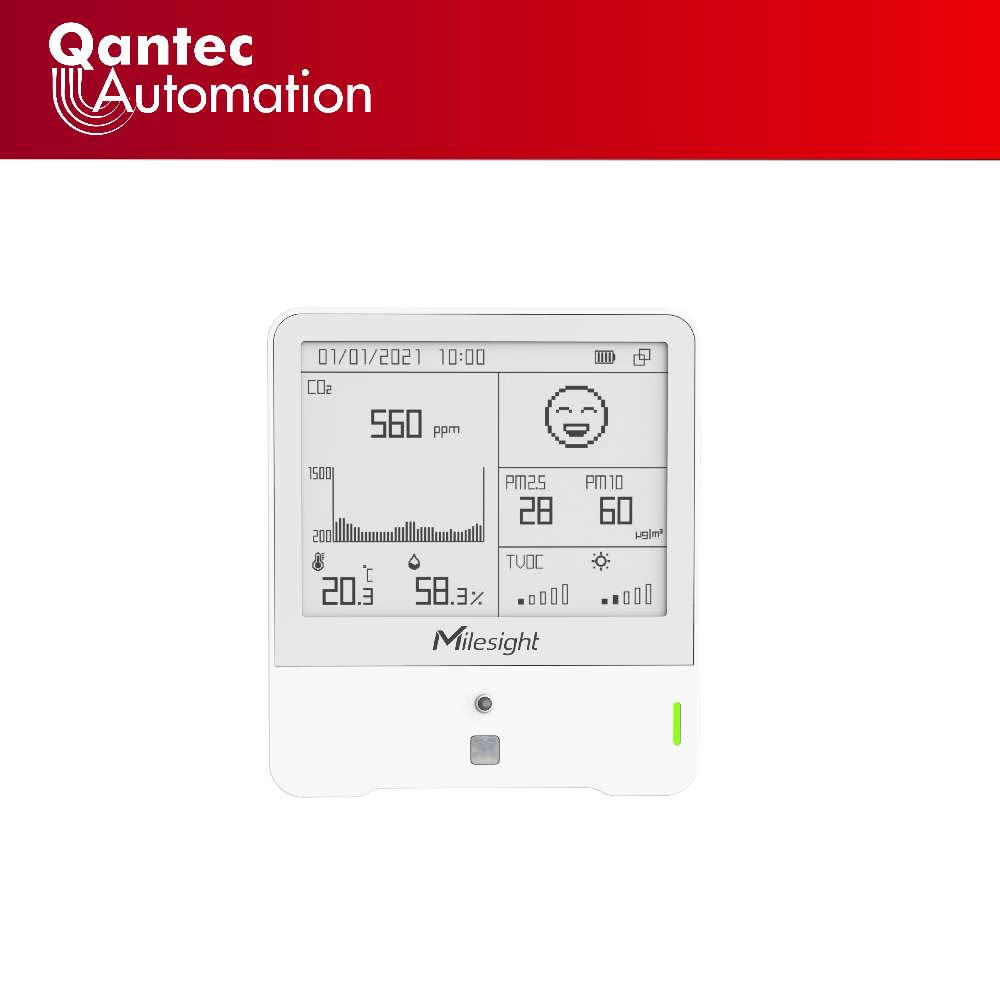
Eight-in-one with a 4.2-inch E-ink screen, adding PM2.5 and PM10 particulate to the AM307 set.
AUD $415.80 – AUD $553.30 inc. GST
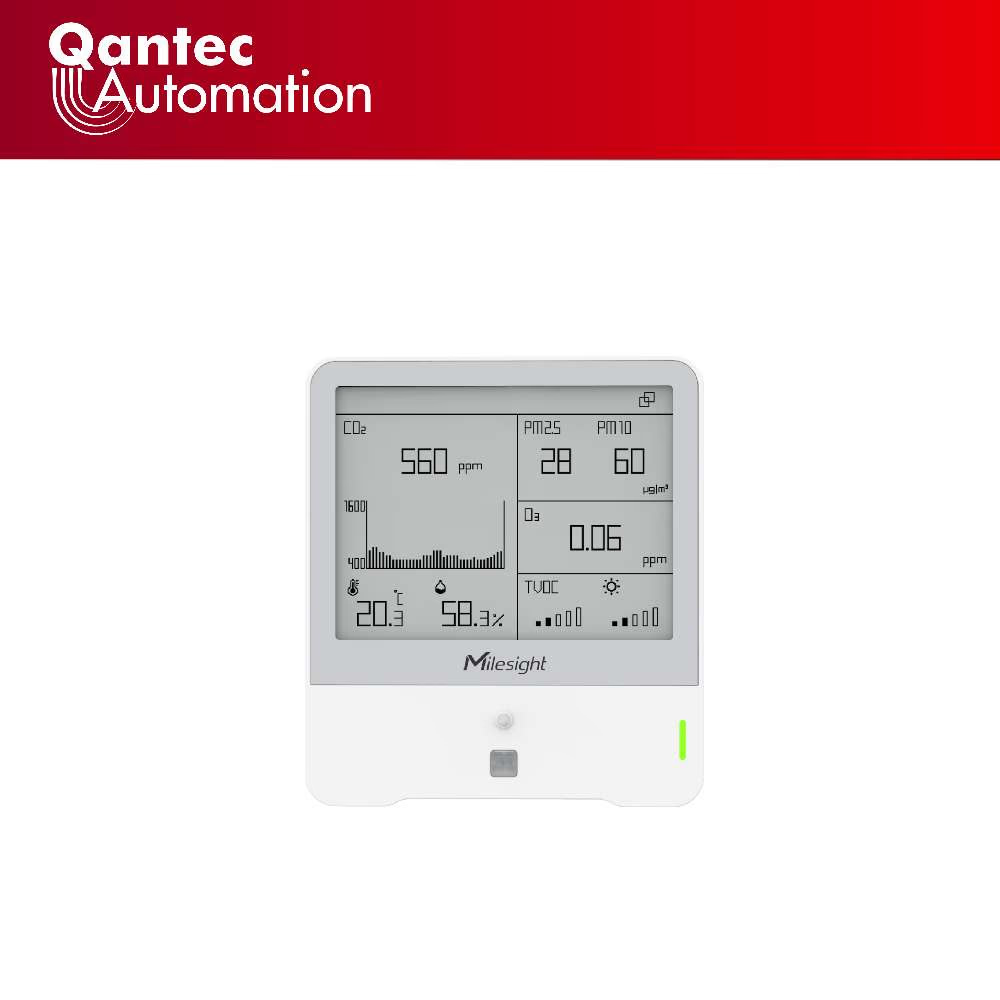
The AM300 series anchors indoor ambience monitoring sensor duty across this group of environmental sensors, sharing a…
AUD $464.20 – AUD $474.10 inc. GST
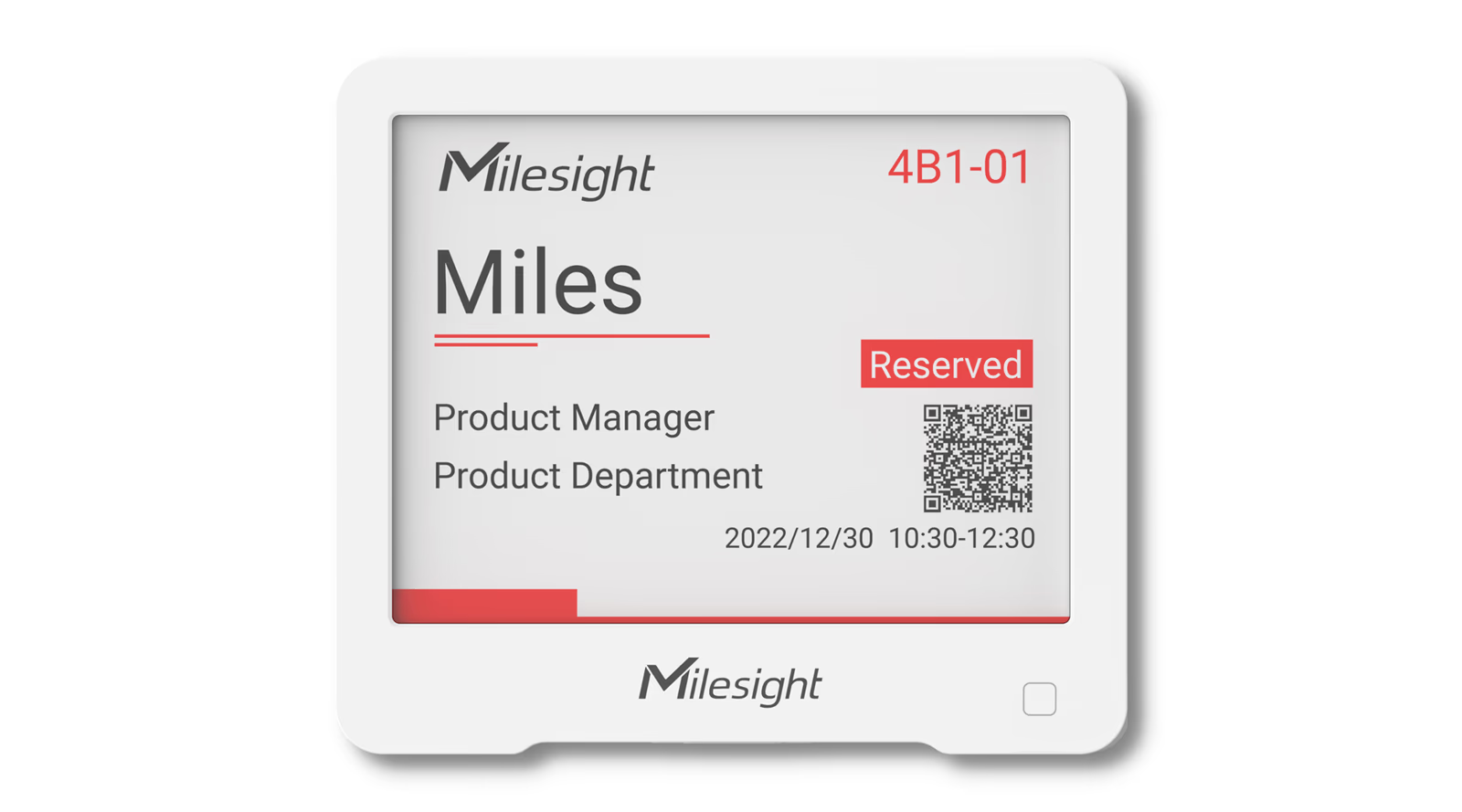
Discover the Exceptional Versatility and Efficiency of the Milesight DS3604 IoT E-Ink Display The Milesight DS3604…
AUD $214.50 inc. GST
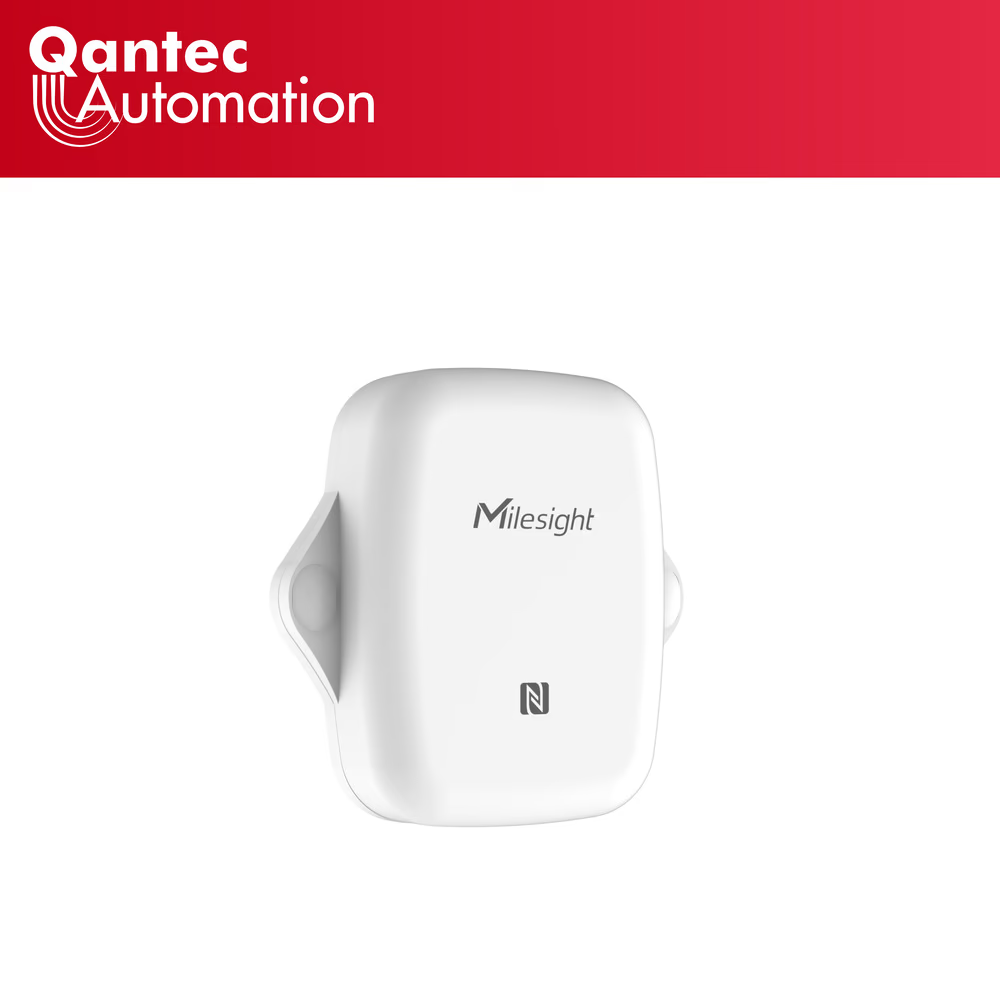
Precision, Power, and Performance: The Ideal Solution for Environmental Monitoring The EM300-TH is an advanced, compact…
AUD $74.80 inc. GST
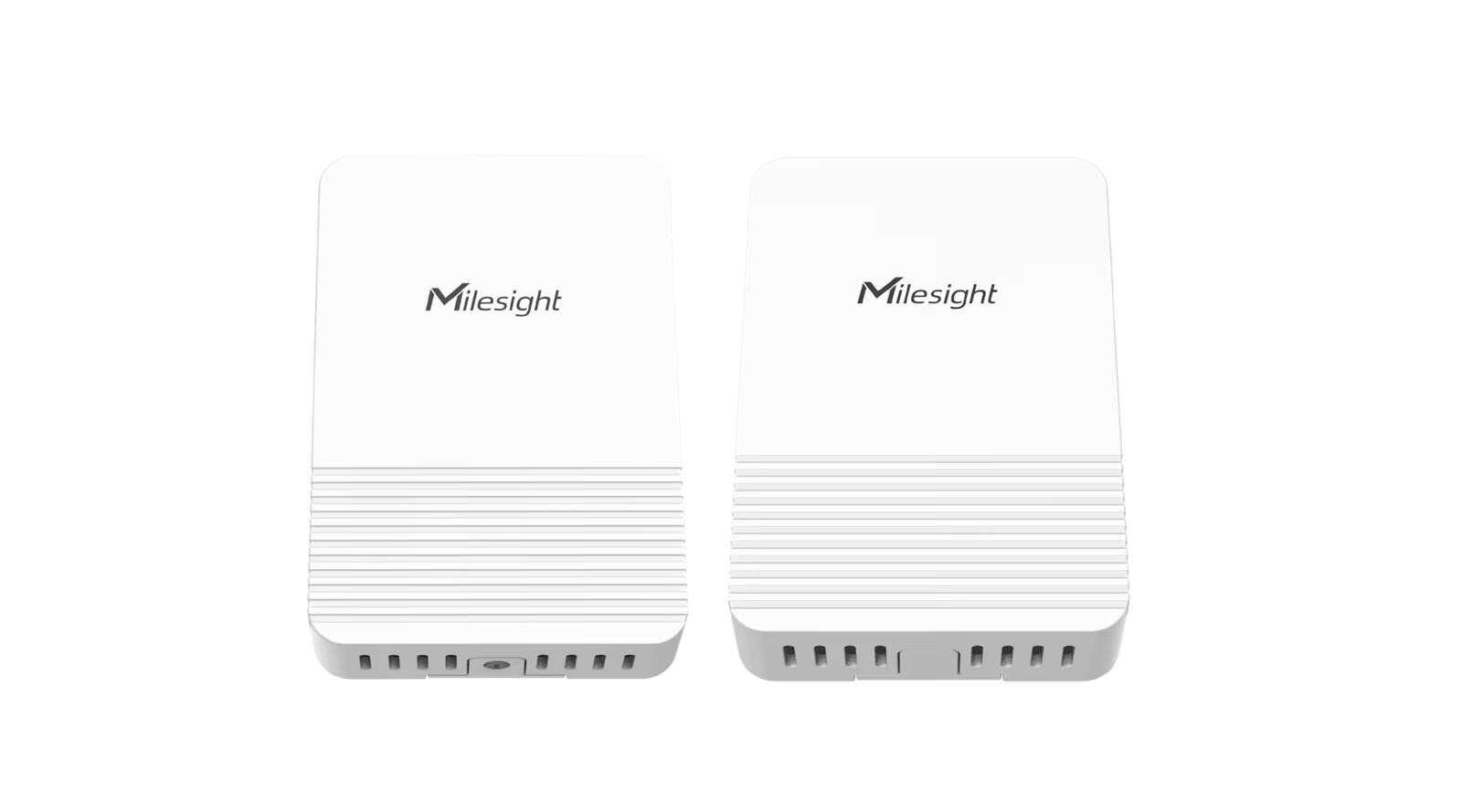
Industrial-grade LoRaWAN temperature and humidity node, running up to a decade on the 8,000 mAh cell.
AUD $88.00 – AUD $104.50 inc. GST
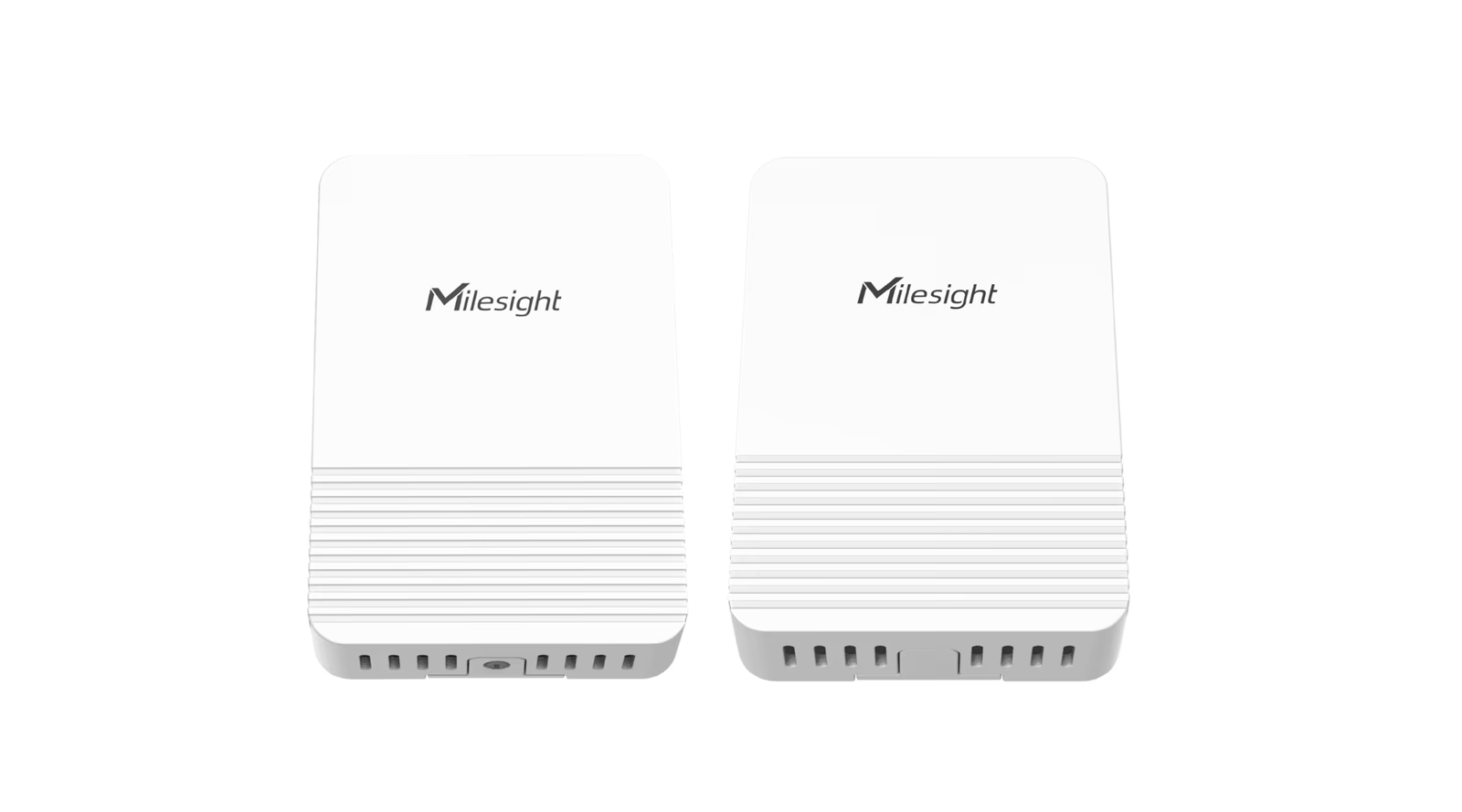
The EM320-TH industrial temperature and humidity sensor supplied with the SS11 sensor shelter.
AUD $295.90 inc. GST
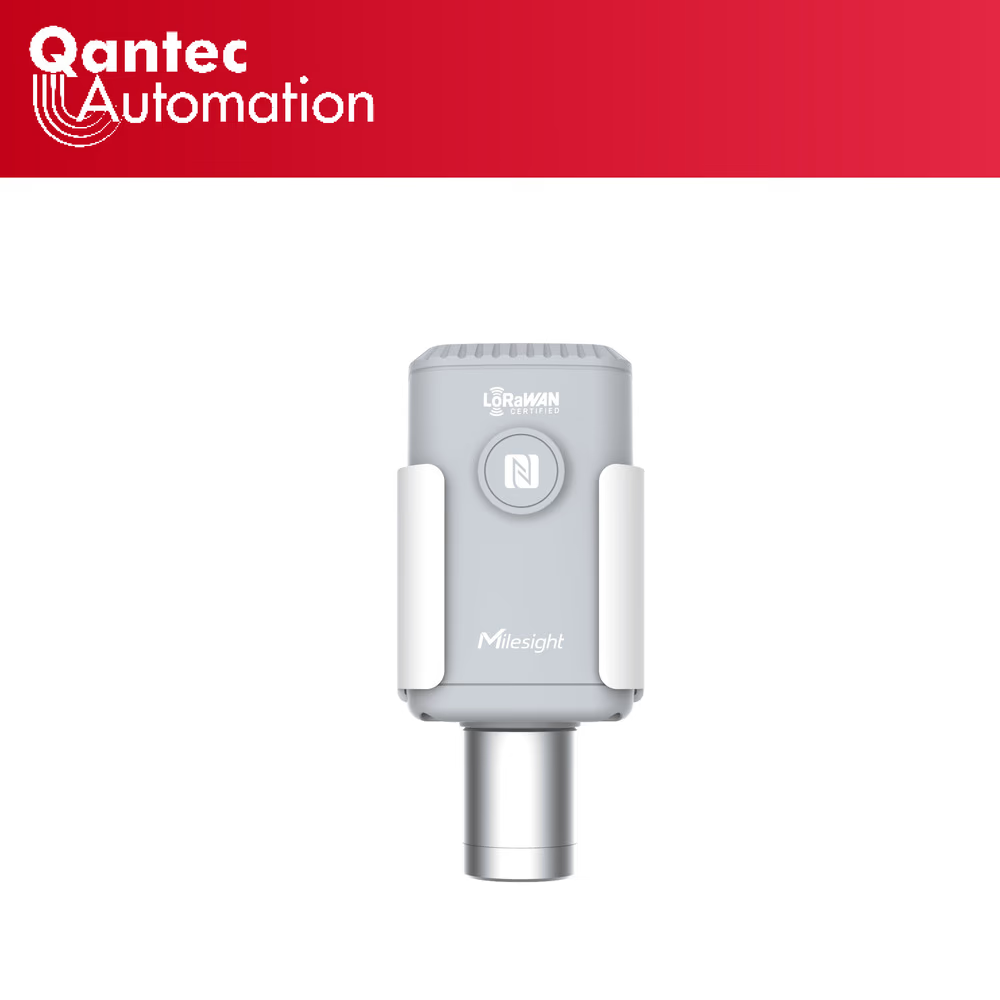
Elevate Your Warehouse and Greenhouse Management with Our Cutting-Edge CO2 Sensor Introducing the EM500-CO2, a durable…
AUD $431.20 inc. GST
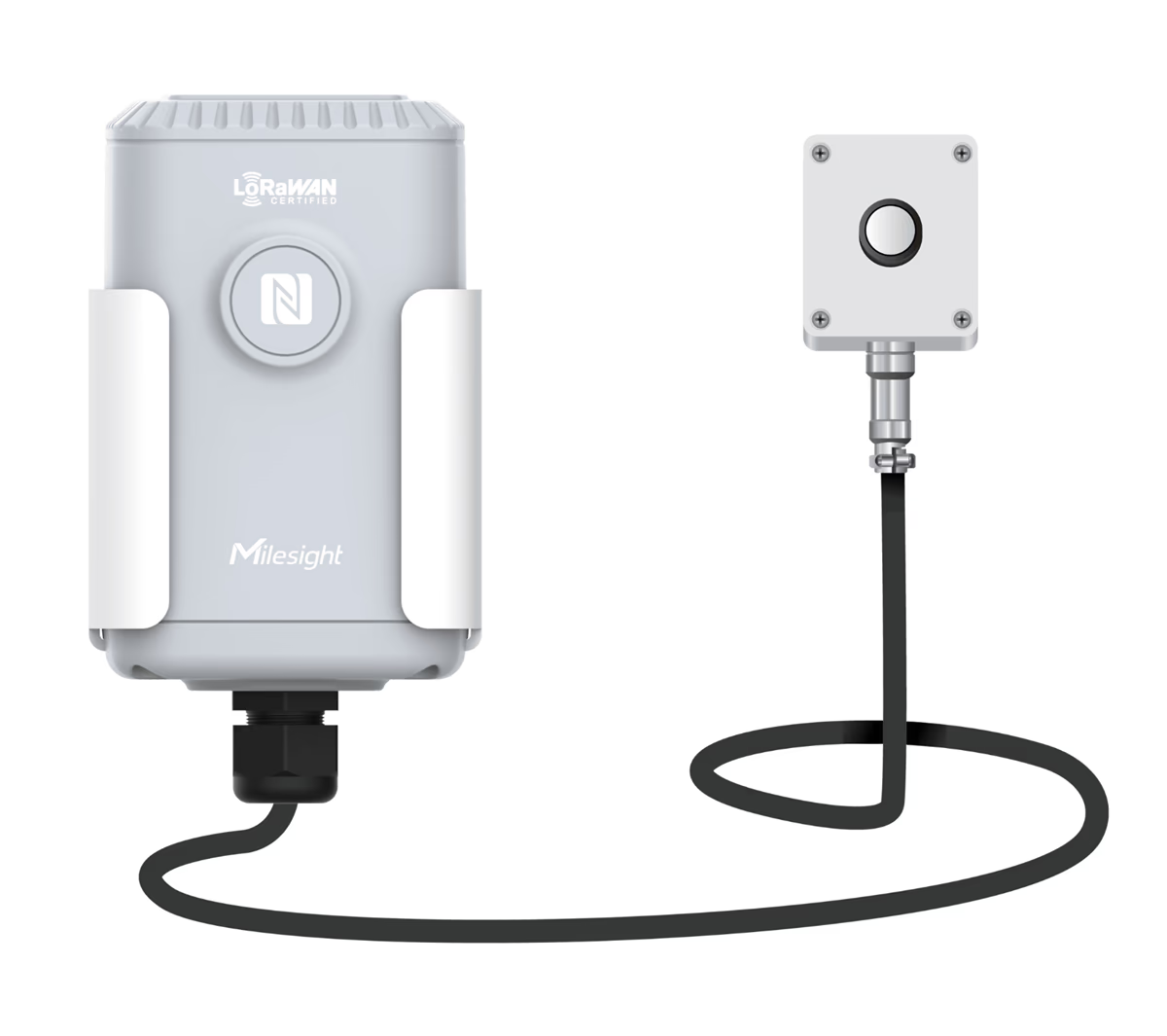
Enhancing Agriculture & Greenhouses with Advanced Light Measurement Technology The Milesight EM500-LGT is a…
AUD $376.20 inc. GST
Among the industrial environmental sensors here, the EM500-PT100 accepts a platinum PT100 probe across a -200°C to…
AUD $277.20 – AUD $496.10 inc. GST