IoT Controller and LoRaWAN Solenoid Valve Control
Qantec Automation — Category Page Content | Gateways & Controllers › IoT Controller
Hero Section
[H1] IoT Controller and LoRaWAN Solenoid Valve Control
Field-deployable Milesight IoT controllers for Modbus RTU acquisition, analog and digital I/O, and remote valve actuation — held in Australian stock on the correct AU915 band.
CTAs: [Request Trade Pricing] · [Check AU Stock & Datasheets]
[Banner alt text]: iot controller — Qantec Automation Australia
Category Intro Block
Qantec Automation, a sister company of Oberix Group, distributes Milesight smart-building and industrial hardware across Australia with local stock, trade pricing and engineering support. This category covers the Milesight IoT controller range, where each IoT controller bridges field-level sensors, meters, relays and solenoid valves to a LoRaWAN (Long Range Wide Area Network) or cellular backhaul using RS485, Modbus RTU (Remote Terminal Unit), analog and digital interfaces. Every AU915 (915–928 MHz) variant ships from Australian stock, so a contractor specifying an IoT controller receives the correct regional band without grey-import re-flashing or freight delays.
Sub-Categories Section
This is a leaf-level taxonomy, so the IoT controller products render directly as WooCommerce tiles:
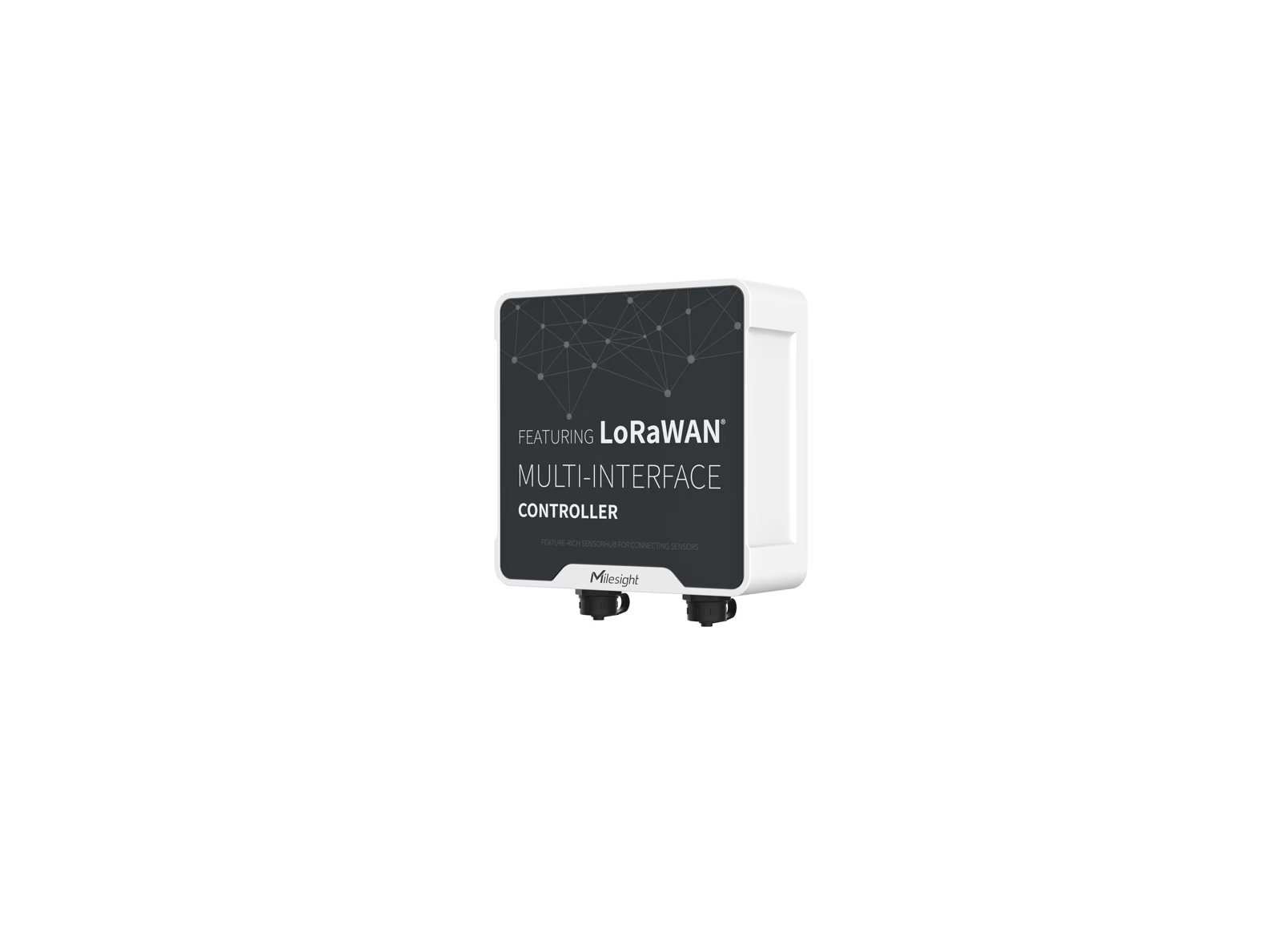
Milesight UC300 [Link to: Milesight UC300 Product Page]
[Alt: Milesight UC300 IoT controller multi-interface — IoT Controller]
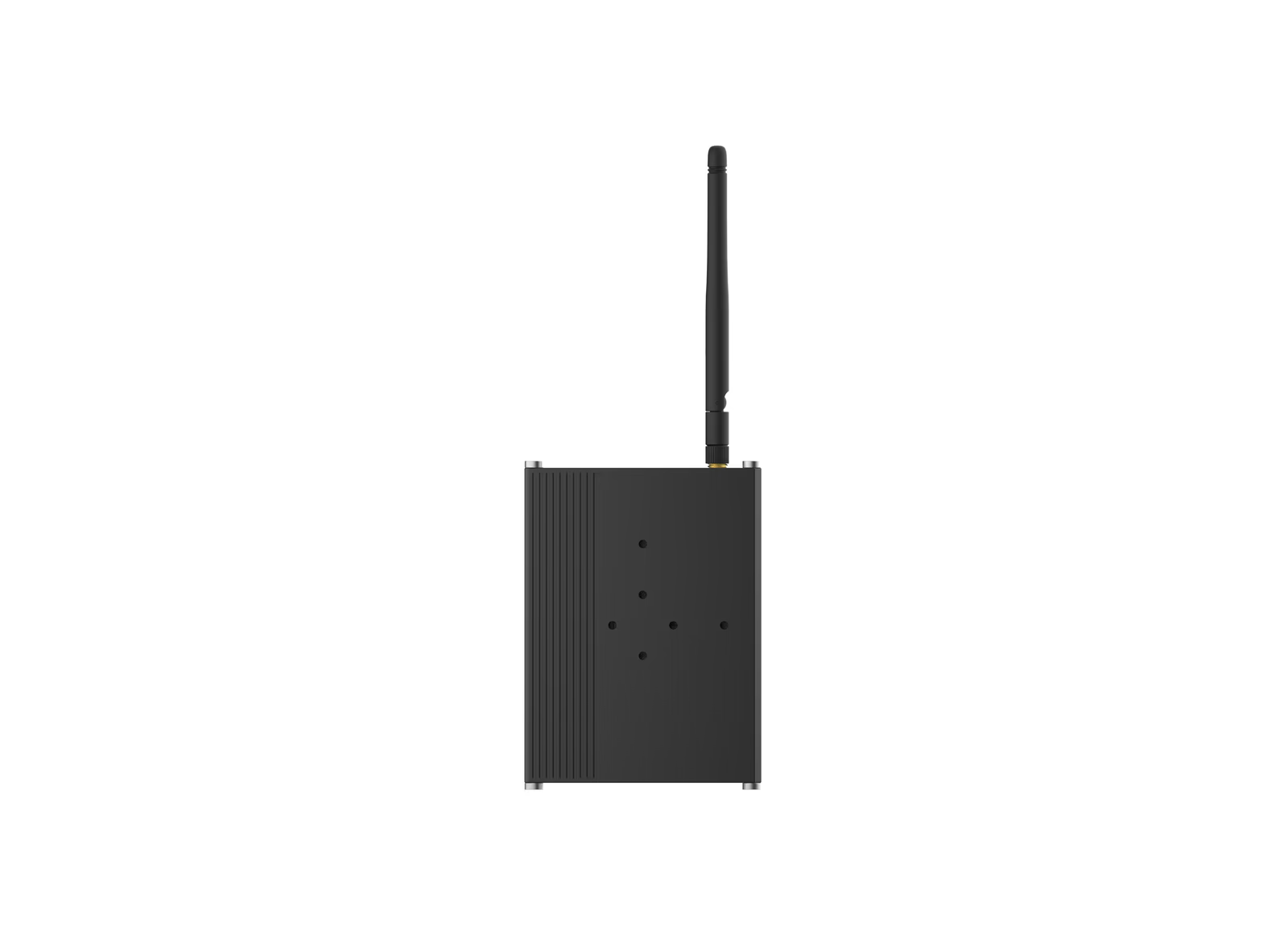
Milesight UC100 [Link to: Milesight UC100 Product Page]
[Alt: Milesight UC100 RS485 LoRaWAN converter — IoT Controller]
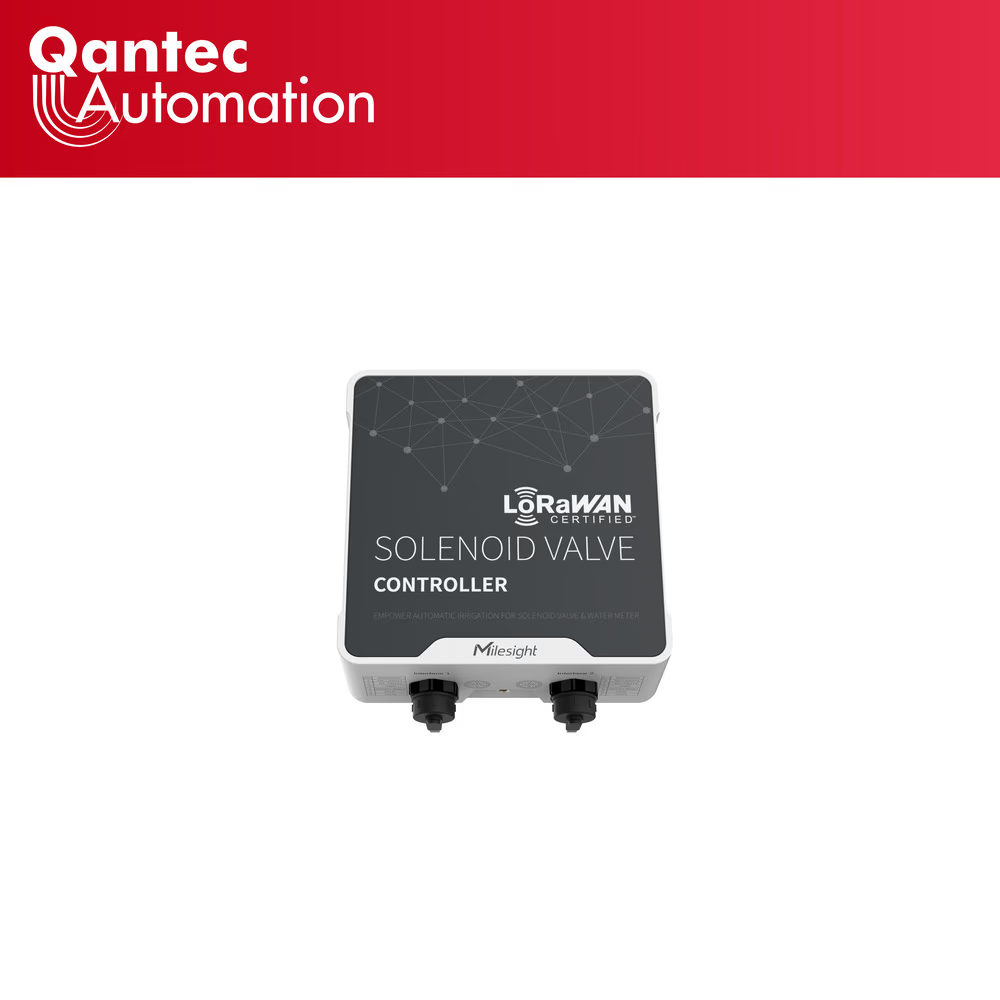
Milesight UC51X [Link to: Milesight UC51X Product Page]
[Alt: Milesight UC51X LoRaWAN solenoid valve controller — IoT Controller]
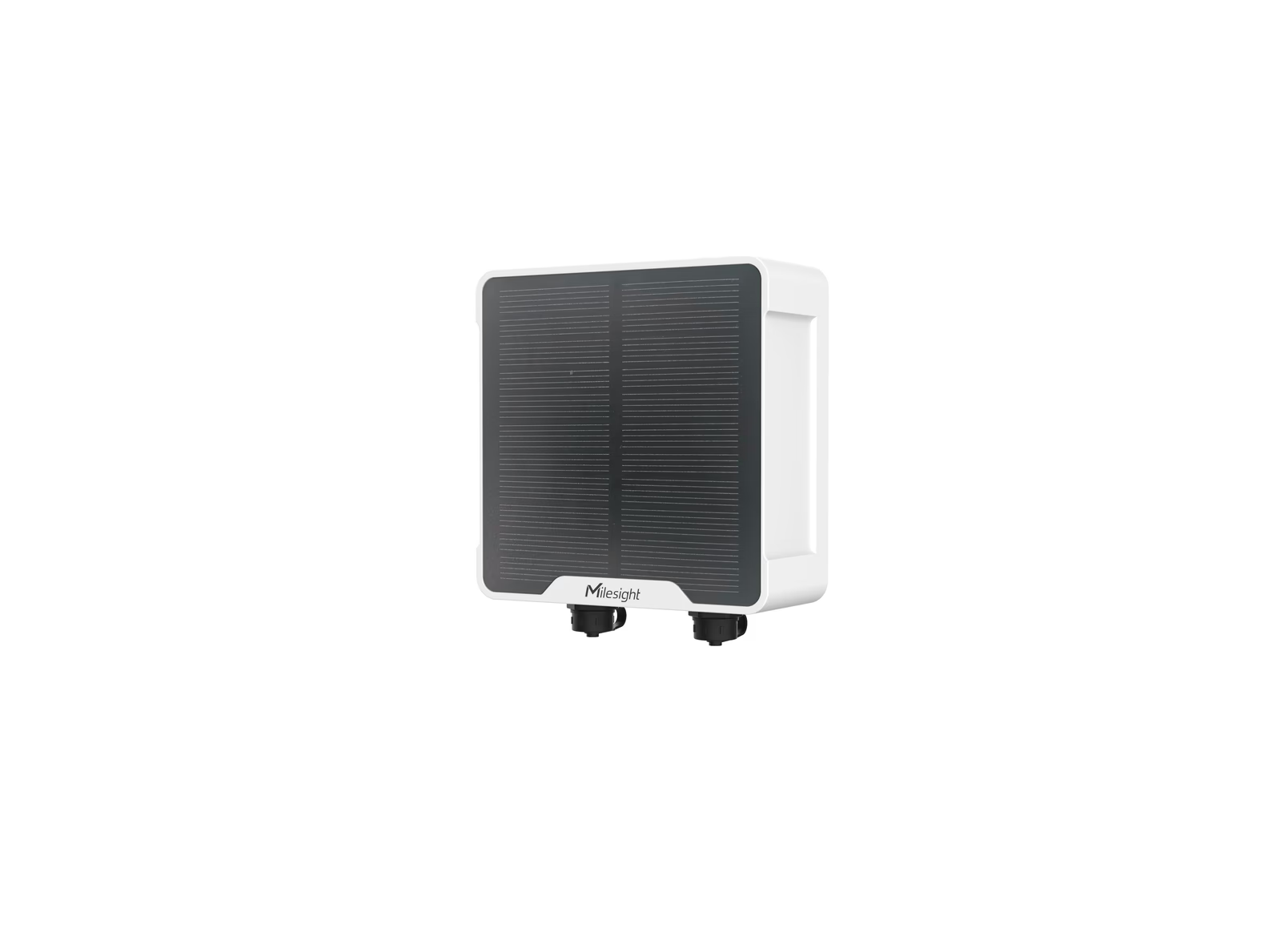
Milesight UC501 [Link to: Milesight UC501 Product Page]
[Alt: Milesight UC501 solar multi-interface controller — IoT Controller]
Milesight UC502 [Link to: Milesight UC502 Product Page]
[Alt: Milesight UC502 battery multi-interface controller — IoT Controller]
Featured Products Carousel
CTA Bar
[H3] Need the Right AU915 IoT Controllers in Stock?
Specifying an RS485 to LoRaWAN converter, an irrigation valve controller or a solar field unit demands the correct regional band and verified firmware. Talk to our engineering team to match the right IoT controller to your topology, with trade pricing, stock confirmation and payload-decoding support before your order ships.
Detailed Content Section
On this page:
[H2] Milesight IoT Controller Range Overview
An IoT controller is the edge device that interfaces physical field equipment — digital inputs, relay outputs, 4–20 mA and 0–10 V analog signals, PT100 RTD probes and RS485 serial buses — and backhauls that data over LoRaWAN or cellular to a network server. Across this Milesight range, AU915 (915–928 MHz) operation falls under the ACMA Radiocommunications (Low Interference Potential Devices) Class Licence, so no individual spectrum licence is required to deploy. Each Milesight IoT controller integrates with existing industrial control systems through open Modbus RTU and standard LoRaWAN, avoiding proprietary lock-in. The range splits cleanly by job: meter and sensor acquisition (UC100, UC300), valve actuation (UC51X), and rugged off-grid telemetry (UC501, UC502).
You can pair any controller in this range with a compatible LoRaWAN gateway [Link to: LoRaWAN Gateway Sub-Category Page] and your preferred network server.
The table below summarises interface counts, power options, LoRaWAN class and ingress rating across all five controllers.
| <w:shd w:fill="13334c" w:val="clear"/><w:tcMar><w:top w:w="80.0" w:type="dxa"/><w:left w:w="120.0" w:type="dxa"/><w:bottom w:w="80.0" w:type="dxa"/><w:right w:w="120.0" w:type="dxa"/></w:tcMar></w:tcPr><w:p w:rsidR="00000000" w:rsidDel="00000000" w:rsidP="00000000" w:rsidRDefault="00000000" w:rsidRPr="00000000" w14:paraId="00000038"><w:pPr><w:spacing w:after="0" w:line="240" w:lineRule="auto"/><w:rPr/></w:pPr><w:r w:rsidDel="00000000" w:rsidR="00000000" w:rsidRPr="00000000"><w:rPr><w:rFonts w:ascii="Arial" w:cs="Arial" w:eastAsia="Arial" w:hAnsi="Arial"/><w:b w:val="1"/><w:bCs w:val="1"/><w:color w:val="ffffff"/><w:sz w:val="17"/><w:szCs w:val="17"/><w:rtl w:val="0"/></w:rPr><w:t xml:space="preserve">Model | <w:shd w:fill="13334c" w:val="clear"/><w:tcMar><w:top w:w="80.0" w:type="dxa"/><w:left w:w="120.0" w:type="dxa"/><w:bottom w:w="80.0" w:type="dxa"/><w:right w:w="120.0" w:type="dxa"/></w:tcMar></w:tcPr><w:p w:rsidR="00000000" w:rsidDel="00000000" w:rsidP="00000000" w:rsidRDefault="00000000" w:rsidRPr="00000000" w14:paraId="00000039"><w:pPr><w:spacing w:after="0" w:line="240" w:lineRule="auto"/><w:rPr/></w:pPr><w:r w:rsidDel="00000000" w:rsidR="00000000" w:rsidRPr="00000000"><w:rPr><w:rFonts w:ascii="Arial" w:cs="Arial" w:eastAsia="Arial" w:hAnsi="Arial"/><w:b w:val="1"/><w:bCs w:val="1"/><w:color w:val="ffffff"/><w:sz w:val="17"/><w:szCs w:val="17"/><w:rtl w:val="0"/></w:rPr><w:t xml:space="preserve">Key Interfaces | <w:shd w:fill="13334c" w:val="clear"/><w:tcMar><w:top w:w="80.0" w:type="dxa"/><w:left w:w="120.0" w:type="dxa"/><w:bottom w:w="80.0" w:type="dxa"/><w:right w:w="120.0" w:type="dxa"/></w:tcMar></w:tcPr><w:p w:rsidR="00000000" w:rsidDel="00000000" w:rsidP="00000000" w:rsidRDefault="00000000" w:rsidRPr="00000000" w14:paraId="0000003A"><w:pPr><w:spacing w:after="0" w:line="240" w:lineRule="auto"/><w:rPr/></w:pPr><w:r w:rsidDel="00000000" w:rsidR="00000000" w:rsidRPr="00000000"><w:rPr><w:rFonts w:ascii="Arial" w:cs="Arial" w:eastAsia="Arial" w:hAnsi="Arial"/><w:b w:val="1"/><w:bCs w:val="1"/><w:color w:val="ffffff"/><w:sz w:val="17"/><w:szCs w:val="17"/><w:rtl w:val="0"/></w:rPr><w:t xml:space="preserve">Power | <w:shd w:fill="13334c" w:val="clear"/><w:tcMar><w:top w:w="80.0" w:type="dxa"/><w:left w:w="120.0" w:type="dxa"/><w:bottom w:w="80.0" w:type="dxa"/><w:right w:w="120.0" w:type="dxa"/></w:tcMar></w:tcPr><w:p w:rsidR="00000000" w:rsidDel="00000000" w:rsidP="00000000" w:rsidRDefault="00000000" w:rsidRPr="00000000" w14:paraId="0000003B"><w:pPr><w:spacing w:after="0" w:line="240" w:lineRule="auto"/><w:rPr/></w:pPr><w:r w:rsidDel="00000000" w:rsidR="00000000" w:rsidRPr="00000000"><w:rPr><w:rFonts w:ascii="Arial" w:cs="Arial" w:eastAsia="Arial" w:hAnsi="Arial"/><w:b w:val="1"/><w:bCs w:val="1"/><w:color w:val="ffffff"/><w:sz w:val="17"/><w:szCs w:val="17"/><w:rtl w:val="0"/></w:rPr><w:t xml:space="preserve">LoRaWAN Class | <w:shd w:fill="13334c" w:val="clear"/><w:tcMar><w:top w:w="80.0" w:type="dxa"/><w:left w:w="120.0" w:type="dxa"/><w:bottom w:w="80.0" w:type="dxa"/><w:right w:w="120.0" w:type="dxa"/></w:tcMar></w:tcPr><w:p w:rsidR="00000000" w:rsidDel="00000000" w:rsidP="00000000" w:rsidRDefault="00000000" w:rsidRPr="00000000" w14:paraId="0000003C"><w:pPr><w:spacing w:after="0" w:line="240" w:lineRule="auto"/><w:rPr/></w:pPr><w:r w:rsidDel="00000000" w:rsidR="00000000" w:rsidRPr="00000000"><w:rPr><w:rFonts w:ascii="Arial" w:cs="Arial" w:eastAsia="Arial" w:hAnsi="Arial"/><w:b w:val="1"/><w:bCs w:val="1"/><w:color w:val="ffffff"/><w:sz w:val="17"/><w:szCs w:val="17"/><w:rtl w:val="0"/></w:rPr><w:t xml:space="preserve">IP Rating | <w:shd w:fill="13334c" w:val="clear"/><w:tcMar><w:top w:w="80.0" w:type="dxa"/><w:left w:w="120.0" w:type="dxa"/><w:bottom w:w="80.0" w:type="dxa"/><w:right w:w="120.0" w:type="dxa"/></w:tcMar></w:tcPr><w:p w:rsidR="00000000" w:rsidDel="00000000" w:rsidP="00000000" w:rsidRDefault="00000000" w:rsidRPr="00000000" w14:paraId="0000003D"><w:pPr><w:spacing w:after="0" w:line="240" w:lineRule="auto"/><w:rPr/></w:pPr><w:r w:rsidDel="00000000" w:rsidR="00000000" w:rsidRPr="00000000"><w:rPr><w:rFonts w:ascii="Arial" w:cs="Arial" w:eastAsia="Arial" w:hAnsi="Arial"/><w:b w:val="1"/><w:bCs w:val="1"/><w:color w:val="ffffff"/><w:sz w:val="17"/><w:szCs w:val="17"/><w:rtl w:val="0"/></w:rPr><w:t xml:space="preserve">Primary Use-case |
|---|---|---|---|---|---|
| <w:shd w:fill="ffffff" w:val="clear"/><w:tcMar><w:top w:w="80.0" w:type="dxa"/><w:left w:w="120.0" w:type="dxa"/><w:bottom w:w="80.0" w:type="dxa"/><w:right w:w="120.0" w:type="dxa"/></w:tcMar></w:tcPr><w:p w:rsidR="00000000" w:rsidDel="00000000" w:rsidP="00000000" w:rsidRDefault="00000000" w:rsidRPr="00000000" w14:paraId="0000003E"><w:pPr><w:spacing w:after="0" w:line="240" w:lineRule="auto"/><w:rPr/></w:pPr><w:r w:rsidDel="00000000" w:rsidR="00000000" w:rsidRPr="00000000"><w:rPr><w:rFonts w:ascii="Arial" w:cs="Arial" w:eastAsia="Arial" w:hAnsi="Arial"/><w:b w:val="0"/><w:bCs w:val="0"/><w:color w:val="222222"/><w:sz w:val="18"/><w:szCs w:val="18"/><w:rtl w:val="0"/></w:rPr><w:t xml:space="preserve">Milesight UC300 | <w:shd w:fill="ffffff" w:val="clear"/><w:tcMar><w:top w:w="80.0" w:type="dxa"/><w:left w:w="120.0" w:type="dxa"/><w:bottom w:w="80.0" w:type="dxa"/><w:right w:w="120.0" w:type="dxa"/></w:tcMar></w:tcPr><w:p w:rsidR="00000000" w:rsidDel="00000000" w:rsidP="00000000" w:rsidRDefault="00000000" w:rsidRPr="00000000" w14:paraId="0000003F"><w:pPr><w:spacing w:after="0" w:line="240" w:lineRule="auto"/><w:rPr/></w:pPr><w:r w:rsidDel="00000000" w:rsidR="00000000" w:rsidRPr="00000000"><w:rPr><w:rFonts w:ascii="Arial" w:cs="Arial" w:eastAsia="Arial" w:hAnsi="Arial"/><w:b w:val="0"/><w:bCs w:val="0"/><w:color w:val="222222"/><w:sz w:val="18"/><w:szCs w:val="18"/><w:rtl w:val="0"/></w:rPr><w:t xml:space="preserve">4 DI, 2 DO, 2 relay, RS232, RS485, 2× 4–20 mA, 2× 0–10 V, PT100 RTD | <w:shd w:fill="ffffff" w:val="clear"/><w:tcMar><w:top w:w="80.0" w:type="dxa"/><w:left w:w="120.0" w:type="dxa"/><w:bottom w:w="80.0" w:type="dxa"/><w:right w:w="120.0" w:type="dxa"/></w:tcMar></w:tcPr><w:p w:rsidR="00000000" w:rsidDel="00000000" w:rsidP="00000000" w:rsidRDefault="00000000" w:rsidRPr="00000000" w14:paraId="00000040"><w:pPr><w:spacing w:after="0" w:line="240" w:lineRule="auto"/><w:rPr/></w:pPr><w:r w:rsidDel="00000000" w:rsidR="00000000" w:rsidRPr="00000000"><w:rPr><w:rFonts w:ascii="Arial" w:cs="Arial" w:eastAsia="Arial" w:hAnsi="Arial"/><w:b w:val="0"/><w:bCs w:val="0"/><w:color w:val="222222"/><w:sz w:val="18"/><w:szCs w:val="18"/><w:rtl w:val="0"/></w:rPr><w:t xml:space="preserve">9–36 V DC; optional 4G LTE variant | <w:shd w:fill="ffffff" w:val="clear"/><w:tcMar><w:top w:w="80.0" w:type="dxa"/><w:left w:w="120.0" w:type="dxa"/><w:bottom w:w="80.0" w:type="dxa"/><w:right w:w="120.0" w:type="dxa"/></w:tcMar></w:tcPr><w:p w:rsidR="00000000" w:rsidDel="00000000" w:rsidP="00000000" w:rsidRDefault="00000000" w:rsidRPr="00000000" w14:paraId="00000041"><w:pPr><w:spacing w:after="0" w:line="240" w:lineRule="auto"/><w:rPr/></w:pPr><w:r w:rsidDel="00000000" w:rsidR="00000000" w:rsidRPr="00000000"><w:rPr><w:rFonts w:ascii="Arial" w:cs="Arial" w:eastAsia="Arial" w:hAnsi="Arial"/><w:b w:val="0"/><w:bCs w:val="0"/><w:color w:val="222222"/><w:sz w:val="18"/><w:szCs w:val="18"/><w:rtl w:val="0"/></w:rPr><w:t xml:space="preserve">Class C | <w:shd w:fill="ffffff" w:val="clear"/><w:tcMar><w:top w:w="80.0" w:type="dxa"/><w:left w:w="120.0" w:type="dxa"/><w:bottom w:w="80.0" w:type="dxa"/><w:right w:w="120.0" w:type="dxa"/></w:tcMar></w:tcPr><w:p w:rsidR="00000000" w:rsidDel="00000000" w:rsidP="00000000" w:rsidRDefault="00000000" w:rsidRPr="00000000" w14:paraId="00000042"><w:pPr><w:spacing w:after="0" w:line="240" w:lineRule="auto"/><w:rPr/></w:pPr><w:r w:rsidDel="00000000" w:rsidR="00000000" w:rsidRPr="00000000"><w:rPr><w:rFonts w:ascii="Arial" w:cs="Arial" w:eastAsia="Arial" w:hAnsi="Arial"/><w:b w:val="0"/><w:bCs w:val="0"/><w:color w:val="222222"/><w:sz w:val="18"/><w:szCs w:val="18"/><w:rtl w:val="0"/></w:rPr><w:t xml:space="preserve">IP30 | <w:shd w:fill="ffffff" w:val="clear"/><w:tcMar><w:top w:w="80.0" w:type="dxa"/><w:left w:w="120.0" w:type="dxa"/><w:bottom w:w="80.0" w:type="dxa"/><w:right w:w="120.0" w:type="dxa"/></w:tcMar></w:tcPr><w:p w:rsidR="00000000" w:rsidDel="00000000" w:rsidP="00000000" w:rsidRDefault="00000000" w:rsidRPr="00000000" w14:paraId="00000043"><w:pPr><w:spacing w:after="0" w:line="240" w:lineRule="auto"/><w:rPr/></w:pPr><w:r w:rsidDel="00000000" w:rsidR="00000000" w:rsidRPr="00000000"><w:rPr><w:rFonts w:ascii="Arial" w:cs="Arial" w:eastAsia="Arial" w:hAnsi="Arial"/><w:b w:val="0"/><w:bCs w:val="0"/><w:color w:val="222222"/><w:sz w:val="18"/><w:szCs w:val="18"/><w:rtl w:val="0"/></w:rPr><w:t xml:space="preserve">Multi-I/O plant-room acquisition and control |
| <w:shd w:fill="ffffff" w:val="clear"/><w:tcMar><w:top w:w="80.0" w:type="dxa"/><w:left w:w="120.0" w:type="dxa"/><w:bottom w:w="80.0" w:type="dxa"/><w:right w:w="120.0" w:type="dxa"/></w:tcMar></w:tcPr><w:p w:rsidR="00000000" w:rsidDel="00000000" w:rsidP="00000000" w:rsidRDefault="00000000" w:rsidRPr="00000000" w14:paraId="00000044"><w:pPr><w:spacing w:after="0" w:line="240" w:lineRule="auto"/><w:rPr/></w:pPr><w:r w:rsidDel="00000000" w:rsidR="00000000" w:rsidRPr="00000000"><w:rPr><w:rFonts w:ascii="Arial" w:cs="Arial" w:eastAsia="Arial" w:hAnsi="Arial"/><w:b w:val="0"/><w:bCs w:val="0"/><w:color w:val="222222"/><w:sz w:val="18"/><w:szCs w:val="18"/><w:rtl w:val="0"/></w:rPr><w:t xml:space="preserve">Milesight UC100 | <w:shd w:fill="ffffff" w:val="clear"/><w:tcMar><w:top w:w="80.0" w:type="dxa"/><w:left w:w="120.0" w:type="dxa"/><w:bottom w:w="80.0" w:type="dxa"/><w:right w:w="120.0" w:type="dxa"/></w:tcMar></w:tcPr><w:p w:rsidR="00000000" w:rsidDel="00000000" w:rsidP="00000000" w:rsidRDefault="00000000" w:rsidRPr="00000000" w14:paraId="00000045"><w:pPr><w:spacing w:after="0" w:line="240" w:lineRule="auto"/><w:rPr/></w:pPr><w:r w:rsidDel="00000000" w:rsidR="00000000" w:rsidRPr="00000000"><w:rPr><w:rFonts w:ascii="Arial" w:cs="Arial" w:eastAsia="Arial" w:hAnsi="Arial"/><w:b w:val="0"/><w:bCs w:val="0"/><w:color w:val="222222"/><w:sz w:val="18"/><w:szCs w:val="18"/><w:rtl w:val="0"/></w:rPr><w:t xml:space="preserve">1× RS485 (Modbus RTU, up to 32 devices) | <w:shd w:fill="ffffff" w:val="clear"/><w:tcMar><w:top w:w="80.0" w:type="dxa"/><w:left w:w="120.0" w:type="dxa"/><w:bottom w:w="80.0" w:type="dxa"/><w:right w:w="120.0" w:type="dxa"/></w:tcMar></w:tcPr><w:p w:rsidR="00000000" w:rsidDel="00000000" w:rsidP="00000000" w:rsidRDefault="00000000" w:rsidRPr="00000000" w14:paraId="00000046"><w:pPr><w:spacing w:after="0" w:line="240" w:lineRule="auto"/><w:rPr/></w:pPr><w:r w:rsidDel="00000000" w:rsidR="00000000" w:rsidRPr="00000000"><w:rPr><w:rFonts w:ascii="Arial" w:cs="Arial" w:eastAsia="Arial" w:hAnsi="Arial"/><w:b w:val="0"/><w:bCs w:val="0"/><w:color w:val="222222"/><w:sz w:val="18"/><w:szCs w:val="18"/><w:rtl w:val="0"/></w:rPr><w:t xml:space="preserve">5–24 V DC or USB-C | <w:shd w:fill="ffffff" w:val="clear"/><w:tcMar><w:top w:w="80.0" w:type="dxa"/><w:left w:w="120.0" w:type="dxa"/><w:bottom w:w="80.0" w:type="dxa"/><w:right w:w="120.0" w:type="dxa"/></w:tcMar></w:tcPr><w:p w:rsidR="00000000" w:rsidDel="00000000" w:rsidP="00000000" w:rsidRDefault="00000000" w:rsidRPr="00000000" w14:paraId="00000047"><w:pPr><w:spacing w:after="0" w:line="240" w:lineRule="auto"/><w:rPr/></w:pPr><w:r w:rsidDel="00000000" w:rsidR="00000000" w:rsidRPr="00000000"><w:rPr><w:rFonts w:ascii="Arial" w:cs="Arial" w:eastAsia="Arial" w:hAnsi="Arial"/><w:b w:val="0"/><w:bCs w:val="0"/><w:color w:val="222222"/><w:sz w:val="18"/><w:szCs w:val="18"/><w:rtl w:val="0"/></w:rPr><w:t xml:space="preserve">Class C | <w:shd w:fill="ffffff" w:val="clear"/><w:tcMar><w:top w:w="80.0" w:type="dxa"/><w:left w:w="120.0" w:type="dxa"/><w:bottom w:w="80.0" w:type="dxa"/><w:right w:w="120.0" w:type="dxa"/></w:tcMar></w:tcPr><w:p w:rsidR="00000000" w:rsidDel="00000000" w:rsidP="00000000" w:rsidRDefault="00000000" w:rsidRPr="00000000" w14:paraId="00000048"><w:pPr><w:spacing w:after="0" w:line="240" w:lineRule="auto"/><w:rPr/></w:pPr><w:r w:rsidDel="00000000" w:rsidR="00000000" w:rsidRPr="00000000"><w:rPr><w:rFonts w:ascii="Arial" w:cs="Arial" w:eastAsia="Arial" w:hAnsi="Arial"/><w:b w:val="0"/><w:bCs w:val="0"/><w:color w:val="222222"/><w:sz w:val="18"/><w:szCs w:val="18"/><w:rtl w:val="0"/></w:rPr><w:t xml:space="preserve">IP30 | <w:shd w:fill="ffffff" w:val="clear"/><w:tcMar><w:top w:w="80.0" w:type="dxa"/><w:left w:w="120.0" w:type="dxa"/><w:bottom w:w="80.0" w:type="dxa"/><w:right w:w="120.0" w:type="dxa"/></w:tcMar></w:tcPr><w:p w:rsidR="00000000" w:rsidDel="00000000" w:rsidP="00000000" w:rsidRDefault="00000000" w:rsidRPr="00000000" w14:paraId="00000049"><w:pPr><w:spacing w:after="0" w:line="240" w:lineRule="auto"/><w:rPr/></w:pPr><w:r w:rsidDel="00000000" w:rsidR="00000000" w:rsidRPr="00000000"><w:rPr><w:rFonts w:ascii="Arial" w:cs="Arial" w:eastAsia="Arial" w:hAnsi="Arial"/><w:b w:val="0"/><w:bCs w:val="0"/><w:color w:val="222222"/><w:sz w:val="18"/><w:szCs w:val="18"/><w:rtl w:val="0"/></w:rPr><w:t xml:space="preserve">RS485 to LoRaWAN converter for meters |
| <w:shd w:fill="ffffff" w:val="clear"/><w:tcMar><w:top w:w="80.0" w:type="dxa"/><w:left w:w="120.0" w:type="dxa"/><w:bottom w:w="80.0" w:type="dxa"/><w:right w:w="120.0" w:type="dxa"/></w:tcMar></w:tcPr><w:p w:rsidR="00000000" w:rsidDel="00000000" w:rsidP="00000000" w:rsidRDefault="00000000" w:rsidRPr="00000000" w14:paraId="0000004A"><w:pPr><w:spacing w:after="0" w:line="240" w:lineRule="auto"/><w:rPr/></w:pPr><w:r w:rsidDel="00000000" w:rsidR="00000000" w:rsidRPr="00000000"><w:rPr><w:rFonts w:ascii="Arial" w:cs="Arial" w:eastAsia="Arial" w:hAnsi="Arial"/><w:b w:val="0"/><w:bCs w:val="0"/><w:color w:val="222222"/><w:sz w:val="18"/><w:szCs w:val="18"/><w:rtl w:val="0"/></w:rPr><w:t xml:space="preserve">Milesight UC51X | <w:shd w:fill="ffffff" w:val="clear"/><w:tcMar><w:top w:w="80.0" w:type="dxa"/><w:left w:w="120.0" w:type="dxa"/><w:bottom w:w="80.0" w:type="dxa"/><w:right w:w="120.0" w:type="dxa"/></w:tcMar></w:tcPr><w:p w:rsidR="00000000" w:rsidDel="00000000" w:rsidP="00000000" w:rsidRDefault="00000000" w:rsidRPr="00000000" w14:paraId="0000004B"><w:pPr><w:spacing w:after="0" w:line="240" w:lineRule="auto"/><w:rPr/></w:pPr><w:r w:rsidDel="00000000" w:rsidR="00000000" w:rsidRPr="00000000"><w:rPr><w:rFonts w:ascii="Arial" w:cs="Arial" w:eastAsia="Arial" w:hAnsi="Arial"/><w:b w:val="0"/><w:bCs w:val="0"/><w:color w:val="222222"/><w:sz w:val="18"/><w:szCs w:val="18"/><w:rtl w:val="0"/></w:rPr><w:t xml:space="preserve">2× DC latching solenoid, 2× pulse | <w:shd w:fill="ffffff" w:val="clear"/><w:tcMar><w:top w:w="80.0" w:type="dxa"/><w:left w:w="120.0" w:type="dxa"/><w:bottom w:w="80.0" w:type="dxa"/><w:right w:w="120.0" w:type="dxa"/></w:tcMar></w:tcPr><w:p w:rsidR="00000000" w:rsidDel="00000000" w:rsidP="00000000" w:rsidRDefault="00000000" w:rsidRPr="00000000" w14:paraId="0000004C"><w:pPr><w:spacing w:after="0" w:line="240" w:lineRule="auto"/><w:rPr/></w:pPr><w:r w:rsidDel="00000000" w:rsidR="00000000" w:rsidRPr="00000000"><w:rPr><w:rFonts w:ascii="Arial" w:cs="Arial" w:eastAsia="Arial" w:hAnsi="Arial"/><w:b w:val="0"/><w:bCs w:val="0"/><w:color w:val="222222"/><w:sz w:val="18"/><w:szCs w:val="18"/><w:rtl w:val="0"/></w:rPr><w:t xml:space="preserve">UC511 solar + 2× 2550 mAh; UC512 3× 9000 mAh Li-SOCl₂ | <w:shd w:fill="ffffff" w:val="clear"/><w:tcMar><w:top w:w="80.0" w:type="dxa"/><w:left w:w="120.0" w:type="dxa"/><w:bottom w:w="80.0" w:type="dxa"/><w:right w:w="120.0" w:type="dxa"/></w:tcMar></w:tcPr><w:p w:rsidR="00000000" w:rsidDel="00000000" w:rsidP="00000000" w:rsidRDefault="00000000" w:rsidRPr="00000000" w14:paraId="0000004D"><w:pPr><w:spacing w:after="0" w:line="240" w:lineRule="auto"/><w:rPr/></w:pPr><w:r w:rsidDel="00000000" w:rsidR="00000000" w:rsidRPr="00000000"><w:rPr><w:rFonts w:ascii="Arial" w:cs="Arial" w:eastAsia="Arial" w:hAnsi="Arial"/><w:b w:val="0"/><w:bCs w:val="0"/><w:color w:val="222222"/><w:sz w:val="18"/><w:szCs w:val="18"/><w:rtl w:val="0"/></w:rPr><w:t xml:space="preserve">UC511 A/B/C; UC512 A/B | <w:shd w:fill="ffffff" w:val="clear"/><w:tcMar><w:top w:w="80.0" w:type="dxa"/><w:left w:w="120.0" w:type="dxa"/><w:bottom w:w="80.0" w:type="dxa"/><w:right w:w="120.0" w:type="dxa"/></w:tcMar></w:tcPr><w:p w:rsidR="00000000" w:rsidDel="00000000" w:rsidP="00000000" w:rsidRDefault="00000000" w:rsidRPr="00000000" w14:paraId="0000004E"><w:pPr><w:spacing w:after="0" w:line="240" w:lineRule="auto"/><w:rPr/></w:pPr><w:r w:rsidDel="00000000" w:rsidR="00000000" w:rsidRPr="00000000"><w:rPr><w:rFonts w:ascii="Arial" w:cs="Arial" w:eastAsia="Arial" w:hAnsi="Arial"/><w:b w:val="0"/><w:bCs w:val="0"/><w:color w:val="222222"/><w:sz w:val="18"/><w:szCs w:val="18"/><w:rtl w:val="0"/></w:rPr><w:t xml:space="preserve">IP67 | <w:shd w:fill="ffffff" w:val="clear"/><w:tcMar><w:top w:w="80.0" w:type="dxa"/><w:left w:w="120.0" w:type="dxa"/><w:bottom w:w="80.0" w:type="dxa"/><w:right w:w="120.0" w:type="dxa"/></w:tcMar></w:tcPr><w:p w:rsidR="00000000" w:rsidDel="00000000" w:rsidP="00000000" w:rsidRDefault="00000000" w:rsidRPr="00000000" w14:paraId="0000004F"><w:pPr><w:spacing w:after="0" w:line="240" w:lineRule="auto"/><w:rPr/></w:pPr><w:r w:rsidDel="00000000" w:rsidR="00000000" w:rsidRPr="00000000"><w:rPr><w:rFonts w:ascii="Arial" w:cs="Arial" w:eastAsia="Arial" w:hAnsi="Arial"/><w:b w:val="0"/><w:bCs w:val="0"/><w:color w:val="222222"/><w:sz w:val="18"/><w:szCs w:val="18"/><w:rtl w:val="0"/></w:rPr><w:t xml:space="preserve">Remote valve and irrigation control |
| <w:shd w:fill="ffffff" w:val="clear"/><w:tcMar><w:top w:w="80.0" w:type="dxa"/><w:left w:w="120.0" w:type="dxa"/><w:bottom w:w="80.0" w:type="dxa"/><w:right w:w="120.0" w:type="dxa"/></w:tcMar></w:tcPr><w:p w:rsidR="00000000" w:rsidDel="00000000" w:rsidP="00000000" w:rsidRDefault="00000000" w:rsidRPr="00000000" w14:paraId="00000050"><w:pPr><w:spacing w:after="0" w:line="240" w:lineRule="auto"/><w:rPr/></w:pPr><w:r w:rsidDel="00000000" w:rsidR="00000000" w:rsidRPr="00000000"><w:rPr><w:rFonts w:ascii="Arial" w:cs="Arial" w:eastAsia="Arial" w:hAnsi="Arial"/><w:b w:val="0"/><w:bCs w:val="0"/><w:color w:val="222222"/><w:sz w:val="18"/><w:szCs w:val="18"/><w:rtl w:val="0"/></w:rPr><w:t xml:space="preserve">Milesight UC501 | <w:shd w:fill="ffffff" w:val="clear"/><w:tcMar><w:top w:w="80.0" w:type="dxa"/><w:left w:w="120.0" w:type="dxa"/><w:bottom w:w="80.0" w:type="dxa"/><w:right w:w="120.0" w:type="dxa"/></w:tcMar></w:tcPr><w:p w:rsidR="00000000" w:rsidDel="00000000" w:rsidP="00000000" w:rsidRDefault="00000000" w:rsidRPr="00000000" w14:paraId="00000051"><w:pPr><w:spacing w:after="0" w:line="240" w:lineRule="auto"/><w:rPr/></w:pPr><w:r w:rsidDel="00000000" w:rsidR="00000000" w:rsidRPr="00000000"><w:rPr><w:rFonts w:ascii="Arial" w:cs="Arial" w:eastAsia="Arial" w:hAnsi="Arial"/><w:b w:val="0"/><w:bCs w:val="0"/><w:color w:val="222222"/><w:sz w:val="18"/><w:szCs w:val="18"/><w:rtl w:val="0"/></w:rPr><w:t xml:space="preserve">GPIO, AI, RS232/RS485, SDI-12 | <w:shd w:fill="ffffff" w:val="clear"/><w:tcMar><w:top w:w="80.0" w:type="dxa"/><w:left w:w="120.0" w:type="dxa"/><w:bottom w:w="80.0" w:type="dxa"/><w:right w:w="120.0" w:type="dxa"/></w:tcMar></w:tcPr><w:p w:rsidR="00000000" w:rsidDel="00000000" w:rsidP="00000000" w:rsidRDefault="00000000" w:rsidRPr="00000000" w14:paraId="00000052"><w:pPr><w:spacing w:after="0" w:line="240" w:lineRule="auto"/><w:rPr/></w:pPr><w:r w:rsidDel="00000000" w:rsidR="00000000" w:rsidRPr="00000000"><w:rPr><w:rFonts w:ascii="Arial" w:cs="Arial" w:eastAsia="Arial" w:hAnsi="Arial"/><w:b w:val="0"/><w:bCs w:val="0"/><w:color w:val="222222"/><w:sz w:val="18"/><w:szCs w:val="18"/><w:rtl w:val="0"/></w:rPr><w:t xml:space="preserve">Solar + 2× 2550 mAh; optional 5–24 V DC | <w:shd w:fill="ffffff" w:val="clear"/><w:tcMar><w:top w:w="80.0" w:type="dxa"/><w:left w:w="120.0" w:type="dxa"/><w:bottom w:w="80.0" w:type="dxa"/><w:right w:w="120.0" w:type="dxa"/></w:tcMar></w:tcPr><w:p w:rsidR="00000000" w:rsidDel="00000000" w:rsidP="00000000" w:rsidRDefault="00000000" w:rsidRPr="00000000" w14:paraId="00000053"><w:pPr><w:spacing w:after="0" w:line="240" w:lineRule="auto"/><w:rPr/></w:pPr><w:r w:rsidDel="00000000" w:rsidR="00000000" w:rsidRPr="00000000"><w:rPr><w:rFonts w:ascii="Arial" w:cs="Arial" w:eastAsia="Arial" w:hAnsi="Arial"/><w:b w:val="0"/><w:bCs w:val="0"/><w:color w:val="222222"/><w:sz w:val="18"/><w:szCs w:val="18"/><w:rtl w:val="0"/></w:rPr><w:t xml:space="preserve">Class A/C | <w:shd w:fill="ffffff" w:val="clear"/><w:tcMar><w:top w:w="80.0" w:type="dxa"/><w:left w:w="120.0" w:type="dxa"/><w:bottom w:w="80.0" w:type="dxa"/><w:right w:w="120.0" w:type="dxa"/></w:tcMar></w:tcPr><w:p w:rsidR="00000000" w:rsidDel="00000000" w:rsidP="00000000" w:rsidRDefault="00000000" w:rsidRPr="00000000" w14:paraId="00000054"><w:pPr><w:spacing w:after="0" w:line="240" w:lineRule="auto"/><w:rPr/></w:pPr><w:r w:rsidDel="00000000" w:rsidR="00000000" w:rsidRPr="00000000"><w:rPr><w:rFonts w:ascii="Arial" w:cs="Arial" w:eastAsia="Arial" w:hAnsi="Arial"/><w:b w:val="0"/><w:bCs w:val="0"/><w:color w:val="222222"/><w:sz w:val="18"/><w:szCs w:val="18"/><w:rtl w:val="0"/></w:rPr><w:t xml:space="preserve">IP67 | <w:shd w:fill="ffffff" w:val="clear"/><w:tcMar><w:top w:w="80.0" w:type="dxa"/><w:left w:w="120.0" w:type="dxa"/><w:bottom w:w="80.0" w:type="dxa"/><w:right w:w="120.0" w:type="dxa"/></w:tcMar></w:tcPr><w:p w:rsidR="00000000" w:rsidDel="00000000" w:rsidP="00000000" w:rsidRDefault="00000000" w:rsidRPr="00000000" w14:paraId="00000055"><w:pPr><w:spacing w:after="0" w:line="240" w:lineRule="auto"/><w:rPr/></w:pPr><w:r w:rsidDel="00000000" w:rsidR="00000000" w:rsidRPr="00000000"><w:rPr><w:rFonts w:ascii="Arial" w:cs="Arial" w:eastAsia="Arial" w:hAnsi="Arial"/><w:b w:val="0"/><w:bCs w:val="0"/><w:color w:val="222222"/><w:sz w:val="18"/><w:szCs w:val="18"/><w:rtl w:val="0"/></w:rPr><w:t xml:space="preserve">Solar off-grid sensor acquisition |
| <w:shd w:fill="ffffff" w:val="clear"/><w:tcMar><w:top w:w="80.0" w:type="dxa"/><w:left w:w="120.0" w:type="dxa"/><w:bottom w:w="80.0" w:type="dxa"/><w:right w:w="120.0" w:type="dxa"/></w:tcMar></w:tcPr><w:p w:rsidR="00000000" w:rsidDel="00000000" w:rsidP="00000000" w:rsidRDefault="00000000" w:rsidRPr="00000000" w14:paraId="00000056"><w:pPr><w:spacing w:after="0" w:line="240" w:lineRule="auto"/><w:rPr/></w:pPr><w:r w:rsidDel="00000000" w:rsidR="00000000" w:rsidRPr="00000000"><w:rPr><w:rFonts w:ascii="Arial" w:cs="Arial" w:eastAsia="Arial" w:hAnsi="Arial"/><w:b w:val="0"/><w:bCs w:val="0"/><w:color w:val="222222"/><w:sz w:val="18"/><w:szCs w:val="18"/><w:rtl w:val="0"/></w:rPr><w:t xml:space="preserve">Milesight UC502 | <w:shd w:fill="ffffff" w:val="clear"/><w:tcMar><w:top w:w="80.0" w:type="dxa"/><w:left w:w="120.0" w:type="dxa"/><w:bottom w:w="80.0" w:type="dxa"/><w:right w:w="120.0" w:type="dxa"/></w:tcMar></w:tcPr><w:p w:rsidR="00000000" w:rsidDel="00000000" w:rsidP="00000000" w:rsidRDefault="00000000" w:rsidRPr="00000000" w14:paraId="00000057"><w:pPr><w:spacing w:after="0" w:line="240" w:lineRule="auto"/><w:rPr/></w:pPr><w:r w:rsidDel="00000000" w:rsidR="00000000" w:rsidRPr="00000000"><w:rPr><w:rFonts w:ascii="Arial" w:cs="Arial" w:eastAsia="Arial" w:hAnsi="Arial"/><w:b w:val="0"/><w:bCs w:val="0"/><w:color w:val="222222"/><w:sz w:val="18"/><w:szCs w:val="18"/><w:rtl w:val="0"/></w:rPr><w:t xml:space="preserve">GPIO, AI, RS232/RS485, SDI-12 | <w:shd w:fill="ffffff" w:val="clear"/><w:tcMar><w:top w:w="80.0" w:type="dxa"/><w:left w:w="120.0" w:type="dxa"/><w:bottom w:w="80.0" w:type="dxa"/><w:right w:w="120.0" w:type="dxa"/></w:tcMar></w:tcPr><w:p w:rsidR="00000000" w:rsidDel="00000000" w:rsidP="00000000" w:rsidRDefault="00000000" w:rsidRPr="00000000" w14:paraId="00000058"><w:pPr><w:spacing w:after="0" w:line="240" w:lineRule="auto"/><w:rPr/></w:pPr><w:r w:rsidDel="00000000" w:rsidR="00000000" w:rsidRPr="00000000"><w:rPr><w:rFonts w:ascii="Arial" w:cs="Arial" w:eastAsia="Arial" w:hAnsi="Arial"/><w:b w:val="0"/><w:bCs w:val="0"/><w:color w:val="222222"/><w:sz w:val="18"/><w:szCs w:val="18"/><w:rtl w:val="0"/></w:rPr><w:t xml:space="preserve">19,000 mAh Li-SOCl₂ (battery only) | <w:shd w:fill="ffffff" w:val="clear"/><w:tcMar><w:top w:w="80.0" w:type="dxa"/><w:left w:w="120.0" w:type="dxa"/><w:bottom w:w="80.0" w:type="dxa"/><w:right w:w="120.0" w:type="dxa"/></w:tcMar></w:tcPr><w:p w:rsidR="00000000" w:rsidDel="00000000" w:rsidP="00000000" w:rsidRDefault="00000000" w:rsidRPr="00000000" w14:paraId="00000059"><w:pPr><w:spacing w:after="0" w:line="240" w:lineRule="auto"/><w:rPr/></w:pPr><w:r w:rsidDel="00000000" w:rsidR="00000000" w:rsidRPr="00000000"><w:rPr><w:rFonts w:ascii="Arial" w:cs="Arial" w:eastAsia="Arial" w:hAnsi="Arial"/><w:b w:val="0"/><w:bCs w:val="0"/><w:color w:val="222222"/><w:sz w:val="18"/><w:szCs w:val="18"/><w:rtl w:val="0"/></w:rPr><w:t xml:space="preserve">Class A | <w:shd w:fill="ffffff" w:val="clear"/><w:tcMar><w:top w:w="80.0" w:type="dxa"/><w:left w:w="120.0" w:type="dxa"/><w:bottom w:w="80.0" w:type="dxa"/><w:right w:w="120.0" w:type="dxa"/></w:tcMar></w:tcPr><w:p w:rsidR="00000000" w:rsidDel="00000000" w:rsidP="00000000" w:rsidRDefault="00000000" w:rsidRPr="00000000" w14:paraId="0000005A"><w:pPr><w:spacing w:after="0" w:line="240" w:lineRule="auto"/><w:rPr/></w:pPr><w:r w:rsidDel="00000000" w:rsidR="00000000" w:rsidRPr="00000000"><w:rPr><w:rFonts w:ascii="Arial" w:cs="Arial" w:eastAsia="Arial" w:hAnsi="Arial"/><w:b w:val="0"/><w:bCs w:val="0"/><w:color w:val="222222"/><w:sz w:val="18"/><w:szCs w:val="18"/><w:rtl w:val="0"/></w:rPr><w:t xml:space="preserve">IP67 | <w:shd w:fill="ffffff" w:val="clear"/><w:tcMar><w:top w:w="80.0" w:type="dxa"/><w:left w:w="120.0" w:type="dxa"/><w:bottom w:w="80.0" w:type="dxa"/><w:right w:w="120.0" w:type="dxa"/></w:tcMar></w:tcPr><w:p w:rsidR="00000000" w:rsidDel="00000000" w:rsidP="00000000" w:rsidRDefault="00000000" w:rsidRPr="00000000" w14:paraId="0000005B"><w:pPr><w:spacing w:after="0" w:line="240" w:lineRule="auto"/><w:rPr/></w:pPr><w:r w:rsidDel="00000000" w:rsidR="00000000" w:rsidRPr="00000000"><w:rPr><w:rFonts w:ascii="Arial" w:cs="Arial" w:eastAsia="Arial" w:hAnsi="Arial"/><w:b w:val="0"/><w:bCs w:val="0"/><w:color w:val="222222"/><w:sz w:val="18"/><w:szCs w:val="18"/><w:rtl w:val="0"/></w:rPr><w:t xml:space="preserve">Battery-only remote telemetry |
For actuation duties choose a Class C LoRaWAN controller; where no gateway exists, the UC300 also offers a 4G LTE variant on the same I/O platform.
[H3] Milesight UC300 IoT Controller Interfaces
The Milesight UC300 is the flagship multi-I/O IoT controller in this LoRaWAN-based range. It carries 4 digital inputs, 2 digital outputs, 2 relay outputs, 1 RS232 port, 1 RS485 port, 2× 4–20 mA analog inputs, 2× 0–10 V analog inputs and 1 PT100 RTD input. The RS485 bus addresses up to 32 Modbus RTU field devices across 32 configurable Modbus channels. It runs LoRaWAN 1.0.3 Class C on AU915, stores 1,000 data records locally, and executes up to 16 IF-THEN rules at the edge when the network drops. An embedded watchdog and IP30 metal case suit indoor plant rooms, and a 4G LTE variant with a Micro SIM (3FF) slot covers sites without LoRaWAN coverage. Power input is 9–36 V DC.
Full interface specifications are published on the manufacturer datasheet: https://www.milesight.com/iot/product/iot-controller/uc300
[DEVELOPER NOTE: Sourced from high-visibility PAA. Sufyan, embed this verified video URL: https://www.youtube.com/watch?v=woeOenrV4ik and apply VideoObject Schema per technical standards]
[H3] UC100 RS485 to LoRaWAN Converter
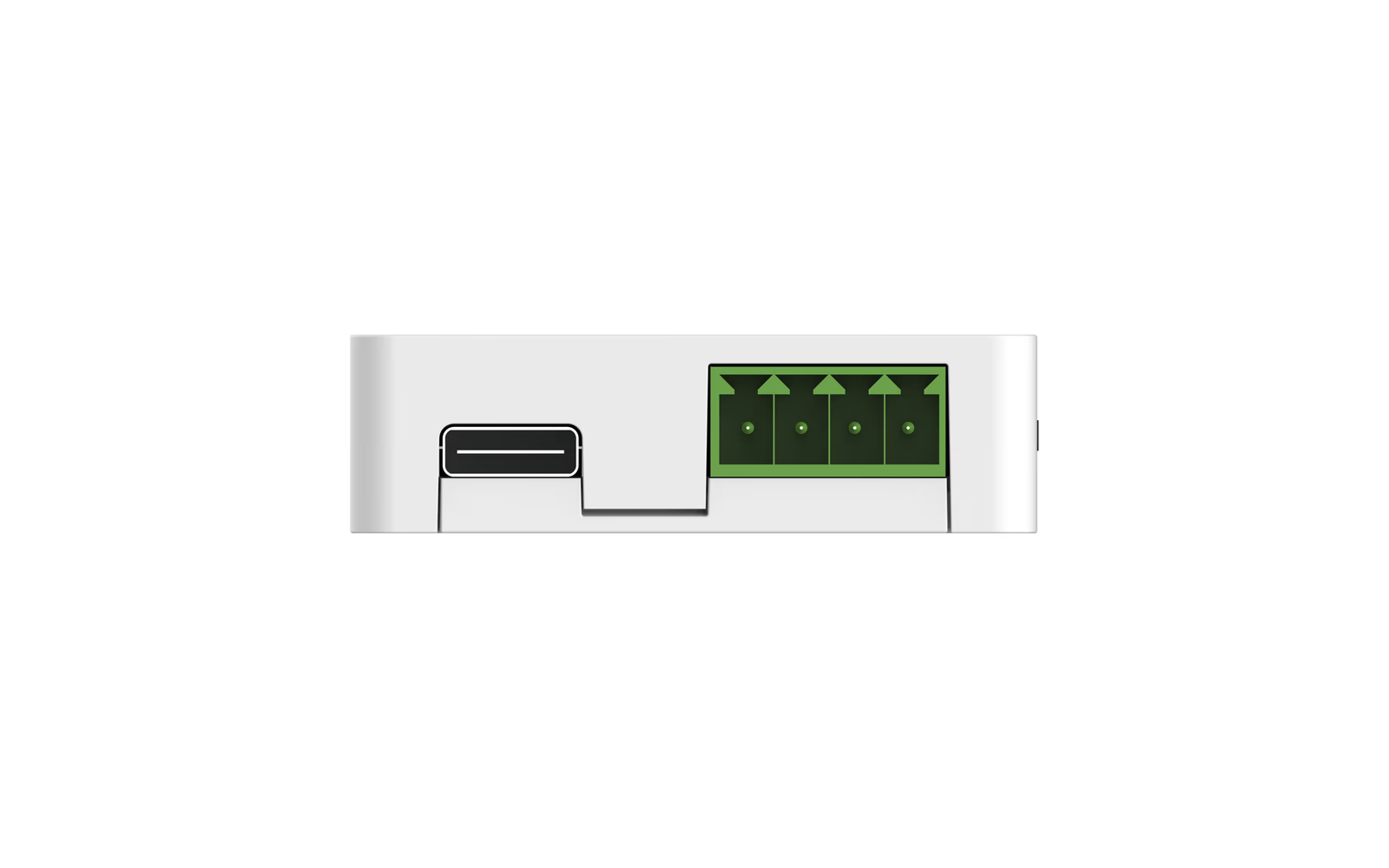
The Milesight UC100 is a compact RS485 to LoRaWAN converter dedicated to Modbus RTU acquisition. A single RS485 port — 3.5 mm terminal block, switchable 120 Ω termination, 1200–115200 bps — reads up to 32 Modbus RTU devices and supports transparent Modbus pass-through between the network server and field meters. As an entry-level IoT controller it buffers 800 historical records with retransmission to guard against packet loss, runs 16 IF-THEN commands, and supports Milesight D2D for gateway-free peer control. Configure it locally over USB Type-C or remotely via LoRaWAN downlink. Power is 5–24 V DC (or 5 V via Type-C), drawing under 0.5 W, in a 70 × 45 × 13 mm IP30 housing.
The UC100 is the lowest-cost path to wireless-enable an existing Modbus energy or power meter [Link to: Power & Energy Sub-Category Page].
[H3] UC51X LoRaWAN Solenoid Valve Controller
The Milesight UC51X series is a LoRaWAN solenoid valve controller for remote, scheduled irrigation and water management. Each unit drives 2 two-wire 12 V DC latching solenoid valves and accepts 2 pulse inputs for water meters. The rule engine supports time-based, volume-based, soil-moisture-triggered and weather-adaptive irrigation, with rain-delay postponement. The UC511 runs Class A/B/C with a built-in solar panel (5 V, 1.6 W) plus 2× 2,550 mAh rechargeable cells and supports Milesight D2D; the UC512 runs on 3× 9,000 mAh replaceable Li-SOCl₂ batteries for multi-year unattended life. An IP67 enclosure with M12 connectors and NFC configuration suits harsh outdoor sites, with LoRaWAN range up to 15 km line-of-sight on AU915.
This Milesight solenoid valve controller pairs naturally with a soil moisture sensor [Link to: Environmental Sensors Sub-Category Page] for closed-loop irrigation.
[H3] UC501 Solar Multi-Interface Controller
The Milesight UC501 is a solar-powered multi-interface controller for off-grid sensor acquisition. It exposes GPIO, analog inputs, a switchable RS232/RS485 serial port and an SDI-12 interface for environmental, hydrological and agricultural instruments. A built-in solar panel with 2× 2,550 mAh rechargeable cells, plus optional 5–24 V DC via M12, sustains remote deployments. As a LoRaWAN controller it runs Class A/C and supports multicast for bulk control, with threshold and change alarms, local buffering and retransmission protecting data integrity. Internal or external antenna (50 Ω SMA) versions ship for signal-constrained sites, housed in an IP67 enclosure with NFC configuration.
Pair the UC501 with a LoRaWAN external antenna or solar accessory [Link to: Accessories & Kits Category Page] to extend range on difficult sites.
[H3] UC502 Battery Multi-Interface Controller
The Milesight UC502 carries the same GPIO, analog input, switchable RS232/RS485 and SDI-12 interfaces as the UC501 but runs battery-only for ultra-low-power sites. A 19,000 mAh replaceable Li-SOCl₂ battery delivers multi-year service where no solar or mains supply exists, and this LoRaWAN controller runs Class A to conserve energy. The IP67 enclosure and M12 connectors match the UC501 for consistent field installation. Choose the UC502 for remote bores, pits and assets where maintenance access is limited and trenching power is impractical.
Typically paired with a liquid level or pipe-pressure sensor [Link to: Liquid Level & Air Quality Sensors Sub-Category Page].
[H2] Australian Compliance for IoT Controllers
Sub-metering data captured by an IoT controller feeds the energy-monitoring evidence base that Australian compliance frameworks require. Under National Construction Code (NCC) 2022 Volume One Section J9, large commercial buildings must provide facilities to monitor and record energy use by end-use category; a UC100 or UC300 IoT controller reading Modbus RTU meters over RS485 delivers that sub-metering stream without rewiring. The same data underpins NABERS Energy ratings (https://www.nabers.gov.au) and Green Star Buildings v1.1 monitoring credits. For mechanical services, a UC300 actuating dampers and fans via its relay and analog outputs supports AS 1668.2 ventilation control logic. Remote tank-level and valve telemetry from a UC501 or UC51X reduces manual confined-space and working-at-height inspections, aligning with WHS Act 2011 duties to eliminate foreseeable risk. Because each IoT controller integrates with existing industrial control systems over open protocols, retrofitting compliance instrumentation rarely requires removing the incumbent IoT controller platform.
[H2] Why Specify Qantec for IoT Controllers
An IoT controller earns its place in a specification through verified interfaces, regional compliance and supply assurance, not marketing claims. Every IoT controller Qantec supplies is a genuine Milesight unit on the AU915 (915–928 MHz) band, carrying AES-128 LoRaWAN security and signed firmware.
[H3] UC300 Cybersecurity and Firmware Integrity
LoRaWAN secures every uplink with AES-128 encryption, using unique NwkSKey and AppSKey session keys negotiated through Over-the-Air Activation (OTAA). On the wired side, terminate the IP backhaul from your gateway and network server on a dedicated OT VLAN, segregated from corporate IT traffic. For the cellular UC300 variant, route 4G traffic through an APN-bound VPN tunnel rather than the public internet. Restrict ToolBox configuration with role-based passwords and change default credentials before commissioning. Apply only signed firmware images sourced from Milesight ToolBox to preserve firmware integrity, and log every downlink command so valve and relay actuation stays auditable. Physically, mount the IoT controller inside a locked plant enclosure.
[H2] Milesight IoT Controller FAQ for Specifiers
Each answer below resolves a specific deployment edge-case for the IoT controller range, from RS485 topology to AU915 airtime.
What is the maximum RS485 cable length for a Milesight IoT controller?
RS485 on a Milesight IoT controller supports runs up to roughly 1,200 metres at lower baud rates, with the UC100 and UC300 operating between 1200 and 115200 bps. Longer cable demands a lower baud rate, a daisy-chain topology and the built-in 120 Ω termination resistor switched in at both bus ends to suppress signal reflections.
How often does a Milesight IoT controller poll Modbus channels on AU915?
Polling is configurable per Modbus channel, and the uplink interval sets how frequently aggregated values reach the network server. On AU915 (915–928 MHz), keep uplink frequency within the ACMA Low Interference Potential Devices duty-cycle and fair-use limits. Tighter polling raises data resolution but consumes more airtime and, on battery units, shortens service life.
Does a LoRaWAN solenoid valve controller need continuous power to hold a valve open?
No. The UC51X drives DC latching solenoids, which draw current only during the open or close pulse and then hold state mechanically with zero standing power. This is why a solar UC511 or battery UC512 manages irrigation valves for years without mains supply, sending only a brief actuation pulse per state change.
What happens to a Milesight IoT controller’s data when the LoRaWAN link drops?
Edge IF-THEN rules keep executing locally, so control actions continue uninterrupted. The UC300 buffers up to 1,000 records and the UC100 up to 800, then retransmits the backlog once the link restores, preventing data loss. Milesight D2D can also trigger peer devices directly, without routing through a gateway.
Footer CTA Section
[H3] Specify Your Milesight IoT Controller with Qantec
Confirm AU915 stock, request trade pricing, and get engineering help with Modbus channel mapping and network-server onboarding before you order. Our team supports systems integrators across Australia from quote through to commissioning.
[Request Trade Pricing] · [Check AU915 Stock] · [Talk to an Engineer]
Extended FAQ Section
Should I choose a Class A or Class C IoT controller for real-time relay and valve control?
Choose Class C whenever you need low-latency downlink control of relays or valves. A Class C device such as the UC300 keeps its receive window open continuously, so a command from the network server actuates an output within roughly a second. Class A units — including the battery-only UC502 and UC512 — open only two short receive windows after each uplink, so downlink control can lag by minutes. Reserve Class A for battery-conserving monitoring, and specify mains- or solar-fed Class C units for actuation duties.
How do I configure Modbus register data types and byte order on a Milesight IoT controller?
Set each Modbus channel’s slave ID, starting register, data type and byte order individually in Milesight ToolBox. For holding-register and input-register types, ToolBox exposes byte-order (endianness) options so you can match the field meter’s word order; coil and discrete types need none. The UC100 and UC300 also offer Active Pass-through and Two-way Pass-through modes, letting the network server issue raw Modbus commands when a fixed channel map is too rigid. Always run the channel Fetch test to confirm correct values before commissioning.
Can a Milesight IoT controller power its RS485 or analog field sensors directly?
The UC501 and UC502 can power sensors through a switchable 5 V, 9 V or 12 V output plus a 3.3 V rail, set via internal DIP switches. This removes a separate field supply for low-draw RS485 or analog instruments. The UC100, by contrast, has no dedicated sensor-power output — it draws 5–24 V DC itself and expects externally powered RS485 devices. Check the sensor’s inrush and continuous current against the controller’s output budget before depending on it.
Should I deploy the LoRaWAN or the 4G cellular UC300 at a remote site?
Deploy the LoRaWAN UC300 wherever a gateway already covers the site, since it adds no recurring connectivity cost and shares spectrum with your other AU915 nodes. Choose the 4G cellular UC300 — or a cellular UC501 or UC502 — only where no gateway exists and deploying one is uneconomic; budget for SIM data plans and ongoing carrier management. Cellular suits isolated single-asset sites, while LoRaWAN wins for dense, multi-node estates.
How do I integrate a Milesight IoT controller with ChirpStack or The Things Stack?
Join the controller in OTAA mode, then add Milesight’s published JavaScript payload codec to your device profile so raw hex uplinks decode into named fields. Milesight maintains official decoders in its SensorDecoders repository on GitHub, and the codec header must follow your network server’s expected signature. Once decoded, pipe data to Grafana, ThingsBoard, Node-RED or Datacake. Test with the server’s payload-codec tester before going live, because an undecoded channel surfaces only as cryptic Base64.
Does antenna placement affect an IoT controller inside a metal enclosure?
Yes — a metal plant enclosure heavily attenuates the AU915 signal, so an internal antenna inside a steel cabinet sacrifices significant range. Specify the external-antenna (EA) variant of the UC501, which terminates a 50 Ω SMA connector, and mount the antenna vertically outside the enclosure with clear line of sight. For the IP30 UC100 and UC300 in indoor risers, keep the antenna clear of cable trays and structural steel. Orientation and obstruction matter more than raw transmit power.
What battery life can I expect from a Li-SOCl₂-powered IoT controller, and what is passivation?
Expect multi-year service from the lithium thionyl chloride (Li-SOCl₂) cells in the UC502 and UC512, because the chemistry self-discharges at only around one percent per year. Passivation is a protective lithium-chloride film that forms on the anode during storage; it enables that long shelf life but causes a brief voltage delay when the cell is first loaded, especially in cold conditions. Real-world life depends on uplink frequency, temperature and downlink activity. These cells are non-rechargeable — never place them in a charging circuit.
Are the Li-SOCl₂ batteries in a UC502 or UC512 dangerous goods for Australian freight?
Yes — lithium thionyl chloride cells are Class 9 dangerous goods, classified UN3091 when installed in equipment and UN3090 when shipped on their own. Road and rail transport within Australia follows the Australian Dangerous Goods (ADG) Code, while air freight follows the IATA Dangerous Goods Regulations, under which UN3090 lithium-metal batteries are forbidden on passenger aircraft. We manage compliant packaging and documentation, which is one more reason to source these units domestically rather than air-freighting grey imports.
When should I wire a sensor to the 4–20 mA input versus the 0–10 V input on a UC300?
Use the 4–20 mA input for any sensor more than a few metres from the UC300, because current loops reject voltage drop and electrical noise across long cable runs. The UC300 provides two 4–20 mA inputs, two 0–10 V inputs and a PT100 RTD input for temperature. Reserve the 0–10 V inputs for nearby transmitters where cable length is short. A live-zero 4 mA signal also lets you tell a genuine zero reading from a broken wire.
Schema Implementation Notes
Update all item/url values to final live WooCommerce permalinks.
1. Organization (Qantec Automation)
<script type="application/ld+json">
{
"@context": "https://schema.org",
"@type": "Organization",
"@id": "https://qantecautomation.com/#org",
"name": "Qantec Automation",
"url": "https://qantecautomation.com/",
"areaServed": "Australia",
"parentOrganization": { "@type": "Organization", "name": "Oberix Group" },
"description": "Authorised Australian distributor of Milesight LoRaWAN and industrial IoT controllers and hardware."
}
</script>
2. WebPage with author + reviewedBy (E-E-A-T)
<script type="application/ld+json">
{
"@context": "https://schema.org",
"@type": "CollectionPage",
"name": "Milesight LoRaWAN IoT Controllers & Solenoid Valve",
"url": "https://qantecautomation.com/product-category/gateways-controllers/iot-controllers/",
"lastReviewed": "2026-06",
"publisher": { "@id": "https://qantecautomation.com/#org" },
"author": {
"@type": "Person",
"name": "Dr. Abhishek Mitra",
"jobTitle": "BDM NSW",
"email": "a.mitra@qantecautomation.com",
"affiliation": { "@type": "Organization", "name": "Qantec Automation", "address": { "@type": "PostalAddress", "addressCountry": "AU" } }
},
"reviewedBy": {
"@type": "Person",
"name": "Dr. Abhishek Mitra",
"jobTitle": "BDM NSW",
"email": "a.mitra@qantecautomation.com",
"affiliation": { "@type": "Organization", "name": "Qantec Automation", "address": { "@type": "PostalAddress", "addressCountry": "AU" } }
}
}
</script>
3. BreadcrumbList
<script type="application/ld+json">
{
"@context": "https://schema.org",
"@type": "BreadcrumbList",
"itemListElement": [
{ "@type": "ListItem", "position": 1, "name": "Gateways & Controllers", "item": "https://qantecautomation.com/product-category/gateways-controllers/" },
{ "@type": "ListItem", "position": 2, "name": "IoT Controllers", "item": "https://qantecautomation.com/product-category/gateways-controllers/iot-controllers/" }
]
}
</script>
4. ItemList (the 5 controllers in render order)
<script type="application/ld+json">
{
"@context": "https://schema.org",
"@type": "ItemList",
"name": "Milesight IoT Controllers",
"itemListElement": [
{ "@type": "ListItem", "position": 1, "url": "https://qantecautomation.com/product/milesight-uc300/", "name": "Milesight UC300 IoT Controller" },
{ "@type": "ListItem", "position": 2, "url": "https://qantecautomation.com/product/milesight-uc100/", "name": "Milesight UC100 IoT Controller" },
{ "@type": "ListItem", "position": 3, "url": "https://qantecautomation.com/product/milesight-uc51x/", "name": "Milesight UC51X LoRaWAN Solenoid Valve Controller" },
{ "@type": "ListItem", "position": 4, "url": "https://qantecautomation.com/product/milesight-uc501/", "name": "Milesight UC501 Multi-Interface Controller (Solar)" },
{ "@type": "ListItem", "position": 5, "url": "https://qantecautomation.com/product/milesight-uc502/", "name": "Milesight UC502 Multi-Interface Controller (Battery)" }
]
}
</script>
5. FAQPage (ALL 13 Q&As - 4 from Section 7 + 9 from Section 9, answers verbatim)
<script type="application/ld+json">
{
"@context": "https://schema.org",
"@type": "FAQPage",
"mainEntity": [
{ "@type": "Question", "name": "What is the maximum RS485 cable length for a Milesight IoT controller?",
"acceptedAnswer": { "@type": "Answer", "text": "RS485 on a Milesight IoT controller supports runs up to roughly 1,200 metres at lower baud rates, with the UC100 and UC300 operating between 1200 and 115200 bps. Longer cable demands a lower baud rate, a daisy-chain topology and the built-in 120 ohm termination resistor switched in at both bus ends to suppress signal reflections." } },
{ "@type": "Question", "name": "How often does a Milesight IoT controller poll Modbus channels on AU915?",
"acceptedAnswer": { "@type": "Answer", "text": "Polling is configurable per Modbus channel, and the uplink interval sets how frequently aggregated values reach the network server. On AU915 (915-928 MHz), keep uplink frequency within the ACMA Low Interference Potential Devices duty-cycle and fair-use limits. Tighter polling raises data resolution but consumes more airtime and, on battery units, shortens service life." } },
{ "@type": "Question", "name": "Does a LoRaWAN solenoid valve controller need continuous power to hold a valve open?",
"acceptedAnswer": { "@type": "Answer", "text": "No. The UC51X drives DC latching solenoids, which draw current only during the open or close pulse and then hold state mechanically with zero standing power. This is why a solar UC511 or battery UC512 manages irrigation valves for years without mains supply, sending only a brief actuation pulse per state change." } },
{ "@type": "Question", "name": "What happens to a Milesight IoT controller's data when the LoRaWAN link drops?",
"acceptedAnswer": { "@type": "Answer", "text": "Edge IF-THEN rules keep executing locally, so control actions continue uninterrupted. The UC300 buffers up to 1,000 records and the UC100 up to 800, then retransmits the backlog once the link restores, preventing data loss. Milesight D2D can also trigger peer devices directly, without routing through a gateway." } },
{ "@type": "Question", "name": "Should I choose a Class A or Class C IoT controller for real-time relay and valve control?",
"acceptedAnswer": { "@type": "Answer", "text": "Choose Class C whenever you need low-latency downlink control of relays or valves. A Class C device such as the UC300 keeps its receive window open continuously, so a command from the network server actuates an output within roughly a second. Class A units, including the battery-only UC502 and UC512, open only two short receive windows after each uplink, so downlink control can lag by minutes. Reserve Class A for battery-conserving monitoring, and specify mains- or solar-fed Class C units for actuation duties." } },
{ "@type": "Question", "name": "How do I configure Modbus register data types and byte order on a Milesight IoT controller?",
"acceptedAnswer": { "@type": "Answer", "text": "Set each Modbus channel's slave ID, starting register, data type and byte order individually in Milesight ToolBox. For holding-register and input-register types, ToolBox exposes byte-order (endianness) options so you can match the field meter's word order; coil and discrete types need none. The UC100 and UC300 also offer Active Pass-through and Two-way Pass-through modes, letting the network server issue raw Modbus commands when a fixed channel map is too rigid. Always run the channel Fetch test to confirm correct values before commissioning." } },
{ "@type": "Question", "name": "Can a Milesight IoT controller power its RS485 or analog field sensors directly?",
"acceptedAnswer": { "@type": "Answer", "text": "The UC501 and UC502 can power sensors through a switchable 5 V, 9 V or 12 V output plus a 3.3 V rail, set via internal DIP switches. This removes a separate field supply for low-draw RS485 or analog instruments. The UC100, by contrast, has no dedicated sensor-power output - it draws 5-24 V DC itself and expects externally powered RS485 devices. Check the sensor's inrush and continuous current against the controller's output budget before depending on it." } },
{ "@type": "Question", "name": "Should I deploy the LoRaWAN or the 4G cellular UC300 at a remote site?",
"acceptedAnswer": { "@type": "Answer", "text": "Deploy the LoRaWAN UC300 wherever a gateway already covers the site, since it adds no recurring connectivity cost and shares spectrum with your other AU915 nodes. Choose the 4G cellular UC300, or a cellular UC501 or UC502, only where no gateway exists and deploying one is uneconomic; budget for SIM data plans and ongoing carrier management. Cellular suits isolated single-asset sites, while LoRaWAN wins for dense, multi-node estates." } },
{ "@type": "Question", "name": "How do I integrate a Milesight IoT controller with ChirpStack or The Things Stack?",
"acceptedAnswer": { "@type": "Answer", "text": "Join the controller in OTAA mode, then add Milesight's published JavaScript payload codec to your device profile so raw hex uplinks decode into named fields. Milesight maintains official decoders in its SensorDecoders repository on GitHub, and the codec header must follow your network server's expected signature. Once decoded, pipe data to Grafana, ThingsBoard, Node-RED or Datacake. Test with the server's payload-codec tester before going live, because an undecoded channel surfaces only as cryptic Base64." } },
{ "@type": "Question", "name": "Does antenna placement affect an IoT controller inside a metal enclosure?",
"acceptedAnswer": { "@type": "Answer", "text": "Yes - a metal plant enclosure heavily attenuates the AU915 signal, so an internal antenna inside a steel cabinet sacrifices significant range. Specify the external-antenna (EA) variant of the UC501, which terminates a 50 ohm SMA connector, and mount the antenna vertically outside the enclosure with clear line of sight. For the IP30 UC100 and UC300 in indoor risers, keep the antenna clear of cable trays and structural steel. Orientation and obstruction matter more than raw transmit power." } },
{ "@type": "Question", "name": "What battery life can I expect from a Li-SOCl2-powered IoT controller, and what is passivation?",
"acceptedAnswer": { "@type": "Answer", "text": "Expect multi-year service from the lithium thionyl chloride (Li-SOCl2) cells in the UC502 and UC512, because the chemistry self-discharges at only around one percent per year. Passivation is a protective lithium-chloride film that forms on the anode during storage; it enables that long shelf life but causes a brief voltage delay when the cell is first loaded, especially in cold conditions. Real-world life depends on uplink frequency, temperature and downlink activity. These cells are non-rechargeable - never place them in a charging circuit." } },
{ "@type": "Question", "name": "Are the Li-SOCl2 batteries in a UC502 or UC512 dangerous goods for Australian freight?",
"acceptedAnswer": { "@type": "Answer", "text": "Yes - lithium thionyl chloride cells are Class 9 dangerous goods, classified UN3091 when installed in equipment and UN3090 when shipped on their own. Road and rail transport within Australia follows the Australian Dangerous Goods (ADG) Code, while air freight follows the IATA Dangerous Goods Regulations, under which UN3090 lithium-metal batteries are forbidden on passenger aircraft. We manage compliant packaging and documentation, which is one more reason to source these units domestically rather than air-freighting grey imports." } },
{ "@type": "Question", "name": "When should I wire a sensor to the 4-20 mA input versus the 0-10 V input on a UC300?",
"acceptedAnswer": { "@type": "Answer", "text": "Use the 4-20 mA input for any sensor more than a few metres from the UC300, because current loops reject voltage drop and electrical noise across long cable runs. The UC300 provides two 4-20 mA inputs, two 0-10 V inputs and a PT100 RTD input for temperature. Reserve the 0-10 V inputs for nearby transmitters where cable length is short. A live-zero 4 mA signal also lets you tell a genuine zero reading from a broken wire." } }
]
}
</script>
6. VideoObject (verified UC300 product video)
<script type="application/ld+json">
{
"@context": "https://schema.org",
"@type": "VideoObject",
"name": "Milesight UC300 IoT Controller",
"description": "Overview of the Milesight UC300 IoT controller and its industrial interfaces: digital input, digital output, analog input, RS232/RS485 and PT100 RTD.",
"thumbnailUrl": "https://i.ytimg.com/vi/woeOenrV4ik/hqdefault.jpg",
"uploadDate": "2022-08-23",
"contentUrl": "https://www.youtube.com/watch?v=woeOenrV4ik",
"embedUrl": "https://www.youtube.com/embed/woeOenrV4ik"
}
</script>